
International Asteroid Day (June 30): What It Is & How to Observe
Telescope Advisor Logo Telescope Advisor
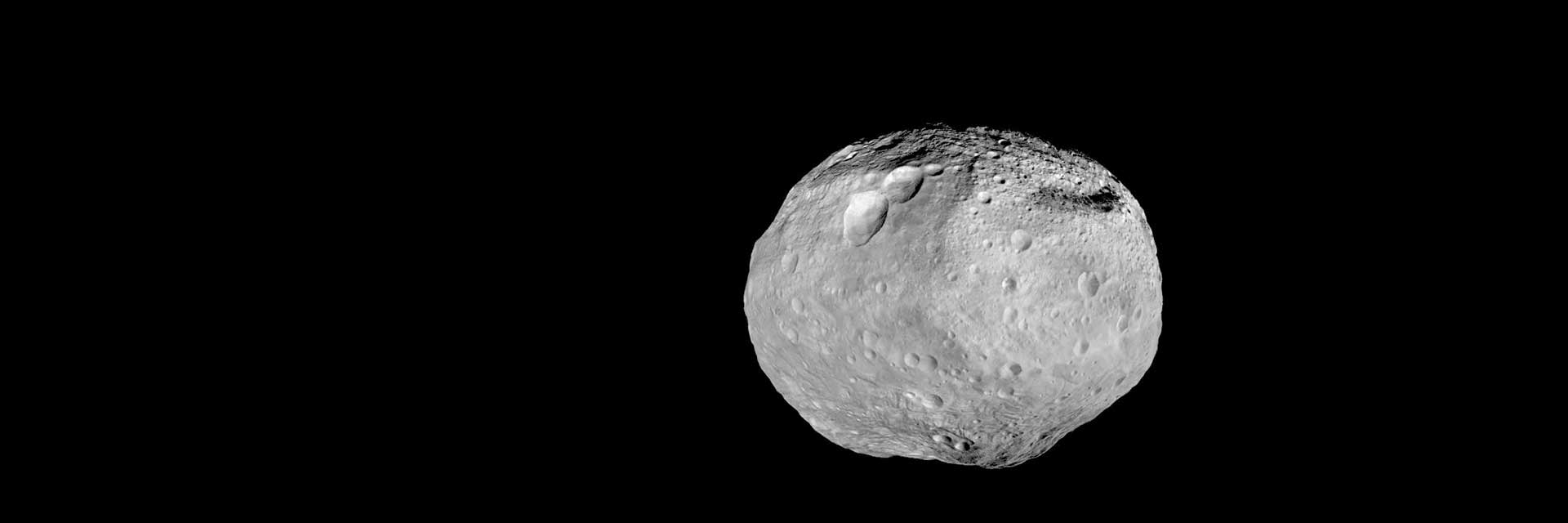
Asteroid Vesta photographed in color by NASA's Dawn spacecraft — the largest asteroid most backyard observers can target, and the subject of International Asteroid Day on June 30

United Nations Observance · June 30

International Asteroid Day: Why It Is June 30 — and How to Observe Asteroids Yourself

Every year on June 30, the world marks International Asteroid Day — a United Nations-recognized observance that falls on the anniversary of the 1908 Tunguska event, the largest asteroid impact in recorded history. It is part awareness campaign, part science festival, and — for anyone with a telescope or binoculars — a genuine observing challenge: the moving "stars" that are real asteroids, quietly orbiting the Sun between Mars and Jupiter.

Every yearJune 30
Why the dateTunguska, 1908
Big year ahead2029 — Apophis + UN Year
Next editionJune 30, 2027
By Telescope Advisor Editorial Team Published: Updated: Reviewed & approved by Juhi Sahni, Senior Editor Editorial Standards

Quick Answer: When Is International Asteroid Day?

International Asteroid Day is June 30 every year — the next edition falls on Wednesday, June 30, 2027. The date is fixed because it marks the anniversary of the Tunguska event of June 30, 1908, when an asteroid or comet fragment airburst over a remote region of Siberia and flattened roughly 2,150 square kilometers (about 830 square miles) of forest. In December 2016 the United Nations General Assembly formally declared June 30 International Asteroid Day to observe that anniversary and to raise public awareness of the asteroid impact hazard.

Unlike most "awareness days," this one is deeply relevant to telescope owners. The objects it celebrates are not abstract — the four largest asteroids in the main belt (Vesta, Ceres, Pallas, and Hygiea) are all within reach of modest amateur instruments, and Vesta is occasionally visible to the naked eye from a dark sky. Asteroid Day is a perfect excuse to add a moving dot to your observing list and watch it drift against the stars over a few nights.

The date

June 30, every year — the next is June 30, 2027. Fixed by the UN in 2016 to mark the 1908 Tunguska anniversary.

The point

Raise awareness of the asteroid impact hazard and of what is being done about it — from telescopic survey programs to planetary-defense missions.

The observing hook

Real asteroids are visible as slow-moving star-like points. Vesta is the classic first target — bright enough for binoculars under dark skies and easy to track over consecutive nights.


🔭

Not sure which telescope actually fits your goals?

Answer 5 quick questions about your budget, observing targets, and experience level — our Telescope Finder Tool recommends a specific model in under 2 minutes.

Find My Telescope →

What Is International Asteroid Day?

International Asteroid Day is an annual global event held on June 30 to raise public awareness about asteroids and what can be done to protect Earth from a potential impact. It grew out of a 2014 initiative — launched the year after the dramatic 2013 Chelyabinsk meteor airburst over Russia — and was formally adopted by the United Nations in December 2016. On the day itself, observatories, museums, science centers, and space agencies worldwide run public programs, and the asteroid-research community uses the occasion to explain both the threat and the science.

Three things are true at once about June 30, and they are worth holding in your head together:

  • Asteroids are common and mostly harmless. Over a million orbit the Sun between Mars and Jupiter, and the vast majority never come near Earth. Most are small; the largest, Ceres, is about 940 kilometers across and is classed as a dwarf planet.
  • Impacts are real and have happened. Tunguska in 1908 and Chelyabinsk in 2013 are the two most famous recent examples — both airbursts, both powerful enough to remind us the hazard is not zero.
  • The hazard is being actively managed. Telescopic survey programs track near-Earth objects, and planetary-defense missions have already demonstrated that we can change an asteroid's orbit.

For observers, the day is also a genuine opportunity: the main belt's brightest members are well within the reach of the same telescopes we recommend for planets and the Moon. If you have never seen an asteroid, June 30 is the excuse you have been waiting for.

Why June 30: The Tunguska Event

On the morning of June 30, 1908, a large object exploded in the atmosphere over the remote Podkamennaya Tunguska river region of Siberia, Russia. The blast — an airburst rather than a ground impact — flattened an estimated 2,150 square kilometers (about 830 square miles) of forest, snapping trees in a radial pattern across the taiga. Because the region was almost uninhabited, few people were hurt, and the event remained poorly understood for years; scientists did not reach the site until the 1920s.

Tunguska is widely described as the largest asteroid impact in recorded history. No crater was found, which is consistent with a body — probably a few tens of meters across — that exploded several kilometers above the ground rather than striking the surface. It stands as the clearest modern reminder that a comparatively small object can still release enormous energy, and it is exactly why the United Nations chose June 30 for the annual observance.

The more recent reminder came on February 15, 2013, when a roughly 18-meter asteroid entered the atmosphere over Chelyabinsk, Russia, and disintegrated in a fireball. The blast injured more than a thousand people, mostly from shattered glass, and its shockwave was felt for hundreds of kilometers. At an estimated energy of a few hundred kilotons of TNT, it was the most energetic impact event recognized since Tunguska — and the fact that it happened over a city is precisely why Asteroid Day's founders wanted the world paying attention.

From a 2014 Declaration to a UN Day

Asteroid Day was co-founded in 2014 — the year after Chelyabinsk — by an unusual and credible group: physicist Stephen Hawking, Danica Remy (then president of the B612 Foundation), Apollo 9 astronaut Rusty Schweickart, filmmaker Grigorij Richters, and Queen guitarist and astrophysicist Brian May. Their founding document, the "100X Declaration," called for a rapid hundredfold acceleration in the discovery rate of near-Earth asteroids — to roughly 100,000 per year within a decade — arguing that you can only deflect a threat you have found.

The first Asteroid Day was held on June 30, 2015, and the initiative grew quickly: more than 2,000 events across 78 countries were reported in its first five years. In 2017 the International Astronomical Union marked the occasion by naming a minor planet — 248750 — "Asteroidday."

December 2016 — UN adoption

The UN General Assembly adopted resolution A/RES/71/90, declaring June 30 International Asteroid Day to observe the Tunguska anniversary and raise public awareness of the asteroid impact hazard. The proposal came from the Association of Space Explorers and was endorsed by the UN Committee on the Peaceful Uses of Outer Space (COPUOS).

Two supporting bodies, 2014

The International Asteroid Warning Network (IAWN) and the Space Mission Planning Advisory Group (SMPAG) were established to coordinate detection and, if ever needed, deflection planning across space agencies.

The Real Hazard — in Numbers

Awareness days live or die on whether they give you a clear, honest picture. Here is the concise version, consistent with the definitions used by the United Nations and NASA:

What counts as "near-Earth"

Near-Earth objects (NEOs) are asteroids and comets whose orbits bring them within about 1.3 astronomical units of the Sun — roughly 195 million kilometers. Most never come close to Earth at all.

The "potentially hazardous" line

The objects that get the closest scrutiny pass within about 0.05 astronomical units (roughly 7.5 million kilometers) of Earth's orbit and are larger than about 140 meters — big enough to cause regional damage if they ever struck.

How many are known

According to NASA's Center for Near Earth Object Studies, more than 36,000 near-Earth asteroids had been discovered. The inventory grows every year as survey telescopes scan the sky — which is exactly the discovery work Asteroid Day celebrates.

The honest bottom line: no known asteroid poses a threat to Earth in the foreseeable future, the overwhelming majority of NEOs are small and harmless, and the reason we can say that confidently is that we keep looking. The day exists to make sure that looking continues — and that the public understands why it matters.

2029: Apophis and a UN Year

The reason Asteroid Day watchers are already excited about 2029 is a specific asteroid and a specific date: on April 13, 2029, the near-Earth asteroid 99942 Apophis will pass at a distance of about 32,000 kilometers from Earth's surface — closer than the ring of geostationary satellites. It poses no threat to the planet, but the flyby is extraordinary: an object of this size passing this close will be visible to the naked eye for large parts of the world, a once-in-a-millennium observing opportunity and a natural laboratory for asteroid science.

To take advantage of that moment, the UN General Assembly declared 2029 the International Year of Asteroid Awareness and Planetary Defence, aiming for a worldwide educational campaign around the close approach. For amateur observers it is a rare chance to watch a near-Earth asteroid with the unaided eye and to follow it through binoculars and telescopes as it races across the sky — a preview of the kind of object-surveying that planetary defense depends on.

How to Observe Asteroids Yourself

Asteroids look like stars, but they are not: a faint point of light that moves against the fixed star field from night to night (or hour to hour, for a close passer like Apophis) is an asteroid. The main-belt asteroids orbit roughly every three to six years between Mars and Jupiter, and the brightest of them are surprisingly easy:

Vesta — the classic first target

The brightest asteroid, occasionally reaching naked-eye visibility from a dark site. In binoculars or a small telescope it appears as a modest star, and its motion between two nights is unmistakable. Our full Vesta observing guide shows the technique.

Ceres — the dwarf planet

The largest body in the main belt (and the first asteroid ever found, in 1801) shines around magnitude 7 at its best — an easy binocular object and a satisfying telescope target at opposition.

The technique: sketch and wait

Find the predicted field with an app or finder chart, sketch the star pattern, then return a night or two later. The dot that moved is your asteroid. Patience and dark skies matter more than aperture.

The best observing window for any main-belt asteroid is at opposition, when it is opposite the Sun, highest at local midnight, and brightest. Because their orbits are long, each asteroid's opposition shifts from year to year — which is exactly why an up-to-date astronomy app (see our best astronomy apps) is the most useful "accessory" for asteroid hunting: it will tell you where each bright asteroid is on any given night.

Gear for Asteroid Observing

Asteroid observing has forgiving gear requirements — these objects are point sources, so the essentials are aperture to reach faint magnitudes, a steady mount to hold the field still, and dark skies to cut skyglow. The ladder:

Binoculars for the brightest few

A good 10×50 or larger pair finds Vesta and Ceres when they are well placed, especially from a dark site. Best stargazing binoculars.

A solid telescope

For magnitude-10-and-fainter asteroids you want aperture. A 100–150mm telescope will track the bright main-belt members comfortably; larger scopes extend your reach. Beginner telescope guide · best Dobsonians.

Dark skies

Skyglow is the enemy of faint moving dots. The dark-sky map and national parks guide point you to the darkest sites.

An app or finder chart — essential

You cannot reliably identify an asteroid by eye alone. A quality astronomy app or printed finder chart showing the predicted field for the night is the difference between success and staring at a blank sky. Stargazing apps roundup.

Eyepiece magnification

Moderate to high power (100–200×) helps separate a faint asteroid from background stars and makes its motion easier to confirm. See best telescope eyepieces.

Photography (optional)

A smartphone at the eyepiece or a DSLR can capture an asteroid as a streak or as a shifted dot between two stacked frames — a rewarding Asteroid Day project. Photography basics.

How to Celebrate Asteroid Day

You do not need to be near an observatory to take part. Practical ways to mark June 30:

  • Go asteroid hunting. Check where Vesta, Ceres, or another bright asteroid is that night, set up your scope or binoculars, and confirm its motion over a couple of nights.
  • Join an event. Museums, planetariums, science centers, and astronomy clubs worldwide run Asteroid Day programs — many free and many streamed. Find a club via our club directory.
  • Learn the hazard honestly. Read what NASA's planetary-defense program and the UN's IAWN and SMPAG actually do — the reality is more reassuring than the headlines.
  • Start planning for 2029. April 13, 2029 — when Apophis becomes a naked-eye object — is worth putting on your calendar now, along with the International Year of Asteroid Awareness and Planetary Defence.


Next Best Step

Need the fastest next step?

Pick the path that matches where you are right now: get a recommendation, compare buyer guides, or narrow by budget.

Open Finder Tool →

🎄 Holiday season: Telescope Christmas Gift Guide 2026 · Smart telescope Black Friday deals

International Asteroid Day FAQ

When is International Asteroid Day?

June 30 every year — the next edition falls on June 30, 2027. The date marks the anniversary of the Tunguska event of June 30, 1908, and was declared International Asteroid Day by the United Nations General Assembly in December 2016 (resolution A/RES/71/90).

What was the Tunguska event?

On June 30, 1908, a large object exploded in the atmosphere over a remote region of Siberia, Russia, flattening roughly 2,150 square kilometers (about 830 square miles) of forest. Because it was an airburst rather than a ground impact, no crater formed. It is widely described as the largest asteroid impact in recorded history.

Who founded Asteroid Day?

It was co-founded in 2014 by physicist Stephen Hawking, Danica Remy of the B612 Foundation, Apollo 9 astronaut Rusty Schweickart, filmmaker Grigorij Richters, and Queen guitarist and astrophysicist Brian May. The first Asteroid Day was held on June 30, 2015, and the United Nations adopted the date in December 2016.

Can you really see asteroids with a telescope?

Yes. Asteroids look like faint stars, but they move against the background stars from night to night. The brightest, Vesta, can reach naked-eye visibility from a dark sky and is an easy binocular and small-telescope target. Ceres is also within reach. The key is a finder chart or app showing where the asteroid is, plus comparing your sketch across two nights.

Is Earth in danger from an asteroid?

No known asteroid poses a threat in the foreseeable future. Survey programs have discovered more than 36,000 near-Earth asteroids, and the objects that receive closest scrutiny are those larger than about 140 meters passing within about 7.5 million kilometers of Earth's orbit. The purpose of Asteroid Day is to keep discovery and planetary-defense work going so that any future threat is found years in advance.

Why is 2029 important for asteroids?

On April 13, 2029, the near-Earth asteroid Apophis passes about 32,000 kilometers from Earth's surface — closer than geostationary satellites — posing no threat but becoming visible to the naked eye for large parts of the world. The UN has declared 2029 the International Year of Asteroid Awareness and Planetary Defence to mark the event.

What is the difference between an asteroid and a comet?

Asteroids are rocky bodies that orbit the Sun, concentrated mainly in the main belt between Mars and Jupiter. Comets are icy bodies that develop a fuzzy coma and tail as they approach the Sun and heat up. Both are tracked as near-Earth objects because either type could theoretically cross Earth's path.

How can I take part in Asteroid Day?

Try observing Vesta or Ceres, attend a local museum or club event, follow the live programs from space agencies and observatories, or simply learn more about planetary defense. If you want to see asteroids yourself, our Vesta guide and astronomy-app roundup are the best starting points.


Continue Exploring

Keep the session going with the next useful answer

Choose the next page based on whether you need a recommendation, a comparison, or a practical observing plan.

Use Finder Tool →

🎄 Holiday season: Telescope Christmas Gift Guide 2026 · Black Friday deal tracking