
International Moon Day (July 20): What It Is & How to Observe
Telescope Advisor Logo Telescope Advisor
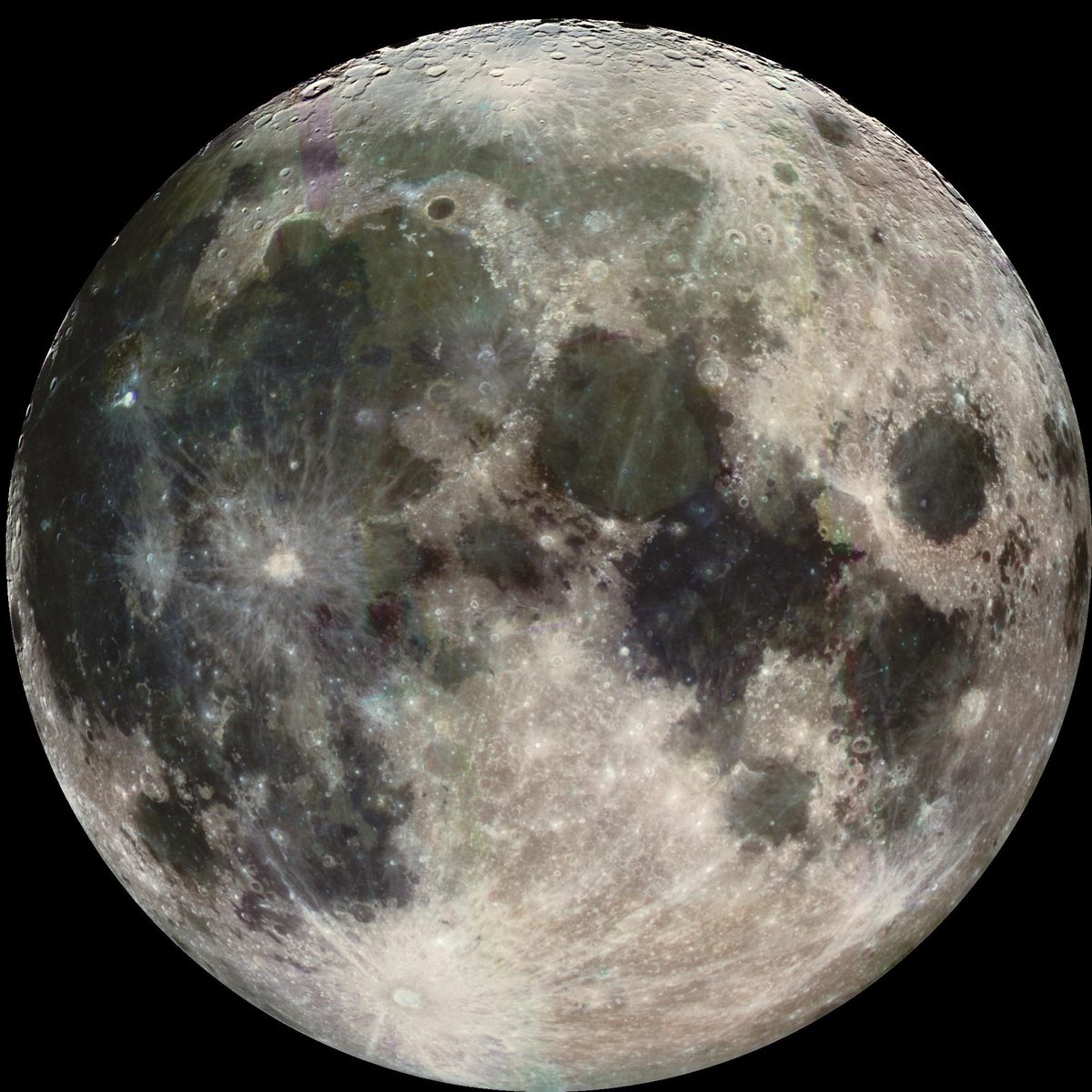
The Moon's limb photographed from orbit by NASA — International Moon Day is July 20 every year

United Nations Observance · July 20

International Moon Day: Why July 20 — and How to Celebrate It Under the Real Moon

Every year on July 20, the United Nations observes International Moon Day — a global celebration that marks the anniversary of the first human Moon landing, Apollo 11's touchdown on July 20, 1969. It is equal parts history, science, and invitation: a day for everyone, everywhere, to look up at the Moon, remember how we got there, and consider where lunar exploration goes next.

Every yearJuly 20
Why the dateApollo 11, 1969
2027 edition58th anniversary
The best viewThrough a telescope
By Telescope Advisor Editorial Team Published: Updated: Reviewed & approved by Juhi Sahni, Senior Editor Editorial Standards

Quick Answer: When Is International Moon Day?

International Moon Day is July 20 every year. In 2021 the United Nations General Assembly declared July 20 an international observance, in its resolution 76/76 on international cooperation in the peaceful uses of outer space. The date was chosen because it is the anniversary of the Apollo 11 Moon landing on July 20, 1969 — the first time humans set foot on another world. The next edition falls on Tuesday, July 20, 2027, the 58th anniversary of the landing.

International Moon Day is a United Nations observance implemented in cooperation with the UN Office for Outer Space Affairs (UNOOSA), and it is also informally known in many places simply as "Moon Day." Its purpose is broad: to mark the anniversary of the Apollo 11 landing, recognize the achievements of all nations in lunar exploration, and raise public awareness about sustainable Moon exploration and use. It is also, for telescope owners, one of the easiest excuses of the year to do what we love — point a scope at the Moon and show it to someone new.

The date

July 20, every year — the next is July 20, 2027. Fixed to the anniversary of Apollo 11's 1969 landing.

The occasion

Humanity's first Moon landing — and a UN-backed call to celebrate lunar science, exploration, and the sustainable use of the Moon.

The best view

Step outside after sunset and look at the real thing. A telescope reveals the craters, maria, and mountain ranges that shaped Apollo's landing-site choices.


🔭

Not sure which telescope actually fits your goals?

Answer 5 quick questions about your budget, observing targets, and experience level — our Telescope Finder Tool recommends a specific model in under 2 minutes.

Find My Telescope →

What Is International Moon Day?

International Moon Day is a United Nations-designated international day observed annually on July 20. The UN General Assembly created it in 2021 through resolution 76/76, which dealt with international cooperation in the peaceful uses of outer space. The day's stated purpose is threefold: to mark the anniversary of the first landing by humans on the Moon (the Apollo 11 mission of 1969), to recognize the achievements of all states in the exploration of the Moon, and to raise public awareness about sustainable Moon exploration and use.

The observance is carried out with the support of UNOOSA — the United Nations Office for Outer Space Affairs — which helps coordinate international space cooperation. Around the day, space agencies, museums, planetariums, universities, and astronomy clubs host public programs: history talks about the Apollo missions, exhibits of lunar science, live telescope views, and family activities built around the Moon. Because the Moon is the easiest major object in the sky to find, the day is unusually beginner-friendly — you can meaningfully "celebrate" it from any backyard on Earth.

Why July 20: Apollo 11 in Brief

Apollo 11 launched on July 16, 1969, carrying commander Neil Armstrong, command module pilot Michael Collins, and lunar module pilot Buzz Aldrin. Four days later, on July 20, 1969, the lunar module Eagle touched down in the Sea of Tranquility — Mare Tranquillitatis, a dark lava plain on the Moon's near side. Hours afterward, Armstrong became the first human to set foot on the lunar surface, followed by Aldrin, while Collins orbited above in the command module.

Armstrong and Aldrin spent more than 21 hours on the surface, including the famous moonwalk, before rejoining Collins and returning to Earth. The crew splashed down on July 24, 1969. NASA's own account dates the achievement as having occurred 57 years before 2026 — which makes July 20, 2026 the 57th anniversary and July 20, 2027 the 58th.

President John F. Kennedy had set the goal in May 1961 — landing a man on the Moon and returning him safely to Earth before the decade was out. Apollo 11 completed that goal with five months to spare. For a deeper dive into the mission and its legacy, NASA's Apollo 11 archive is the authoritative source.

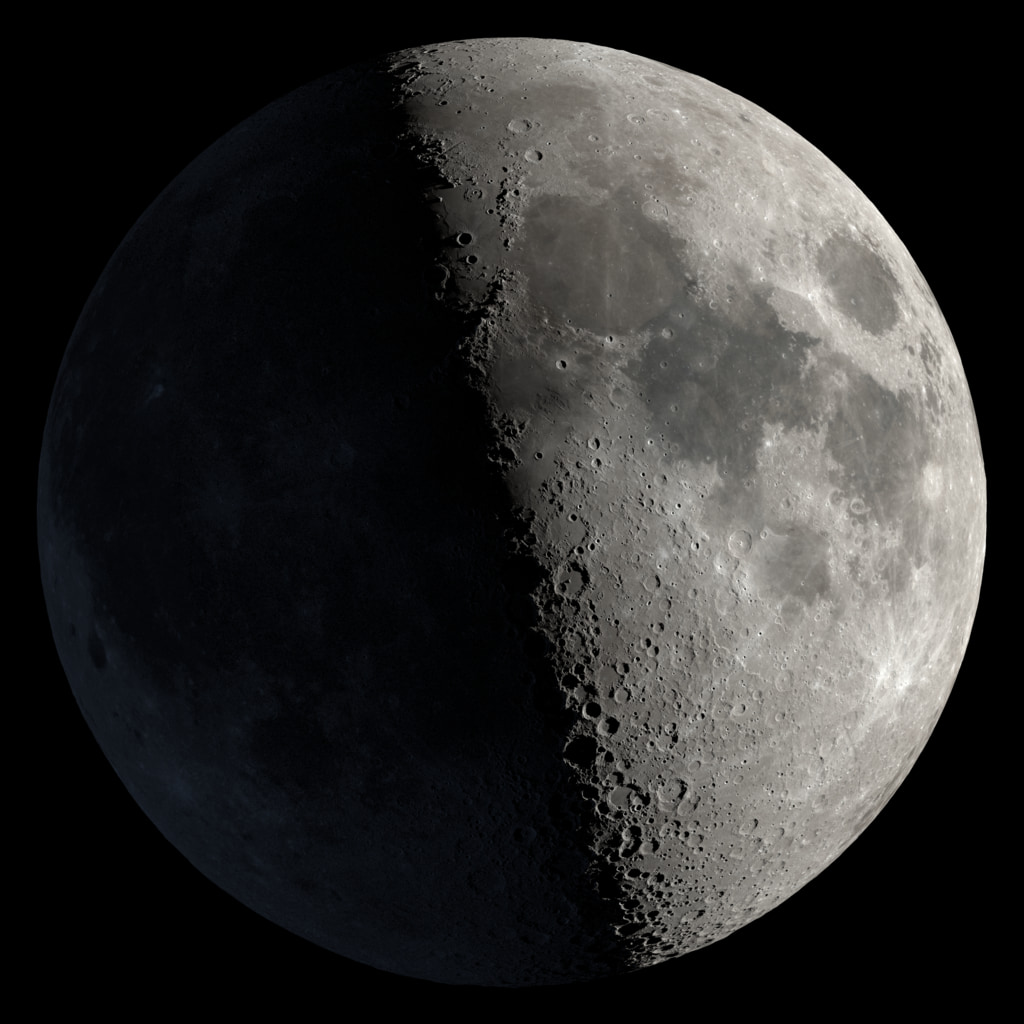
The Moon's cratered surface imaged by NASA's Lunar Reconnaissance Orbiter — the landscape the Apollo 11 crew explored lies in the dark plains of Mare Tranquillitatis

The Moon Apollo Explored

Apollo 11 touched down in the Sea of Tranquility, one of the dark volcanic plains clearly visible to the naked eye. Credit: NASA / Lunar Reconnaissance Orbiter.

Why a Moon Day Now

The UN created International Moon Day in 2021 for a reason: the Moon is returning to the center of human spaceflight. In the 2020s the Moon has hosted robotic landers from multiple nations, orbiters continue to map it in unprecedented detail, and crewed missions have begun flying around it again — NASA's Artemis II crew completed a crewed flyby of the Moon in April 2026, the first since Apollo. Plans for sustainable exploration, and questions about how the Moon's resources should be used, are now live international topics rather than far-future speculation.

That is precisely the conversation Moon Day exists to widen. The UN describes the day as both a reminder of past success and an annual testimony to future endeavor — a chance for every country, and every person, to feel a stake in what happens next on and around the Moon. For amateur astronomers it is also simply a good annual habit: a fixed date each summer to take the Moon seriously, whatever the current phase, and to share it with someone who has never looked properly.

How to Celebrate by Observing the Moon

The Moon's phase on July 20 changes from year to year, but that hardly matters — every phase rewards a look, and Moon Day is about participation, not perfect conditions. Here is how to turn the observance into an observing session:

Naked eye — find the Apollo plain

No equipment needed. The dark patch upper-left of the Moon's center (as seen from the Northern Hemisphere) includes the Sea of Tranquility, where Apollo 11 landed. Knowing you are looking at the place humans first walked is the whole point of the day.

Binoculars — explore the maria

Binoculars turn the Moon into a map of lava plains, ray craters, and bright highlands. Trace the terminator if the Moon is not full and watch the relief appear. Best stargazing binoculars.

Telescope — the full tour

At 75–150× the Moon becomes a landscape: crater walls catching sunlight, mountain ranges, and the fault scarps that geologists used to understand the lunar crust. Phase-by-phase targets: How to Observe the Moon.

If you observe on a night when the Moon is out during a good phase for detail — near first or last quarter — the craters will be at their three-dimensional best. If the 20th happens to land near full Moon, focus instead on the bright ray systems and the maria, and check our Moon Phases Explained to see what each phase is best for.

Can You See the Apollo Landing Sites?

The honest answer is a delightful half-yes. The landing regions — the dark plains where Apollo 11, 12, 14, 15, 16, and 17 set down — are easy to find: each mission landed on or beside a mare plain, several of which are visible to the naked eye. What you cannot see is the hardware. The lunar modules and flags are far too small for any backyard telescope; they were only imaged from lunar orbit by spacecraft like NASA's Lunar Reconnaissance Orbiter, whose cameras can resolve the descent stages from above.

So on Moon Day, point at Mare Tranquillitatis and know exactly what you are looking at — and leave the "can I see the flag?" question to the myth-busting page we built for it: Can you see the American flag on the Moon with a telescope?

Gear for Your Moon Day

Moon Day has the most forgiving gear requirements of any observance on the calendar — the target is bright, easy to find, and looks good in almost anything. The sensible upgrade path:

Binoculars

The fastest route to a satisfying Moon view, and the best tool for a sidewalk event where guests need quick turns at the eyepiece. Our picks.

A telescope that does the Moon justice

Any decent scope shows lunar detail, but a 60–80mm refractor or tabletop Dobsonian delivers crisp views at 75–150×. Best telescopes for the Moon · beginner guide.

A Moon filter

Bright phases dazzle in the eyepiece. A neutral-density or variable polarizing filter keeps the view comfortable and high-contrast. Best Moon filters.

Higher-power eyepieces

To push past the stock eyepieces and reach 120–150×, a good short eyepiece or zoom eyepiece is the key. Best telescope eyepieces.

Photograph it — and share it

Moon Day is a natural night to capture the Moon with your phone at the eyepiece and share it. Technique and gear: How to Photograph the Moon.

Keep it social

The best "gear" for Moon Day is a second pair of eyes. Set up where neighbors can stop by, or join a club event — a line of first-time viewers is the traditional measure of success.

Best Telescopes for the Moon: Our Top Picks for Moon Day

Moon Day is the easiest possible excuse to look at the Moon properly — and if the anniversary inspires a first telescope, the Moon is the ideal first target: bright, easy to find, and endlessly detailed at moderate power. Each pick below is chosen for crisp, high-contrast lunar views in the 75–150× range where craters and mountain ranges come alive, and every one doubles as a capable planetary scope. For the full ranked comparison, see our complete best telescopes for viewing the Moon guide.

Editor's Pick — Best First Telescope for the Moon
Celestron AstroMaster 70AZ refractor telescope — best first telescope for viewing the Moon on Moon Day

Celestron AstroMaster 70AZ — Best First Telescope for the Moon

Editor’s Pick70mm refractor · f/13 · alt-az mount

The AstroMaster 70AZ is the scope we recommend to virtually every beginner, and it is built for exactly what Moon Day asks of a telescope. Its long f/13 focus keeps chromatic aberration to a minimum, so the bright lunar limb stays crisp instead of fringing purple, and the included 20mm eyepiece frames the whole disk while the 10mm eyepiece takes you to about 90× along the terminator.

The steel-tube alt-az tripod steadies faster than most tripods at this price — important at the magnifications lunar detail demands. If the Apollo anniversary is the night you finally buy a telescope, this is the one to start with.

Celestron Travel Scope 70 portable refractor — best budget telescope for a Moon Day sidewalk event

Celestron Travel Scope 70 — Best Budget Grab-and-Go

Best budget70mm refractor · 400mm focal length · backpack included

The Travel Scope 70 is the scope to carry to a sidewalk Moon Day event — it packs into its own backpack, sets up in minutes, and at 20× shows the whole Moon with the major maria and ray craters in a single view.

Its 10mm eyepiece (40×) reaches the main terminator craters, and the low price makes it a low-risk first telescope. Set it on a solid table or sturdier tripod for the steadiest views.

Sky-Watcher Heritage 130P tabletop Dobsonian telescope — best value for lunar detail on Moon Day

Sky-Watcher Heritage 130P — Best Value for Crater Detail

Best value130mm parabolic Dobsonian · f/5 · tabletop

With more than three times the light grasp of a 70mm refractor, the Heritage 130P resolves the finest lunar detail in this lineup — crater chains, rilles, and the subtle color differences between maria and highlands that smaller scopes miss.

The tabletop Dobsonian base sits rock-solid on any table — perfect for a Moon Day backyard party — and the collapsible tube keeps it portable. It is also an excellent first deep-sky scope for the nights after the Moon wanes.

Celestron NexStar 4SE Maksutov-Cassegrain telescope — best GoTo telescope for showing the Moon to guests on Moon Day

Celestron NexStar 4SE — Best GoTo for Sharing With Guests

Best GoTo102mm Maksutov-Cassegrain · f/13 · GoTo alt-az

If you are hosting a Moon Day gathering, the 4SE is the ideal showpiece. Press “Moon” and the GoTo mount slews to it automatically while guests wait — no hunting in the dark — and the 102mm Mak-Cass delivers crisp, color-free views at 53× and 132× with the included eyepieces.

The single-arm mount and steel tripod keep the view steady as a queue of first-time viewers takes turns — the right choice when the Moon is the first object you will show other people.

All prices and availability are shown live on Amazon — check the current price before you decide. Need a Moon filter to go with any of these scopes? Our Moon filter guide pairs perfectly with the picks above.

Sister Observances in the Space Calendar

International Moon Day is part of a family of UN and community observances that give astronomy lovers a reason to celebrate all year. The ones most relevant to observers:

International Observe the Moon Night

NASA's autumn lunar celebration, held on a Saturday near first quarter — the 2026 edition is September 19. Full guide.

International Asteroid Day (June 30)

The UN day marking the 1908 Tunguska event and the asteroid impact hazard — and a great excuse to hunt main-belt asteroids. Full guide.

International Dark Sky Week (April)

The week of the new moon in April, when the world turns off excess light and rediscovers the natural night sky. Full guide.


Next Best Step

Need the fastest next step?

Pick the path that matches where you are right now: get a recommendation, compare buyer guides, or narrow by budget.

Open Finder Tool →

🎄 Holiday season: Telescope Christmas Gift Guide 2026 · Smart telescope Black Friday deals

International Moon Day FAQ

When is International Moon Day?

July 20 every year. The United Nations General Assembly declared July 20 International Moon Day in 2021 (resolution 76/76), marking the anniversary of the Apollo 11 Moon landing of July 20, 1969. The next edition is July 20, 2027 — the 58th anniversary.

Why is Moon Day on July 20?

Because July 20, 1969 is when Apollo 11 landed humans on the Moon for the first time. Neil Armstrong and Buzz Aldrin touched down in the Sea of Tranquility and walked on the lunar surface, while Michael Collins remained in orbit.

Who organizes International Moon Day?

It is a United Nations international observance, implemented in cooperation with the UN Office for Outer Space Affairs (UNOOSA). Events are hosted around the world by space agencies, museums, planetariums, universities, and astronomy clubs.

Is International Moon Day the same as "Moon Day"?

Essentially yes in spirit. "International Moon Day" is the United Nations observance held on July 20, and the day is also commonly referred to simply as "Moon Day" — particularly in the United States, where it honors the Apollo 11 landing anniversary.

Do I need a telescope to celebrate Moon Day?

No. The Moon is visible to the naked eye, and the Sea of Tranquility — where Apollo 11 landed — is one of the dark patches you can see without any equipment. Binoculars and telescopes simply add detail; even a full phase is a beautiful naked-eye sight.

Can you see the Apollo 11 landing site through a telescope?

You can see the region — the Sea of Tranquility is easy to find — but not the hardware. The lunar module and flag are far too small for any backyard telescope; they have been imaged from lunar orbit by NASA's Lunar Reconnaissance Orbiter.

What phase is the Moon on Moon Day?

It varies from year to year because July 20 is a fixed calendar date while the lunar cycle is about 29.5 days. Some years the 20th falls near first quarter (great for crater detail), others near full or in a crescent phase. Every phase offers something to see; our Moon-phases guide explains what each is best for.

Why does the Moon matter beyond history?

The Moon is central to current spaceflight: robotic landers from several nations have reached it in recent years, and crewed missions have begun flying around it again (NASA's Artemis II completed a crewed lunar flyby in April 2026). International Moon Day exists to celebrate that return and to discuss how the Moon should be explored and used sustainably.


Continue Exploring

Keep the session going with the next useful answer

Choose the next page based on whether you need a recommendation, a comparison, or a practical observing plan.

Use Finder Tool →

🎄 Holiday season: Telescope Christmas Gift Guide 2026 · Black Friday deal tracking