
Jupiter Moon Mutual Events 2026–2027: Rare Season Guide
Telescope Advisor Logo Telescope Advisor
Hubble Space Telescope portrait of Jupiter showing the Great Red Spot and banded cloud structure

Sky Event Guide · 2026–2027

Jupiter Moon Mutual Events 2026–2027: The Once-in-20-Years Season

For the first time since 2015, Jupiter's four great moons reach the edge-on geometry that lets them eclipse and occult each other. This guide explains the phenomenon, when to watch, and what telescope you need.

Season startsLate 2026
FrequencyOnce per ~20 years
Best telescope4"+ for visual, 6"+ for detail
Event typesEclipses + occultations
By Elena Reyes Reviewed by Juhi Sahni Updated Editorial Standards

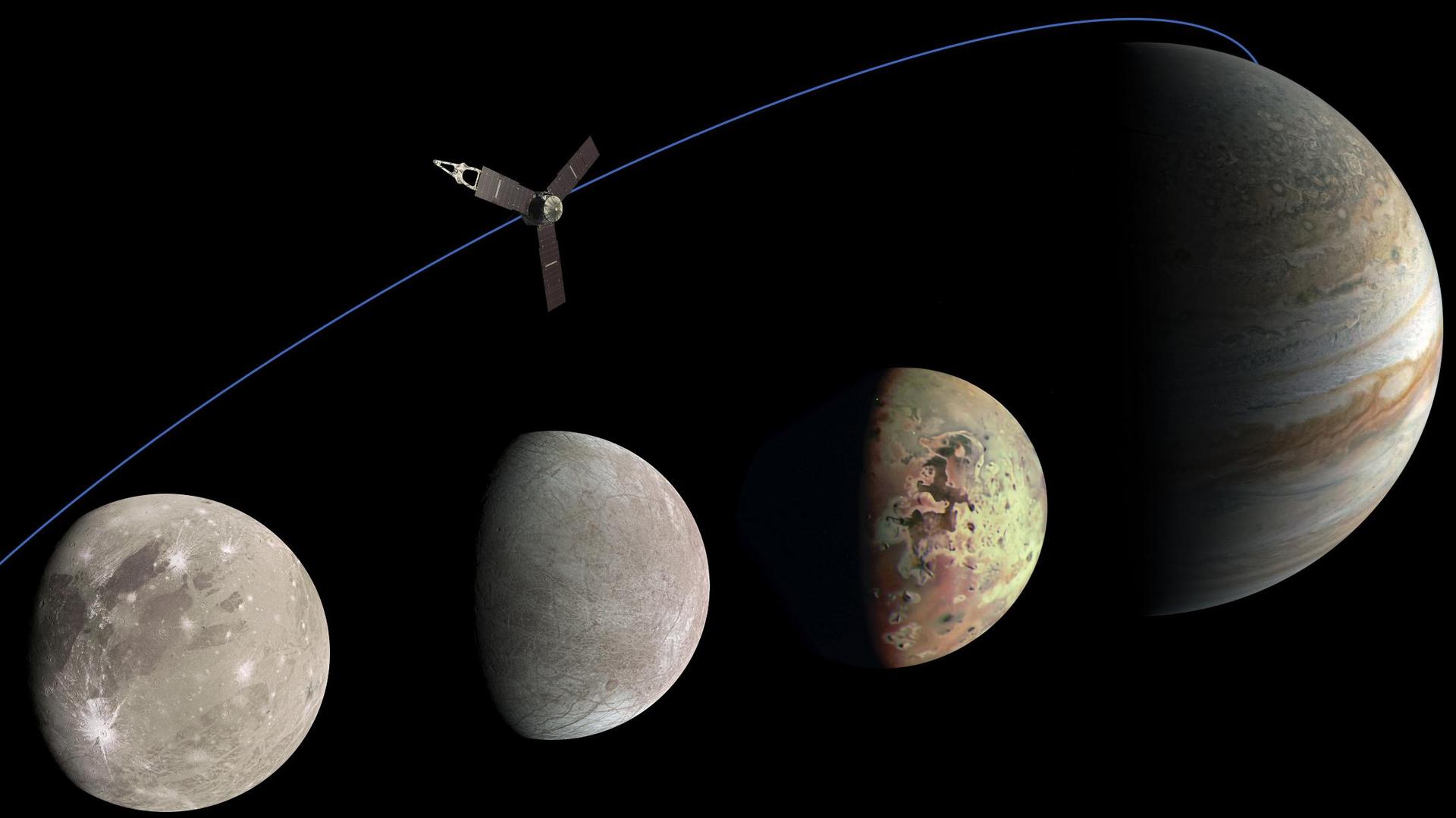
If you have spent any time observing Jupiter through a telescope, you have seen its four Galilean moons — Io, Europa, Ganymede, and Callisto — moving back and forth in their orbital dance. You have probably also seen a shadow transit: the black dot of a moon's shadow crossing Jupiter's cloud tops. These are common events, visible many times each year.

But there is a rarer class of event that most amateur astronomers never get the chance to see: mutual events, where one of Jupiter's moons passes directly in front of another (an occultation) or passes through the shadow of another (an eclipse). These events only become possible when Jupiter's orbital plane aligns edge-on with Earth's line of sight — a geometry that occurs roughly once every 20 years.

The next mutual event season begins in late 2026 and extends through 2027. This guide covers what mutual events are, why they are so rare, how to observe them, and the telescope equipment that gives you the best chance of witnessing this fascinating celestial phenomenon.

What Are Jupiter's Mutual Events?

Mutual events occur when two of Jupiter's moons interact with each other from our perspective. There are two types:

Mutual Occultations

In a mutual occultation, one moon passes directly in front of another, blocking it from view. The nearer moon appears to merge with and then cover the more distant moon. For a few seconds to a few minutes, one moon partially or completely disappears behind the other. The total duration depends on the relative sizes and orbital speeds of the two moons involved. An occultation of Europa by Io, for example, may last about 90 seconds, while an occultation of Callisto by Ganymede can last over four minutes because both moons are larger and move across each other at a slower relative speed.

Mutual Eclipses

In a mutual eclipse, one moon passes through the shadow cast by another. The eclipsed moon dims noticeably — sometimes fading by a full magnitude or more — as it crosses the shadow cone. Unlike an occultation, the two moons do not appear to touch; the eclipsed moon simply grows fainter as it enters the shadow and brightens again as it exits. These events are more subtle than occultations and require careful observation to detect.

Both types require Earth to be near the plane of Jupiter's equatorial system. When Jupiter's axial tilt (currently about 3.13°) is combined with Earth's orbital position, the plane of the Galilean moons tips edge-on to our line of sight approximately every 20 years. During this window, the moons line up in a way that allows them to pass in front of and shadow each other from our perspective.

Why 2026–2027? The Bidecadal Alignment

Jupiter's rotation axis is tilted by about 3.13° relative to its orbital plane. More importantly, the plane in which the four Galilean moons orbit is closely aligned with Jupiter's equator. As Earth and Jupiter move around the Sun, our viewing angle relative to the moon plane changes slowly over time.

The plane of the moons' orbits passes through Earth's line of sight twice during each 11.8-year Jovian orbit — once when Earth crosses the plane from one side, and again when we cross back. However, these crossings do not always produce mutual events because the Sun's position also matters: mutual eclipses require Jupiter to be roughly opposite the Sun (near opposition) so that the shadows of the moons are cast in our direction. The combination of Earth crossing the moon plane and Jupiter being near opposition creates the optimal mutual event season, which occurs roughly every 20 years.

The last good mutual event season was 2014–2015. The next one after 2026–2027 will be in the mid-2040s. This truly is a once-in-two-decades opportunity.

What Mutual Events Look Like Through a Telescope

Through a 6-inch or larger telescope at 150x–200x, a mutual occultation appears as follows: two moons that were clearly separated in the field begin to approach each other over several minutes. As they converge, the nearer moon's disk overlaps the farther one. For a brief period — typically 30 seconds to 3 minutes — the two bodies appear as a single elongated or irregularly shaped blob of light. Then the nearer moon continues its orbit, and the two separate again. The entire sequence from approach through separation spans roughly 10–20 minutes.

A mutual eclipse is more subtle. One moon gradually dims over the course of several minutes as it enters the shadow cone of another. The dimming can range from barely perceptible (0.2–0.3 magnitudes) to dramatic (1.5+ magnitudes, making the moon nearly invisible). Europa is the most frequently eclipsed moon because its bright icy surface reflects more light and its smaller size means it can be completely immersed in another moon's shadow. Timing the exact moment of minimum brightness and the duration of the event is a scientifically useful observation that amateurs can contribute to professional databases.

The most visually striking events are occultations involving Io and Europa, because both are relatively small and fast-moving, producing crisp, well-defined disappearances. Occultations involving Ganymede are slower and show more gradual merging because Ganymede is larger and its higher albedo makes the boundary between the two disks harder to distinguish.

What Telescope Do You Need?

Mutual events are telescope-mandatory — you cannot see them with binoculars. The moons are too small and too close together for typical binocular resolution. Here is what works at different aperture levels:

  • 4-inch (100mm) telescope: Marginal for mutual events. You can see the Galilean moons as separate disks at high power under good seeing, but distinguishing a mutual occultation from a near approach requires excellent optics and steady air. Large-aperture Maksutovs like the Skymax 127 at 200x can just resolve an occultation on a very steady night.
  • 6-inch (150mm) telescope: The practical minimum for confident visual observation of mutual events. At 150x–200x, the moons show as distinct disks, and the overlap during an occultation is clearly visible. A 6-inch SCT or Dobsonian at f/8 or slower provides the contrast needed for eclipse dimming detection.
  • 8-inch (200mm) telescope: Ideal for mutual event observing. At 200x–250x, the moons are large enough to show surface brightness variations, and the progression of an occultation — first contact, maximum overlap, separation — is clearly defined. An 8-inch Dobsonian or SCT is the recommended instrument for dedicated mutual event observers.
  • 10-inch and larger: These apertures show mutual events in detail, with individual moon features (surface markings on Ganymede, the polar caps on Io) potentially visible during the overlap phase. They also allow video recording of events for timing analysis.
Sky-Watcher Heritage 130P tabletop Dobsonian for observing Jupiter's moons
RECOMMENDED

Sky-Watcher Heritage 130P Dobsonian

The Heritage 130P is an excellent entry point for mutual event observing. Its 130mm (5.1-inch) aperture is slightly above the 4-inch minimum, and the parabolic mirror delivers sharp planetary images at 150x with a 6mm eyepiece. The tabletop Dobsonian format makes it easy to set up quickly on any flat surface. The short 650mm focal length (f/5) means you need a short-focal-length eyepiece (4–5mm) to reach 130x–160x, and the fast f-ratio is less forgiving of eyepiece quality at the edges. Despite these constraints, the Heritage 130P is capable of showing the brighter mutual occultations and is the most affordable telescope that can do so reliably.

Celestron NexStar 6SE Schmidt-Cassegrain telescope for Jupiter moon observation
BEST SCT

Celestron NexStar 6SE

The NexStar 6SE is the natural choice for observers who want a dedicated planetary telescope with GoTo tracking for Jupiter. The 150mm aperture exceeds the recommended minimum, and the 1500mm focal length (f/10) provides high native magnification without heavy Barlow dependence. At 200x with a 7.5mm eyepiece, the Galilean moons appear as crisp disks with distinct size and brightness differences. The GoTo mount automatically tracks Jupiter across the sky, which is essential for extended observation of 10–20 minute mutual event sequences. The 6SE's longer focal ratio is also more forgiving on eyepiece quality than fast Dobsonians.

Tips for Observing Mutual Events

  • Use an event prediction tool. Mutual events are predictable years in advance. Use the Institut de Mecanique Celeste et de Calcul des Ephemerides (IMCCE) mutual event predictor or the Occult 4 software to generate event timetables for your location. Each event lasts only minutes, so precise timing is essential.
  • Observe near Jupiter's opposition. Jupiter is at its brightest and highest in the sky near opposition, which provides the best viewing conditions. Jupiter reaches opposition in the evening sky in 2026 and 2027.
  • High magnification is required. Use at least 150x–200x magnification. The moons appear as separate disks at this power, making mutual events discernible from simple near approaches. A 2× Barlow with a 10mm eyepiece on a 1200mm focal length Dobsonian gives 240× — excellent for event observing.
  • Wait for steady seeing. Mutual events push your telescope to its resolution limit, so steady atmospheric seeing is critical. Observe when Jupiter is high in the sky (above 40° altitude) and avoid nights with visible atmospheric turbulence.
  • Take notes and timings. Record the time of first contact (when the two disks begin to overlap), maximum overlap, and separation. Your timing data has scientific value — professional astronomers use amateur mutual event timings to refine the orbital models of the Galilean moons.
  • Consider video recording. A simple planetary camera (or even a smartphone held to the eyepiece) recording at 30 fps can capture the full event sequence. Stacking the best frames from video helps reveal the moment of occultation more clearly than visual observation alone.

Why Mutual Events Matter to Science

Mutual events are not just a visual spectacle — they are valuable scientific opportunities. Precise timing of mutual occultations and eclipses allows astronomers to measure the positions of the Galilean moons with extraordinary accuracy, down to a few tens of kilometres. These measurements help refine the orbital models of Io, Europa, Ganymede, and Callisto, which in turn improves our understanding of tidal heating, orbital resonances, and the internal structures of these worlds.

The orbital resonances among the Galilean moons — Io: 1.769 days, Europa: 3.551 days (exactly 2:1 with Io), Ganymede: 7.155 days (exactly 2:1 with Europa) — produce subtle orbital perturbations that accumulate over time. Mutual event timing is one of the best ways to measure these perturbations from Earth. The last mutual event season in 2014–2015 produced thousands of amateur timing measurements that were used in peer-reviewed studies of the Jovian system.

For the 2026–2027 season, the European Space Agency's JUICE mission (en route to Jupiter) and NASA's Europa Clipper will both be on their way to the Jovian system. Ground-based observations from amateur astronomers during the mutual event season will complement these missions by providing continuous Earth-based monitoring that the spacecraft cannot provide during their cruise phases.

Mutual Events vs. Shadow Transits: What Is the Difference?

Every observer of Jupiter has seen shadow transits — the black dot of a moon's shadow moving across Jupiter's cloud tops. These are common, visible many times per month. Mutual events are fundamentally different:

Feature Shadow Transit Mutual Event
What happens Moon casts shadow on Jupiter's clouds Moon eclipses or occults another moon
Frequency Multiple times per week Every ~20 years
Visibility Easy — dark spot on bright planet Challenging — two small disks overlapping
Duration 1–3 hours 30 seconds–5 minutes
Telescope needed Any telescope 60mm+ 150mm+ recommended
Scientific value Visual interest Orbital refinement data

For a detailed guide to standard Jupiter moon observing — including identifying which moon is which, tracking their movements, and observing shadow transits — see our complete Jupiter moon observing guide.

Frequently Asked Questions

What are Jupiter's mutual events?

Mutual events occur when Jupiter's Galilean moons pass in front of each other (occultation) or through each other's shadows (eclipse). These events only become visible from Earth every 20 years when the moon plane aligns edge-on with our line of sight.

How often do Jupiter mutual events occur?

The optimal mutual event season occurs approximately every 20 years. The last good season was 2014–2015. The next one after 2026–2027 will be in the mid-2040s.

What telescope do I need to see Jupiter moon mutual events?

A 6-inch or larger telescope at 150x to 200x magnification is recommended for confident visual observation. A 4-inch telescope can show the brightest events under perfect conditions. Binoculars cannot resolve the moons as separate disks for mutual event observation.

What is the difference between a mutual occultation and a mutual eclipse?

In a mutual occultation, one moon passes directly in front of another, physically blocking it from view. In a mutual eclipse, one moon passes through the shadow of another, causing it to dim without disappearing.

Can I photograph Jupiter mutual events?

Yes. A planetary camera (or smartphone held to the eyepiece) recording video at 30 fps can capture the event sequence. Stacking the best frames improves clarity. For precise timing measurements, video recording with a time-stamp is the recommended method.

How do I find mutual event timings for my location?

Use the IMCCE mutual event predictor (free online) or Occult 4 software to generate custom event timetables for your specific observing location. Events are predictable years in advance based on the known orbital mechanics of the Galilean moons.

A Rare Window into the Jovian System

The 2026–2027 Jupiter mutual event season is the finest opportunity most amateur astronomers will have in their lifetimes to witness the Galilean moons interacting with each other in ways that are normally hidden from our view. It is a reminder that the Solar System is not static — the moons of Jupiter are active, dynamic worlds whose positions and relationships change measurably within a single observing session.

Whether you are timing events for scientific contribution or simply watching the rare sight of two worlds passing before each other, the 2026–2027 season offers something that will not come again until the 2040s. The right telescope, clear skies, and a few minutes of precise timing are all it takes to participate.

For more information on observing Jupiter and its moons, see our dedicated Jupiter moon observing guide, and our best telescope for Jupiter guide for equipment recommendations.

Related Guides

Elena Reyes — Senior Science Editor

Elena Reyes

Senior Science Editor

Covers NASA missions, space science discoveries, and astronomical events for Telescope Advisor. Translates complex astrophysical research into practical insights for backyard observers. Based in the San Francisco Bay Area.

Content reviewed by our editorial team. Research and drafting assisted by AI to ensure unbiased, data-driven analysis. Learn more about our editorial process.