Night Sky in February 2027: Mars Opposition & Winter Highlights
Telescope Advisor Logo Telescope Advisor
Orion constellation rising over a winter landscape — February nights showcase the year's best winter stars

Monthly Sky Guide · February 2027

Night Sky in February 2027: Mars Opposition, Jupiter at Its Best, and Winter's Last Stand

February 2027 delivers the planetary event of the year: Mars reaches opposition on February 19, appearing at its brightest and largest until 2035. Jupiter dominates the evening sky, Saturn returns to the pre-dawn, and winter's finest constellations make their last evening appearance.

Top eventMars opposition Feb 19
Planet highlightJupiter evening, Mars all night
ConstellationsOrion, Taurus, Gemini, Auriga
Mars magnitude-1.2, disk 14.6"
By Telescope Advisor Editorial Team Published: Updated: Reviewed & approved by Juhi Sahni, Senior Editor Editorial Standards

February 2027 is the month amateur astronomers have been waiting for. Mars reaches opposition on February 19 — its closest approach to Earth until 2035 — appearing at magnitude -1.2 with a 14.6-arcsecond disk that reveals the polar ice cap and dark albedo features in any 4-inch or larger telescope. But Mars is only the headliner. Jupiter remains brilliant in the evening sky, Saturn returns to the pre-dawn, and the winter Milky Way arcs overhead with the year's best deep-sky targets.

This is also the last month for comfortable evening viewing of Orion, Taurus, and Gemini before they sink into the western twilight by March. February is a month of transition: winter constellations are at their peak early in the evening, but by month's end spring galaxies begin to appear in the east after midnight.

This guide covers the key events, planetary positions, and deep-sky highlights for February 2027, with recommended equipment for each target.

Top 5 Sky Events in February 2027

  1. Mars at opposition — February 19. Mars rises at sunset, visible all night at magnitude -1.2. Disk reaches 14.6 arcseconds — large enough to show the polar cap and Syrtis Major in a 6-inch telescope at 150×. This is the best Mars opposition until 2035.
  2. Jupiter well placed in Gemini. Jupiter is visible from dusk until after midnight, crossing the meridian around 9 PM. At magnitude -2.3 with a 42-arcsecond disk, it is the dominant evening planet.
  3. Comet Encke final weeks. Encke fades below magnitude 7 by early February. This is the last good window for binocular viewing before it becomes a telescopic object.
  4. Saturn returns to the pre-dawn sky. Saturn rises around 5 AM by mid-February, becoming visible low in the southeast before sunrise. Its rings tilt approximately 10° — noticeably more open than in 2026.
  5. Winter Milky Way and deep-sky treasures. February evenings offer some of the year's finest deep-sky viewing: the Orion Nebula, Pleiades, Double Cluster, and Auriga's three open clusters are all well placed.

Planet Visibility in February 2027

Mars — Opposition on February 19

Mars reaches opposition on February 19, 2027, rising at sunset and setting at sunrise. At magnitude -1.2, it outshines every star in the night sky and is unmistakable in the constellation Leo. Through a telescope, the 14.6-arcsecond disk shows the brilliant white south polar ice cap and the dark V-shaped feature Syrtis Major, along with the circular Hellas impact basin. The key to good Mars observing is patience: the planet rotates every 24.6 hours, so the features visible change from night to night. A 6-inch telescope at 180×–250× under steady seeing reveals the most detail. For a complete guide, see our Mars opposition guide.

Jupiter — Evening Dominance

Jupiter is visible from sunset until after midnight, well placed in Gemini. At magnitude -2.3 and 42 arcseconds across, it is the brightest point of light in the evening sky after the Moon. The four Galilean moons perform their nightly dance — shadow transits are frequent, with Io and Europa casting small black shadows onto the Jovian cloud tops. A 6-inch telescope at 150× reveals the North and South Equatorial Belts and the Great Red Spot on favourable rotations. The Moon passes near Jupiter on February 14, making a fine wide-field pairing for binoculars or a finder scope.

Saturn — Pre-Dawn Return

After several months lost in the solar glare, Saturn returns to the pre-dawn sky in February. It rises around 5 AM and is visible low in the southeast before sunrise. At magnitude 1.0, it is faint but unmistakable with its iconic ring system. The rings tilt approximately 10° toward Earth — noticeably more open than the 7.5° tilt of early 2026, and the improvement is visible even in a 4-inch telescope at 100×. The Cassini Division is visible under steady seeing. Saturn will continue to improve through its own opposition season later in 2027.

Venus — Morning Star Transition

Venus transitions to the morning sky in February, visible low in the southeast about 30 minutes before sunrise. It is brilliant at magnitude -4.3 and shows a thick gibbous phase through a telescope — approximately 70–80% illuminated. The view is challenging because of the low altitude, but Venus is unmistakable as the brightest object in the dawn sky. By late March it will have climbed higher and thinned into a more striking crescent.

Comet Encke — Last Binocular Window

Comet 2P/Encke is fading through February, dropping from magnitude 6.5 to 7.5 over the month. Early February from a dark site is the last realistic window for 10×50 binocular detection. By late February, Encke requires a 6-inch telescope. See our Comet Encke guide for finder charts and timing.

Recommended Telescopes for February 2027

February 2027 is a month where both planetary and deep-sky observing are in full swing. Here are our telescope recommendations for getting the most out of the February night sky.

Sky-Watcher Heritage 130P flexible tube Dobsonian — ideal portable telescope for Mars opposition
BEST PORTABLE DOBSONIAN

Sky-Watcher Heritage 130P (5-inch Dobsonian)

The Heritage 130P is a 130mm (5-inch) tabletop Dobsonian that delivers excellent planetary views in a compact, affordable package. At 150×, Mars shows its polar cap and Syrtis Major clearly. Jupiter's belts and GRS are well defined. The collapsible tube design makes it easy to transport to dark sites for deep-sky viewing of the Orion Nebula and winter clusters.

Aperture: 130mmFocal: 650mmMount: Tabletop Dobsonian
Celestron NexStar 6SE Schmidt-Cassegrain — premium Mars opposition telescope with GoTo tracking
BEST PLANETARY TELESCOPE

Celestron NexStar 6SE (6-inch SCT with GoTo)

The NexStar 6SE is the gold standard for planetary observing. Its 150mm aperture at 180×–250× reveals Mars' polar cap, Syrtis Major, and seasonal cloud features. The GoTo mount automatically tracks Mars across the sky, keeping the planet centred at high magnification for extended study. Jupiter's Galilean moons and Saturn's rings are also spectacular. The 6SE's database of 40,000 objects makes it ideal for finding deep-sky targets during February's dark-sky windows.

Aperture: 150mmFocal: 1500mmMount: Computerised Alt-Az
Celestron SkyMaster 15x70 binoculars — wide-field winter Milky Way and Comet Encke binoculars
BEST BINOCULARS

Celestron SkyMaster 15x70 Binoculars

A quality pair of 15×70 binoculars is essential for February's wide-field treasures. They sweep the winter Milky Way to reveal the Orion Nebula as a distinct fuzzy patch, resolve dozens of stars in the Pleiades, and frame Auriga's three open clusters in a single field. They are also the best tool for catching Comet Encke in early February before it fades beyond binocular range. The 70mm objective gathers enough light to show M31, the Double Cluster, and dozens of NGC objects from a dark site.

Winter Constellations and Deep-Sky Highlights

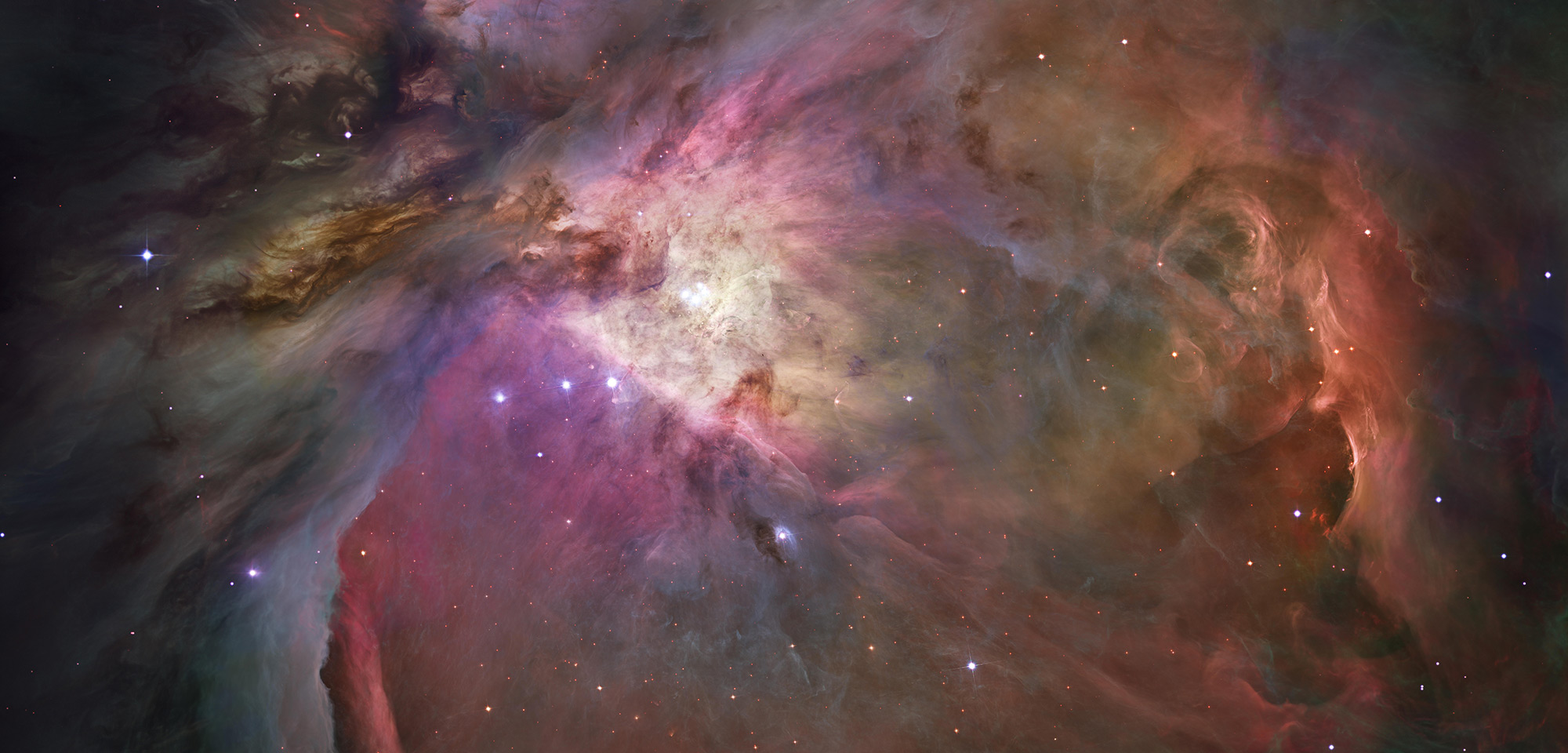
February evenings offer the last comfortable views of the winter Milky Way before spring constellations take over. Orion is high in the south at nightfall, with the Orion Nebula (M42) spectacular in any telescope. Taurus sits overhead with the Pleiades (M45) and Hyades clusters. Gemini is well placed in the east with the open cluster M35. Auriga offers three bright open clusters — M36, M37, and M38 — all visible in a single binocular field.

For deep-sky observers with a 6-inch or larger telescope, February is also the month when the first spring galaxies rise in the east after midnight: M81 and M82 in Ursa Major, and the Leo Triplet (M65, M66, NGC 3628) become accessible by 1–2 AM. A 2-inch wide-angle eyepiece at 30×–50× is ideal for sweeping the winter Milky Way.

Deep-Sky Target Table

TargetTypeConstellationMagnitudeBest ViewingRecommended Scope
M42 (Orion Nebula)Emission nebulaOrion4.0EveningAny telescope
M45 (Pleiades)Open clusterTaurus1.6EveningBinoculars or wide-field
M35Open clusterGemini5.1Evening4-inch+
M36/M37/M38Open clustersAuriga6.0/5.6/6.8EveningBinoculars
Double ClusterOpen cluster pairPerseus3.7/3.8EveningBinoculars
M81/M82GalaxiesUrsa Major6.9/8.4Late night6-inch+
M65/M66Galaxies (Leo Triplet)Leo9.3/8.9After midnight8-inch+

Moon Phases and Dark-Sky Windows

February 2027 offers two excellent New Moon weekends for deep-sky observing — one at the start of the month and one at the end. This is a rare treat that gives you four weeks of dark-sky opportunities spread across the month.

PhaseDateBest For
New MoonFebruary 1Deep-sky: Orion Nebula, winter Milky Way, Comet Encke
First QuarterFebruary 10Lunar terminator observing, Mars
Full MoonFebruary 17Bright planetary observing (Mars at opposition!)
Last QuarterFebruary 24Pre-dawn planets, galaxies before sunrise
New MoonFebruary 27Deep-sky: spring galaxies, late winter targets

Plan your deep-sky sessions around the two New Moon weekends (Feb 1 and Feb 27). The first weekend is ideal for winter Milky Way targets like the Orion Nebula, Pleiades, and Auriga clusters. The second weekend, while the winter constellations are still well placed, also marks the rising of spring galaxies in the east after midnight.

Essential Accessories for February Observing

Beyond the telescope itself, a few key accessories make the difference between a frustrating February night and a productive one. Cold temperatures, dew, and the need for high magnification during Mars opposition all demand specific equipment choices.

Celestron Omni 2x Barlow lens — doubles magnification for planetary observing
RECOMMENDED

Celestron Omni 2x Barlow Lens

A 2x Barlow lens doubles the magnification of any eyepiece, effectively giving you two eyepieces for the price of one. For Mars opposition, a 10mm eyepiece with a 2x Barlow produces 150× with a 6-inch scope — ideal for showing the polar cap and Syrtis Major. The Celestron Omni is a fully multi-coated, 3-element design that preserves image quality at high power.

🔦

ESSENTIAL

Red LED Astronomy Flashlight

A red flashlight preserves your night vision while allowing you to read star charts, adjust eyepieces, and set up your telescope in the dark. White light ruins dark adaptation for 20–30 minutes. A dimmable red LED flashlight with a magnetic base is ideal — you can attach it to your telescope mount for hands-free operation. Many models also include a Moon mode that is even dimmer for use after extended deep-sky observation.

🌡

RECOMMENDED

12V Dew Heater System

Dew formation is the single biggest annoyance in cold-weather observing. A dew heater band wrapped around the telescope's objective or corrector plate keeps the glass above the dew point, preventing the fogging that ends sessions prematurely. The SCT dew heater from Celestron or a universal dew strap from Thousand Oaks are proven choices. Paired with a rechargeable 12V power tank, a dew heater system adds minimal weight and transforms your cold-weather observing experience.

Binocular Highlights for February

A good pair of binoculars is the most underrated observing tool for February's night sky. The winter Milky Way is packed with bright open clusters and nebulae that are perfectly framed in 10×50 or 15×70 binoculars. Unlike a telescope, binoculars require no setup time — you can step outside and start observing immediately.

Top binocular targets for February:

  • The Pleiades (M45) — a stunning sight in 10×50 binoculars, with dozens of stars resolved across a 1° field.
  • The Orion Nebula (M42) — visible as a distinct fuzzy patch below Orion's Belt, with the faint glow of the Running Man Nebula (M43) visible in 15×70 binoculars.
  • The Double Cluster (NGC 869/884) — two open clusters side by side in Perseus, a favourite target that fits perfectly in a binocular field.
  • Comet Encke — early February only; sweep the evening sky and look for a faint, diffuse patch moving against the background stars.
  • Auriga's clusters (M36, M37, M38) — all three visible in a single 7° field of 10×50 binoculars.
  • Beehive Cluster (M44) — rising in the east after midnight, this large open cluster in Cancer is a fine binocular target.

Observing Tips for February 2027

February is one of the coldest months in the Northern Hemisphere, and cold weather brings challenges for the observer. Allow 30–45 minutes for your telescope to reach thermal equilibrium — a warm telescope stored indoors will produce blurry images until the optics cool to ambient temperature. This is particularly important for Mars opposition observing, where steady air at high magnification is essential.

Dress in multiple layers, including a thermal base layer, fleece mid-layer, and a windproof outer shell. A warm hat and insulated boots make the difference between a 15-minute session and a 3-hour session. Hand warmers are inexpensive and let you operate eyepiece controls and focus knobs with bare fingers.

Dew is a significant problem on cold February nights. A dew shield for your telescope's objective is strongly recommended, and a 12V dew heater is ideal for longer sessions. Keep eyepieces in a sealed ziplock bag or warm pocket between uses to prevent fogging. For more tips on cold-weather observing, see our winter astronomy guide.

Sky Calendar — February 2027

DateEventDetails
Feb 1New MoonDark skies all night — best deep-sky weekend of the month
Feb 5Mercury at greatest evening elongationMercury visible low in west after sunset, ~18° from Sun
Feb 7Moon near UranusOccultation visible from parts of North America
Feb 10First Quarter MoonBest for lunar observing along the terminator
Feb 14Moon near JupiterConjunction ~3° separation, fine wide-field pairing
Feb 17Full MoonMars at opposition — bright moon doesn't affect planetary viewing
Feb 19Mars closest approach~0.62 AU from Earth — best Mars view until 2035
Feb 24Last Quarter MoonPre-dawn planets and galaxies
Feb 27New MoonDark skies — second deep-sky weekend

Frequently Asked Questions

What is the best telescope for viewing Mars at opposition?

A 6-inch or larger telescope at 150×–250× magnification is ideal for Mars opposition observing. The Celestron NexStar 6SE or Sky-Watcher Heritage 130P are excellent choices. A 4-inch telescope shows the polar cap and Syrtis Major, but 6-inch+ aperture reveals subtle surface detail.

When is the best time to view Jupiter in February 2027?

Jupiter is best viewed from dusk until around midnight. It crosses the meridian around 9 PM, which is when it is highest in the sky and the atmosphere is most stable. The Moon passes near Jupiter on February 14, making a nice pairing.

Can I see Comet Encke with binoculars in February?

Early February is the last realistic window for 10×50 binocular detection of Comet Encke. It will be around magnitude 6.5 in early February, fading to 7.5+ by month's end. A dark site is essential. By late February, a 6-inch telescope is required.

What deep-sky objects are best in February?

February is the peak of the winter Milky Way. The Orion Nebula (M42), Pleiades (M45), Double Cluster, and Auriga's three open clusters (M36, M37, M38) are the highlights. Late February also marks the return of spring galaxies — M81, M82, and the Leo Triplet.

Will the full Moon affect Mars opposition viewing?

The full Moon on February 17 falls two days before Mars opposition on February 19. While the bright moon washes out deep-sky objects, it has minimal effect on planetary observing — Mars itself is bright enough at magnitude -1.2 that moonlight does not degrade the view.

Final Tip: Don't Miss Mars at Opposition

Mars opposition February 19, 2027 is the single most important planetary event of the year and the best Mars opposition until 2035. Even a 4-inch telescope shows the polar cap and major dark markings. A 6-inch or larger telescope at high magnification reveals subtle surface detail that changes night to night as the planet rotates. Mark your calendar and make sure your telescope is set up and thermally equilibrated well before the evening of the 19th.

February is also the last month for comfortable winter Milky Way observing. Take advantage of the two New Moon weekends (February 1 and February 27) for deep-sky sessions. By March, Orion and Taurus are sinking into the western evening sky, and the galaxy season begins in earnest. If you miss the winter Milky Way now, you will have to wait until late autumn for it to return to the evening sky.

Related Guides

Elena Reyes — Senior Science Editor

Elena Reyes

Senior Science Editor

Covers NASA missions, space science discoveries, and astronomical events for Telescope Advisor. Translates complex astrophysical research into practical insights for backyard observers. Based in the San Francisco Bay Area.

Content reviewed by our editorial team. Research and drafting assisted by AI to ensure unbiased, data-driven analysis. Learn more about our editorial process.