Night Sky in March 2027: Galaxy Season Begins & Spring
Telescope Advisor Logo Telescope Advisor
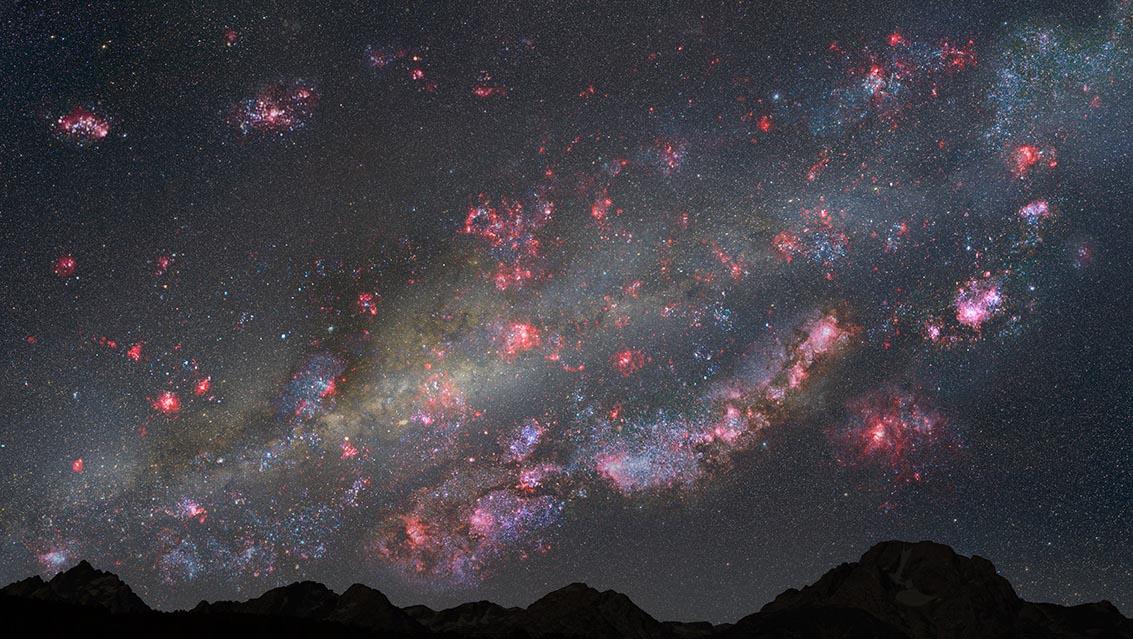
Milky Way band arching across the night sky — March marks the transition from winter Milky Way to galaxy season

Monthly Sky Guide · March 2027

Night Sky in March 2027: Galaxy Season Opens, Mars Fades and Spring Returns

March 2027 marks the transition from winter deep-sky to spring galaxy season. The Virgo Cluster, Leo Triplet, and Markarian's Chain become accessible, Mars begins to fade after opposition, Jupiter lingers in the evening, and the spring equinox brings longer nights.

Top eventGalaxy season begins
Planet highlightJupiter evening, Saturn pre-dawn
EquinoxMarch 20
Mars fadingMag -0.2, disk shrinking
By Telescope Advisor Editorial Team Published: Updated: Reviewed & approved by Juhi Sahni, Senior Editor Editorial Standards

March is a month of transition in the night sky. The winter constellations — Orion, Taurus, Gemini — are still visible in the early evening but sinking toward the western horizon. In their place, the spring constellations Leo, Virgo, and Ursa Major rise in the east, bringing with them the galaxy season: the richest and most rewarding period for deep-sky observers with 6-inch and larger telescopes.

Mars, fresh from its February 19 opposition, remains visible most of the night but fades noticeably as Earth pulls ahead in our faster orbit. Jupiter dominates the early evening. Saturn becomes a more comfortable pre-dawn target as it rises earlier each morning. And on March 20, the spring equinox marks the astronomical beginning of spring in the Northern Hemisphere.

This guide covers the key events, planetary positions, and deep-sky highlights for March 2027.

Top 5 Sky Events in March 2027

  1. Galaxy season begins. The Virgo Cluster of galaxies rises by mid-evening. Over 1,300 galaxies within reach of amateur telescopes, with M84, M86, M87, and the Markarian's Chain as highlights.
  2. Spring equinox — March 20. Equal day and night. Astronomical spring begins. Nights are still long enough for extended observing sessions.
  3. Mars fading post-opposition. Mars drops from magnitude -1.2 to -0.2 during March. The disk shrinks from 14" to 10". Good detail still visible early in the month with 6"+ telescopes.
  4. Jupiter in early evening. Jupiter sets by 11 PM by late March. Still magnificent at magnitude -2.1, but the evening window is shrinking.
  5. Leo Triplet well placed. The galaxies M65, M66, and NGC 3628 in Leo are perfectly positioned for evening observing — some of the finest galaxy targets for small and medium telescopes.

Planet Visibility in March 2027

Mars — Still Visible, Still Detailed

Mars is still a worthwhile target in early March, though its disk shrinks from 14 to 10 arcseconds over the month and its magnitude fades from -0.8 to -0.2. Through a 6-inch telescope at 180×, the polar cap and Syrtis Major remain visible through the first week of March. By late March, the disk is noticeably smaller and only the brightest markings are detectable. Mars sets around 3–4 AM by month's end. If you missed the opposition in February, early March is your second-best chance this decade to see Mars at a decent size.

Jupiter — Evening Window Shrinking

Jupiter sets earlier each night, by around 10–11 PM by late March. At magnitude -2.1 and 40 arcseconds across, it is still the brightest point in the evening sky after the Moon. A 6-inch telescope at 150× shows the equatorial belts and Great Red Spot on favourable rotations. Jupiter is heading toward solar conjunction in mid-2027 and will disappear into the evening twilight by May. March is the last month for comfortable evening Jupiter observing before it becomes a twilight target.

Saturn — Improving Morning View

Saturn rises around 4 AM in March, visible in the southeast before dawn. Its ring tilt has increased to about 10.5°, providing an increasingly open view of the ring system. A 4-inch telescope at 120× shows the Cassini Division clearly. Saturn will continue to improve through its October 2027 opposition, making March the start of the 2027 Saturn observing season.

Venus — Bright Morning Star

Venus is brilliant in the pre-dawn sky at magnitude -4.2, but low altitude makes telescopic views challenging. Through a telescope, Venus shows a thickening crescent as it moves between Earth and the Sun. The thin crescent in early March is a striking sight in any telescope at 60×. On March 25, Venus reaches greatest brilliance at magnitude -4.5 — one of the most striking sights of the dawn sky all year.

Galaxy Season: The Year's Best Deep-Sky Opportunity

March marks the beginning of galaxy season — the period from March through May when Earth's night side faces away from the plane of the Milky Way, and we look out into the intergalactic void where thousands of external galaxies are visible. The Virgo Cluster of galaxies, roughly 54 million light-years away, contains over 1,300 galaxies, of which several dozen are visible in 6-inch and larger telescopes from suburban skies.

Top galaxy targets for March: The Leo Triplet (M65, M66, NGC 3628) is the easiest and most rewarding galaxy target for small telescopes. The three galaxies fit in a single low-power field and show distinct shapes: M65 is an elongated spiral, M66 shows more defined spiral structure, and NGC 3628 is a striking edge-on spindle with a dark dust lane. The Virgo Cluster's brightest members — M84, M86, M87 — rise later in the evening. M87's relativistic jet is a challenging target visible in 10-inch and larger scopes under dark skies. Markarian's Chain, a sweeping arc of galaxies stretching between M84 and M86, is one of the finest deep-sky sights of the year — a region where you can see a dozen galaxies in a single 1° eyepiece field.

For detailed guides to these objects, see our Leo Triplet guide and Messier catalog guide.

Deep-Sky Target Table

TargetTypeConstellationMagnitudeSizeBest Scope
M65Spiral galaxyLeo9.38.7'×2.4'6-inch+
M66Spiral galaxyLeo8.99.1'×4.2'6-inch+
NGC 3628Edge-on spiralLeo9.515'×3'8-inch+
M87Elliptical galaxyVirgo8.68.3'×6.6'6-inch+
M84/M86Elliptical pairVirgo9.1/8.96'×6'6-inch+
M81/M82Galaxy pairUrsa Major6.9/8.426'×14'/11'×4'4-inch+
M51 (Whirlpool)Spiral galaxyCanes Venatici8.411'×7'6-inch+
M3Globular clusterCanes Venatici6.216'Any telescope

Recommended Telescopes for Galaxy Season

Galaxy observing demands aperture — the larger your telescope, the more galaxies you will see and the more detail they will reveal. Here are our top recommendations for March galaxy hunting.

Sky-Watcher Classic 200P Dobsonian — 8-inch aperture ideal for galaxy hunting
BEST GALAXY HUNTER

Sky-Watcher Classic 200P (8-inch Dobsonian)

An 8-inch Dobsonian is the gold standard for galaxy observing. At 40× with a 30mm eyepiece, the Leo Triplet fits in a single field, showing M65 as a bright elongated spindle, M66 with its brighter core, and NGC 3628 as a thin edge-on slash. Push to 120× for the Virgo Cluster and M87's bright core. The Classic 200P offers the perfect balance of aperture (collects 64% more light than a 6-inch), portability (the tube weighs under 12 kg), and value (under $500). For dedicated galaxy hunters, this is the telescope that opens up the universe.

Aperture: 203mmFocal: 1200mmMount: Dobsonian base
Sky-Watcher Heritage 130P — compact 5-inch tabletop Dobsonian for portable galaxy viewing
BEST PORTABLE OPTION

Sky-Watcher Heritage 130P (5-inch Dobsonian)

If the 8-inch Dobsonian is too large for your storage or transport situation, the Heritage 130P is a capable alternative for galaxy observing. At 40×, it shows M81 and M82 in Ursa Major as a bright pair, and the Leo Triplet is detectable under dark skies. The collapsible tube makes it easy to take to a dark site, and the tabletop base is stable enough for the high magnifications needed to spot galaxy cores. While 5-inch aperture cannot rival 8-inch for faint galaxy detail, it is a very capable entry point into galaxy season that won't break the bank or your back.

Essential Accessories for Galaxy Hunting

The right accessories dramatically improve your galaxy observing experience. Here is what we recommend for March deep-sky sessions.

Explore Scientific 82° wide-angle eyepiece — essential for galaxy sweeping
RECOMMENDED

Wide-Field 2-inch Eyepiece (25–32mm)

A 2-inch wide-field eyepiece at 30–50× is the single most important accessory for galaxy observing. It gives you a 1.5° or wider true field, enough to frame the Leo Triplet, Markarian's Chain, or the M81/M82 pair in a single view. An Explore Scientific 82° 30mm or similar 2-inch eyepiece is a lifetime investment that transforms any Dobsonian into a galaxy-sweeping machine.

🔮

RECOMMENDED

Star Atlas or Sky-Safari App

Navigating the Virgo Cluster requires a good star atlas or planetarium app. The Virgo Cluster is dense — dozens of galaxies packed into a few square degrees — and hopping between them is much easier with a detailed chart. SkySafari 7 Pro or a printed Pocket Sky Atlas are the tools of choice. For beginners, a planisphere and a Messier list printed on a single page is often enough to get started.

Spring Constellations and Their Treasures

Leo dominates the southern sky in March evenings, with its bright star Regulus marking the heart of the lion. The Sickle asterism (Regulus and six fainter stars forming a backward question mark) is the lion's mane. The Leo Triplet sits about 1° below the triangle formed by Theta Leonis and Iota Leonis.

Ursa Major is high overhead, with the famous galaxy pair M81 (Bode's Galaxy) and M82 (Cigar Galaxy) easily found near the Big Dipper's bowl. These are among the brightest galaxies in the sky — visible even in 10×50 binoculars from a dark site. Canes Venatici offers the beautiful Whirlpool Galaxy (M51) and the globular cluster M3. Virgo rises in the east by mid-evening, bringing the richest galaxy fields for late-night observing.

For observers with GoTo mounts, load up the Messier catalog and spend the evening hopping between the Virgo Cluster galaxies. A well-prepared observing list of 20–30 targets will fill a productive March evening.

Moon Phases and Dark-Sky Windows

PhaseDateBest For
New MoonMarch 1Dark skies all night — prime galaxy observing weekend
First QuarterMarch 9Lunar terminator, planetary observing
Full MoonMarch 16Bright planets, bright galaxies (M81, M82)
Last QuarterMarch 23Morning planets, pre-dawn galaxies
New MoonMarch 30Second dark-sky window — deep galaxy fields

March offers two New Moon weekends (March 1 and March 30) — both ideal for galaxy hunting. The first weekend catches the Virgo Cluster rising by midnight; the second weekend finds it already well placed by evening.

Sky Calendar — March 2027

DateEventDetails
Mar 1New MoonDark skies — prime galaxy observing weekend
Mar 3Mars near MoonConjunction ~4° separation, evening sky
Mar 7First Quarter MoonBest for lunar surface terminator observing
Mar 14Moon near JupiterEvening conjunction, fine wide-field pairing
Mar 20Spring equinoxEqual day and night — astronomical spring begins
Mar 25Venus at greatest brillianceMorning sky, magnitude -4.5 — stunning crescent
Mar 30New MoonSecond dark-sky window — excellent for galaxy hunting

Binocular Highlights for March

While a telescope is essential for serious galaxy hunting, binoculars are the best tool for getting oriented in the spring sky and enjoying the season's brightest sights. A pair of 10×50 binoculars from a dark site reveals more than you might expect.

  • M81 and M82 in Ursa Major — these two galaxies appear as a bright pair of faint patches about 1° apart, visible even in 10×50 binoculars from a reasonably dark site. They are the brightest galaxy pair in the northern sky.
  • The Leo Triplet — detectable as three faint glows in 15×70 binoculars under dark skies. A challenging but rewarding target.
  • M44 (Beehive Cluster) in Cancer — large open cluster that fits perfectly in a binocular field, resolving into dozens of stars in 10×50s.
  • Comet Encke — by early March, Encke has faded to magnitude 8+ and is no longer a binocular target, but it is worth checking with a telescope if you have not seen it yet.
  • Open clusters in the winter Milky Way — the last evening window for M35 (Gemini), M36/M37/M38 (Auriga), and the Double Cluster (Perseus) before they sink into the western twilight.

Galaxy Observing by Telescope Size

Different telescope apertures give different views of the same galaxies. Here is what you can expect at each aperture level during March 2027.

4-inch (100mm) telescope: M81 and M82 show as bright patches with brighter cores. The Leo Triplet (M65, M66, NGC 3628) is detectable as faint elongated patches under dark skies. M87 appears as a small round glow. You will see 5–10 galaxies on a good night.

6-inch (150mm) telescope: The Leo Triplet shows distinct shapes — M65 elongated, M66 slightly brighter, NGC 3628 as a thin edge-on. M81 and M82 are striking. The Virgo Cluster offers 15–20 galaxies, including M84, M86, M87, M49, M58, M59, M60, and M100. M51 shows spiral structure hints under good conditions.

8-inch (200mm) telescope: The Virgo Cluster opens up to 30–40 galaxies in a single night. M51 shows clear spiral arms and its companion NGC 5195. M87 is bright with a prominent core. Markarian's Chain becomes a stunning arc of galaxies. NGC 3628 shows its equatorial dust lane under dark skies.

10-inch and larger: Over 50 galaxies visible in the Virgo Cluster region. M87's jet (a stream of material ejected from the supermassive black hole) becomes visible under dark skies. Faint NGC galaxies fill the field. The Sombrero Galaxy (M104) shows its dark dust lane clearly.

Observing Tips for March 2027

March weather is unpredictable across much of the Northern Hemisphere — you may get a crystal-clear night with stable air, or you may get clouds and rain. Make the most of clear nights by preparing in advance. Have your equipment cooled and ready before sunset. For Dobsonian users, collimation should be checked before each session — a well-collimated reflector delivers noticeably sharper galaxy cores.

Galaxy observing requires dark skies. Even a 10-inch telescope from a suburban backyard will show fewer galaxies than a 6-inch from a Bortle 3 dark site. If you can drive to a darker location for the New Moon weekends, the difference is dramatic — the Virgo Cluster goes from a handful of faint smudges to dozens of distinct galaxies with visible cores.

Use averted vision — looking slightly to the side of a galaxy's position — to detect its faintest extent. The human eye's peripheral vision is more sensitive to low-contrast light than direct vision. With practice, averted vision reveals galaxy details that are invisible when you look directly at them.

Frequently Asked Questions

What is the best telescope for galaxy observing?

An 8-inch or larger Dobsonian is the best value for galaxy hunting. The Sky-Watcher Classic 200P offers the ideal balance of aperture, portability, and cost. A 6-inch scope works well for bright galaxies like M81, M82, and the Leo Triplet, but an 8-inch unlocks dozens of fainter Virgo Cluster members.

When is the best time to view the Virgo Cluster?

Late March through May is prime Virgo Cluster season. The cluster rises around midnight in March but by May it is well placed in the evening sky. The New Moon periods around March 1 and March 30 are ideal for dark-sky sessions.

Can I see galaxies from the city?

Yes, but your options are limited. The brightest galaxies — M81, M82, M87, the Leo Triplet — are visible from suburban skies in a 6-inch or larger telescope. The fainter Virgo Cluster members require darker skies. A light-pollution reduction filter helps slightly but cannot replace dark skies for galaxy observing.

What eyepiece is best for galaxy viewing?

A 2-inch wide-field eyepiece in the 25–32mm range (40×–50× on a 1200mm scope) is ideal for galaxy sweeping. This magnification gives a 1.5° true field, enough to frame multiple galaxies in a single view. For detailed study of individual galaxy cores, switch to a 10–15mm eyepiece (80×–120×).

How many galaxies can I see in March?

With an 8-inch telescope from a dark site, you can see 30–50 galaxies in a single March evening. The Virgo Cluster alone offers several dozen, plus the Leo Triplet, M81/M82, M51, M101, M64, M104 (the Sombrero), and more. The Messier catalog alone has over 30 galaxies well placed in March and April.

Start Your Galaxy Season Early

March 2027 offers the perfect conditions to start the galaxy season. The two New Moon weekends (March 1 and March 30) provide dark skies for the faintest galaxies, and the spring equinox gives equal day and night, meaning long, dark observing sessions that don't require staying up past midnight to catch the best targets.

For dedicated galaxy observers, an 8-inch or larger Dobsonian with a wide-field eyepiece is the ideal tool. The Virgo Cluster alone provides months of observing, with dozens of galaxies visible in a single evening's sweep. Combined with the Leo Triplet, M81/M82, M51, and the dozens of other spring galaxies accessible in a 6–8 inch scope, March offers more deep-sky targets than any other month of the year.

Related Guides

Elena Reyes — Senior Science Editor

Elena Reyes

Senior Science Editor

Covers NASA missions, space science discoveries, and astronomical events for Telescope Advisor. Translates complex astrophysical research into practical insights for backyard observers. Based in the San Francisco Bay Area.

Content reviewed by our editorial team. Research and drafting assisted by AI to ensure unbiased, data-driven analysis. Learn more about our editorial process.