
Smart Telescope Deals: Prime Big Deal Days 2026
Telescope Advisor Logo Telescope Advisor
A smart telescope imaging under a dark sky — smart telescope deals for Amazon Prime Big Deal Days on October 6-7, 2026

Deals Guide · Smart Telescopes · October 6–7, 2026

Smart Telescope Deals: Prime Big Deal Days 2026

Smart telescopes are the one high-cost category where October discounts genuinely match November. The market is crowded, several brands are fighting for the same buyers, and Prime events are where they push hardest. Here is what is available, what each one is actually good at, and how to avoid the two traps in this category.

Sale windowOct 6–7, 2026
Typical discount10–25% off
Worth waiting for Nov?No — October matches it
Live models verified7 in stock
By Telescope Advisor Editorial Team Published: Updated: Reviewed & approved by Juhi Sahni, Senior Editor Editorial Standards

Quick Answer: Which Smart Telescope Should You Buy in This Sale?

If you want the most polished experience, buy a Seestar. If portability matters most, buy the Dwarf 3. If you want genuinely large aperture in a smart package, buy Unistellar or Celestron Origin — but expect to pay several times as much for it.

  • Best overall value: the ZWO Seestar S30 Pro. It sits at the top of the line that made smart telescopes mainstream, and it produces finished deep-sky images with no prior experience.
  • Best for travel: the Dwarflab Dwarf 3 weighs under two kilograms and fits in a daypack. Its wide-field camera makes framing intuitive.
  • Best small and light: the Dwarflab Dwarf Mini is the entry point to the category at roughly half the price of the flagship models.
  • Best large aperture: the Unistellar Equinox 2 uses a 114mm mirror — more than double the light-gathering area of the compact smart scopes, with a price to match.
  • Best premium all-in-one: the Celestron Origin is a 6-inch smart telescope from the biggest name in consumer astronomy, with a correspondingly premium price.

The two traps in this category: buying on sensor specifications rather than on the app experience, and buying a model that is being discontinued at a discount that looks attractive until you need support. Both are covered below, along with an honest availability status for every brand.


🔭

Not sure which telescope actually fits your goals?

Answer 5 quick questions about your budget, observing targets, and experience level — our Telescope Finder Tool recommends a specific model in under 2 minutes.

Find My Telescope →

Why October Discounts Match November in This Category

For almost every other kind of telescope, waiting for Black Friday is the correct advice. Smart telescopes are the exception, and the reason is competitive rather than seasonal.

Five years ago this category barely existed. Today there are at least six manufacturers selling app-controlled imaging telescopes into the same pool of buyers, and the market is still growing faster than the audience. That produces exactly the conditions where price becomes the battleground: brands discount to gain share rather than to clear seasonal stock, and they do it whenever a major retail event gives them an excuse. Prime Big Deal Days is one of the two biggest excuses of the year.

The practical effect is that October discounts on smart telescopes have historically landed in the same range as Black Friday ones — unlike large Schmidt-Cassegrains, where November is reliably deeper. If a smart telescope is on your list, waiting seven weeks buys you very little. That is not true of almost any other purchase on this site.

And October suits the hardware better

Smart telescopes image galaxies and nebulae through long stacked exposures, and they work from suburban gardens where visual observing struggles. Early October offers long, dark, still evenings with the autumn deep-sky catalogue well placed and the Andromeda Galaxy near its best. A smart telescope bought on October 6 collects real data within days.


Next Best Step

Need the fastest next step?

Pick the path that matches where you are right now: get a recommendation, compare buyer guides, or narrow by budget.

Open Finder Tool →

🎄 Holiday season: Telescope Christmas Gift Guide 2026 · Smart telescope Black Friday deals

ZWO Seestar Deals

ZWO is the company that made smart telescopes mainstream. The Seestar line has the largest user base in the category, the most mature companion app, and the most active community — which matters more than any specification, because a smart telescope is software as much as hardware. Problems get solved quickly when thousands of people are using the same device.

Editor's Pick — Best Smart Telescope in the Sale
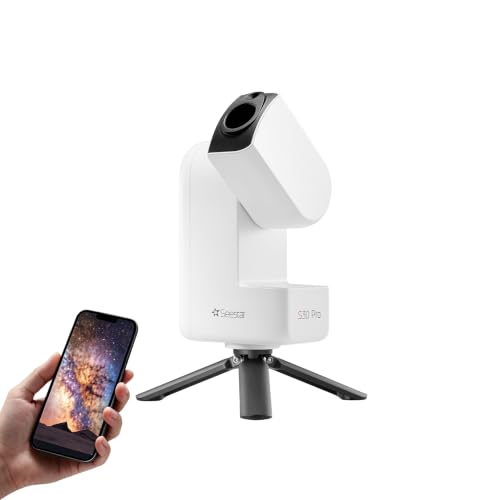
ZWO Seestar S30 Pro app-controlled smart telescope

ZWO Seestar S30 Pro Smart Telescope

App-controlledGoTo and live stackingDeep-sky and planetary modesPortable all-in-one

The S30 Pro extends the Seestar formula with more aperture and a refined imaging chain over the standard S30, and it is the model to buy if you want the smoothest path from unboxing to finished image of a galaxy. Place it on any flat surface, connect your phone, pick an object from a curated list, and the scope finds it, tracks it, and stacks successive exposures into a picture you can look at on screen while it is still capturing. There is no polar alignment, no guiding, and no post-processing required to produce something worth showing someone. It also handles the Moon and brighter planets well, which makes it a more versatile single purchase than a pure deep-sky imager.

Pros

  • The most mature app and firmware in the category
  • Deep-sky imaging with genuinely no prior experience
  • Handles both deep-sky objects and lunar or planetary targets
  • Large community, so problems get solved publicly and quickly
  • Compact enough to leave set up and take outside in one trip

Cons

  • Small aperture compared with a conventional telescope at the same price
  • You are looking at a screen rather than through an eyepiece
  • Firmware updates occasionally change behaviour you had learned

Our Verdict

The default recommendation in this category, and the model most likely to face aggressive discounting during a Prime event because ZWO is defending its lead. If you want one smart telescope and you want it to just work, buy this one.

Price: $699.00 · Sep 17, 2026

Affiliate link — we may earn a commission at no extra cost to you.

Availability note: the Seestar S50 is no longer sold new

The original Seestar S50 — the model that defined this category — is discontinued and its Amazon listing currently shows as unavailable. We do not link to it and we do not recommend buying one at a premium from third-party sellers, because spare parts and ongoing firmware support are not guaranteed. The S30 Pro is the current replacement and the model we recommend. The standard Seestar S30 also currently shows as unavailable on Amazon.

Dwarflab Dwarf Deals

Dwarflab built its position on portability. Where the Seestar is a small telescope you carry outside, the Dwarf is a device that goes in a daypack — which changes how often you actually use it. The rivalry between Dwarflab and ZWO has been the single best thing to happen to smart telescope pricing, and both brands tend to move during Prime events.

Dwarflab Dwarf 3 dual-camera portable smart telescope
2Best Ultra-Portable

Dwarflab Dwarf 3 Smart Telescope

Dual-camera system8.3MP main sensorUnder 4 lbsApp-controlled

The Dwarf 3 is the smart telescope for people who will genuinely take one somewhere. At under two kilograms it fits in a daypack, and the dual-camera arrangement is a real feature rather than a marketing line: a wide-field camera shows you the surrounding sky on your phone so you can see where the instrument is pointing, while the main camera captures the image. The larger sensor delivers more detail in finished frames than the compact competition, at the cost of a smaller aperture that shows up on the faintest targets and requires longer total exposure.

Pros

  • Genuinely light enough to hike or travel with
  • Wide-field camera makes framing and finding objects intuitive
  • Higher-resolution sensor than most smart scopes of this size
  • Two cameras means it doubles as a spotting scope for wildlife

Cons

  • Smaller aperture means fainter targets need much longer sessions
  • App and firmware have matured less evenly than the Seestar ecosystem
  • Less polished overall, so expect to troubleshoot occasionally

Our Verdict

Buy the Dwarf 3 for portability and the Seestar for polish. If your observing happens on trips, hikes, or holidays rather than in one back garden, the Dwarf is the better instrument because you will actually have it with you.

Price: $549.00 · Sep 17, 2026

Affiliate link — we may earn a commission at no extra cost to you.

Dwarflab Dwarf Mini compact portable smart telescope
3Best Entry to Smart Telescopes

Dwarflab Dwarf Mini Smart Telescope

Ultra-compactApp-controlledLightweightDeep-sky imaging

The Mini is the cheapest way into the smart telescope category, and the least intimidating. It is small enough to live in a bag permanently, sets up in under a minute, and produces recognisable images of the brighter nebulae and clusters within a single session. The compromise is aperture and resolution: this is a device for learning what the category offers and for casual imaging, not for chasing faint galaxies. If you are unsure whether smart telescopes are for you, this is the low-risk way to find out during the sale.

Pros

  • Lowest entry price in the smart telescope category
  • Small and light enough to keep with you at all times
  • Fast setup means it gets used on marginal nights too
  • Well matched to bright targets that suit short sessions

Cons

  • Limited aperture restricts you to the brighter objects
  • You will want to upgrade if the hobby takes hold
  • Image quality is clearly below the flagship models

Our Verdict

The right purchase if you want to try smart astronomy without committing to a flagship price, or if you want something permanently in the car. Pair it with the tripod and a hard case, both of which are frequently discounted in the same event.

Price: $419.00 · Sep 17, 2026

Affiliate link — we may earn a commission at no extra cost to you.

Unistellar Equinox 2 and eVscope 2

Unistellar pioneered this category and remains the option for buyers who want real aperture in a smart package. Both current models use a 114mm Newtonian mirror — more than double the light-gathering area of the compact smart scopes — which makes a genuine difference on faint galaxies and globular clusters rather than just on paper. Unistellar also runs a citizen-science programme that lets owners contribute real observations to asteroid occultation and exoplanet transit work, which no other consumer brand offers.

Unistellar Equinox 2 smart telescope with 114mm Newtonian optics
4Best Large-Aperture Smart Scope

Unistellar Equinox 2 Smart Telescope

114mm NewtonianEnhanced Vision processingCitizen science modeApp-controlled

The Equinox 2 is Unistellar's mid-range model and the best value in their lineup. Its 114mm aperture is what separates it from the compact smart scopes: it gathers substantially more light, which translates into real detail on galaxies, nebulae, and globular clusters rather than just brighter versions of the same smudge. The Enhanced Vision processing builds a colour image in real time as you watch, and Science Mode feeds observations into genuine research collaborations. It is a significantly larger and heavier instrument than a Seestar, so portability is not its selling point — capability is.

Pros

  • 114mm aperture delivers real deep-sky detail, not just convenience
  • Real-time colour image build-up as you observe
  • Genuine citizen-science participation, unique in this category
  • Quality optics from Europe with a long support record

Cons

  • Several times the price of the compact smart scopes
  • Much larger and heavier — not a grab-and-go device
  • Smaller user community than ZWO, so fewer troubleshooting resources
  • Accessories such as eyepieces are sold separately

Our Verdict

The strongest recommendation in this category for anyone who already knows they are serious about deep-sky imaging and wants aperture. If you want a smart telescope to sit beside a conventional scope rather than replace it, this is the one.

Price: $2,899.00 · Sep 17, 2026

Affiliate link — we may earn a commission at no extra cost to you.

Unistellar eVscope 2 flagship smart telescope with electronic eyepiece
5Best Premium

Unistellar eVscope 2 Smart Telescope

114mm mirrorElectronic eyepieceNikon opticsEnhanced Vision

Unistellar's flagship, and the only smart telescope with a genuine electronic eyepiece — an OLED viewfinder you look into rather than at a phone screen. That single difference matters more than it sounds: it restores the experience of putting your eye to an instrument while keeping the light amplification that makes faint objects visible from a town. The optics are Nikon-specified, the field of view is wider than the Equinox 2's for framing large nebulae, and the build quality is the best in the category. It is also the most expensive option on this page by a considerable margin.

Pros

  • Electronic eyepiece gives a real observing experience, not a screen
  • Nikon-specified optics and the best build quality in the category
  • Wider field of view suits large nebulae and comet work
  • Citizen-science contributions included as standard

Cons

  • The most expensive smart telescope available
  • Heavy and bulky — neither portable nor grab-and-go
  • A discount here is still a large absolute amount

Our Verdict

Buy this only if the electronic eyepiece is the thing you specifically want, or if budget is genuinely not a constraint. The Equinox 2 delivers most of the capability for substantially less, and at this price point, waiting to see what November offers is a reasonable strategy.

Price: $4,999.00 · Sep 17, 2026

Affiliate link — we may earn a commission at no extra cost to you.

Celestron Origin

Celestron is the largest name in consumer astronomy, and the Origin is their answer to the smart telescope category. It uses a 6-inch Rowe-Ackermann Schmidt Astrograph design — a dedicated imaging optical system rather than a converted visual telescope — which produces noticeably better corrected images across the field than the compact smart scopes. It also integrates with the wider Celestron accessory ecosystem, which matters if you already own Celestron equipment.

Celestron Origin Mark II intelligent home observatory smart telescope
6Best Premium All-in-One

Celestron Origin Mark II Intelligent Home Observatory

152mm RASA opticsApp-controlledFully automated imagingCelestron ecosystem

The Origin Mark II is a 152mm imaging telescope that finds, frames, captures, and stacks without intervention. The RASA-derived optical design is built specifically for imaging rather than adapted from a visual telescope, which shows in the corner-to-corner sharpness of the resulting frames. Setup is a case of placing it outside and starting a session from your phone; it can run unattended for hours. It is a substantial instrument rather than a portable device, and it is priced accordingly — but within the premium tier it offers the most forgiving path to consistently good deep-sky pictures.

Pros

  • 152mm of imaging-optimised aperture — the largest here
  • RASA-derived optics give well-corrected, sharp fields
  • Best-in-class software workflow from one of the oldest names in the industry
  • Integrates with existing Celestron accessories and mounts

Cons

  • Expensive, even discounted
  • Large and heavy — this is a permanent-ish setup, not a travel scope
  • Overkill if you are still deciding whether you enjoy imaging

Our Verdict

For someone who has already decided they want automated deep-sky imaging and wants the best optical system in that package, this is the recommendation. For everyone else, the price is hard to justify before you have tried the hobby — and November may serve you better at this price point.

Price: $4,299.00 · Sep 17, 2026

Affiliate link — we may earn a commission at no extra cost to you.

Vaonis: Current Availability

Vaonis makes some of the most elegantly designed instruments in the category, and the Vespera line is well regarded for its build quality and portability. We would normally include it in a guide like this. We are not, because of a straightforward availability problem you should know about before you go looking for a deal on one.

  • Vaonis Vespera II currently shows as unavailable on its Amazon listing. We have not linked it, because sending you to a page you cannot buy from is not useful.
  • Vaonis Stellina is not sold on Amazon at all and never has been — it is purchased direct from Vaonis or through specialist astronomy retailers.

If you specifically want a Vaonis instrument, buy direct or through a specialist retailer rather than waiting for it to appear in a Prime event. If you are flexible about the brand, the Seestar and Dwarf models above cover the same ground with better availability and stronger discount prospects during the sale.

We re-verify product availability before every sale event and update this section whenever a listing changes state.

Side-by-Side Comparison

Specifications only tell you so much in this category — the app experience is half the product. This table gives you the deciding factors in the order most buyers actually care about them.

Model Aperture Portability App Maturity Best For
ZWO Seestar S30 Pro Compact High Excellent Most people, most of the time
Dwarflab Dwarf 3 Compact Highest Good Travellers and hikers
Dwarflab Dwarf Mini Smallest Very high Good Trying the category cheaply
Unistellar Equinox 2 114mm Low Very good Serious deep-sky imaging
Unistellar eVscope 2 114mm Low Very good Electronic eyepiece experience
Celestron Origin Mark II 152mm Very low Very good Automated imaging, permanently set up

Aperture figures are the objective diameter of the imaging optics. For the compact models the manufacturer specifies aperture differently from a conventional telescope, so direct numerical comparison across the two groups is misleading — the practical difference is in how faint an object each can capture in a reasonable session.

Two Traps to Avoid

Trap 1: buying on sensor specifications

Every manufacturer quotes sensor resolution, and it is the least useful number in the category. A 12-megapixel sensor with software that occasionally loses tracking produces worse results than an 8-megapixel sensor that works reliably every time. What actually determines your results is how well the software finds, tracks, and stacks — and the only honest way to judge that is the size and activity of the community around each device. That is why the Seestar recommendation above rests on app maturity as much as on hardware.

Trap 2: buying a discontinued model at a deep discount

This is the more expensive mistake. When a manufacturer discontinues a smart telescope, remaining stock can look like a spectacular bargain — and for a conventional telescope with no electronics that would be fine advice. A smart telescope is a computer with optics attached. Its usefulness depends on firmware updates, an app that still runs on current phones, and available spare parts. Buying a discontinued model to save money risks owning a device that stops working properly long before the optics wear out. This is precisely why we do not link the discontinued Seestar S50 above, however attractive a third-party listing may look.

The safe approach: buy a current model from a manufacturer with an active support record, during a sale, and accept that you are paying for the software as much as the hardware. In this category that is the opposite of a compromise.


Continue Exploring

Keep the session going with the next useful answer

Choose the next page based on whether you need a recommendation, a comparison, or a practical observing plan.

Use Finder Tool →

🎄 Holiday season: Telescope Christmas Gift Guide 2026 · Black Friday deal tracking

Live Deal Tracking

Tracking begins October 4, 2026. From then through the end of the sale we check every model on this page against its price history and update this section, reporting discounts as a percentage against the recent average rather than as a fixed figure. Smart telescopes are the category where limited-stock pricing moves fastest, so check back on the morning of October 6.

Availability on this page was last verified on September 17, 2026. We re-check every listing before the event and mark anything that has gone out of stock rather than leaving a dead link.

Frequently Asked Questions

Do smart telescopes go on sale during Prime Big Deal Days?

Yes, and often more aggressively than conventional telescopes. The category has several competing manufacturers chasing the same buyers, so brands use Prime events to gain market share. Typical discounts have run 10–25%, with occasional deeper cuts on specific models during limited-stock lightning deals.

Should I buy a smart telescope in October or wait for Black Friday?

This is the one high-cost category where October genuinely matches November. Smart telescope discounts are driven by brand competition rather than seasonal stock clearance, so the percentages land in a similar range at both events. Buying in October also means using it through the autumn imaging season.

Is the Seestar S50 still available?

No. The Seestar S50 is discontinued and its Amazon listing currently shows as unavailable. We do not recommend buying one from third-party sellers at a premium, because firmware support and spare parts are not guaranteed for a discontinued smart telescope. The S30 Pro is the current model in that line.

Can I buy a Vaonis smart telescope on Amazon?

The Vaonis Vespera II currently shows as unavailable on Amazon, and the Stellina is not sold there at all. Vaonis instruments are bought direct from the manufacturer or through specialist astronomy retailers. If you want one of their models, a Prime event is not the right place to look.

What is the difference between a smart telescope and a normal telescope?

A smart telescope finds and tracks objects automatically and builds up an image electronically, which you view on a phone or screen. A conventional telescope shows you the object directly through an eyepiece. Smart telescopes work well from light-polluted locations and produce shareable images with no experience; conventional telescopes give a more immediate, higher-resolution view and usually cost less for the same aperture.

Which smart telescope is best for a beginner?

The one with the most mature software, which currently means a ZWO Seestar. Specifications matter far less than how reliably the app finds, tracks, and stacks. If you want to spend as little as possible while finding out whether the category suits you, a Dwarflab Dwarf Mini is the low-risk option.

Do I need dark skies for a smart telescope?

No, and that is the main reason to consider one. Smart telescopes stack many short exposures and subtract background light, so they produce images of nebulae and galaxies from suburban gardens where a conventional telescope would show almost nothing. Dark skies still improve the results, but they are not a requirement.