Houston Stargazing: Best Dark Sky Spots & Observatories
Telescope Advisor Logo Telescope Advisor
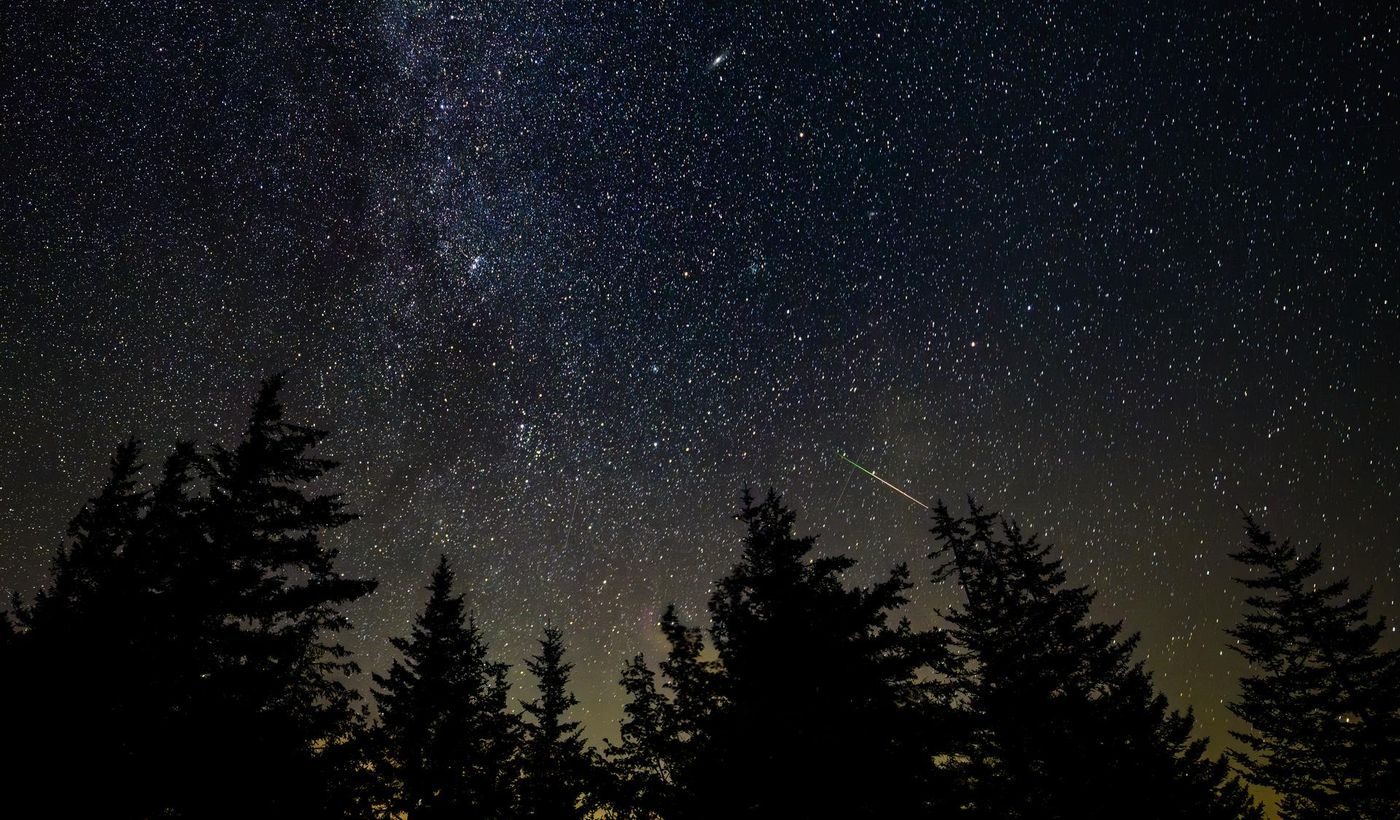
A Perseid meteor streaks past the Milky Way above a pine ridge, the kind of sky the forests north of Houston show on a cold-front night

Stargazing Destination Guide · Greater Houston

Houston Stargazing: The Best Dark Sky Spots and Observatories Within 3 Hours (2026)

Houston is the hardest big city in Texas to stargaze from. The terrain is flat, so nothing blocks the light dome of a seven-million-person metro, and the Gulf air is thick enough that even a dark sky loses a magnitude to haze. Yet Houston also has something Dallas, Austin and San Antonio do not: a public observatory with a 36-inch research telescope inside a state park 45 minutes from downtown, three active astronomy clubs that run free star parties, and an ocean to the south that swallows every light for 600 miles. This guide to stargazing near Houston covers all of it, with the drive times, Bortle ratings and night-access rules that decide whether a trip works.

Sky DowntownBortle 8–9
Darkest Within 2 HoursBortle 4 (Lake Livingston, Somerville)
Closest Public TelescopeGeorge Observatory, 45 min
Best SeasonOctober–March cold fronts

Photo: a Perseid meteor and the Milky Way over a pine ridge, August 2025. NASA/Bill Ingalls

By Telescope Advisor Editorial TeamPublished: Updated: Reviewed & approved by Juhi Sahni, Senior Editor Editorial Standards

Stargazing Near Houston at a Glance

Drive times are from downtown at the Houston Museum of Natural Science in normal evening traffic. Readers in Sugar Land and Pearland are 20 minutes closer to Brazos Bend; The Woodlands and Conroe are 30 minutes closer to the Sam Houston National Forest; League City and Clear Lake are halfway to Galveston already. The Bortle classes are estimates we derived from light-pollution maps and local observing reports, and on the Gulf Coast they come with a caveat: humidity scatters light, so a site rated Bortle 4 on paper can look like Bortle 5 on a muggy July night and like Bortle 3 the morning after a January cold front.

LocationBortleDrive from DowntownNight AccessBest For
Brazos Bend SP & George Observatory545 min SWPark gate closes 9:30 pm; Saturday observatory tickets; campers stayLooking through a 36-inch telescope
Stephen F. Austin SP5–650 min WCampers only after 10 pmQuick weeknight escape
Galveston Island SP5 (dark to the south)1 hr SBeach campground, 24 hours for campersMilky Way core over the Gulf
Sam Houston NF (Double Lake, Cagle)4–51 hr 15 min NOpen; campgrounds and forest roadsClosest true forest dark sky
Huntsville SP51 hr 15 min NCampers only after 10 pmLake horizon under pines
Bolivar Peninsula beaches4–51 hr 30 min SE (ferry)Beaches open; vehicles allowed on sandDarkest coastal horizon near the city
Lake Livingston SP41 hr 30 min NECampers only after 10 pmDarkest state park within 90 minutes
Big Thicket National Preserve41 hr 45 min NEOpen 24 hours; backcountry permit to campRemote, rarely visited
Lake Somerville SP (Nails Creek)42 hrs NWCampers only after 10 pmWhere Houston astrophotographers go
Enchanted Rock SNA34 hrs WReservation required; certified Dark Sky ParkThe weekend upgrade

Why Houston Is Harder Than the Desert, and How to Beat It

Las Vegas and Phoenix have mountains that cut their light domes off like a wall. Houston has nothing. The land is so flat that from Brazos Bend, 45 minutes away, the city is still a bright orange arc across a third of the northern sky, and from Galveston you can see the refinery glow of Texas City before you see Polaris. On top of that sits the air. Average relative humidity after dark runs above 80 percent most of the year, and water vapour scatters light in every direction, which is why a Houston-area sky never gets as black as a Mojave sky of the same Bortle class. Dew forms on telescope optics within an hour of sunset from March to November. Mosquitoes are a given. From June to November, hurricane season decides your weekends.

The answer is to stop fighting the summer and plan around the one thing Houston does better than the desert: cold fronts. From October to March, a "blue norther" sweeps through every week or two, drops the humidity to desert levels for two or three nights, and leaves the clearest, steadiest, most transparent skies the Gulf Coast ever sees. The first night behind a front is the night to drive north to the forest or south to the beach. Local observers watch the dew point rather than the cloud forecast: a dew point below 40 degrees Fahrenheit means a night worth the drive.

Direction matters as much as distance. Houston sits roughly in the middle of its own glow, so the trick is to put the city on the side of the sky you do not need. For the summer Milky Way core, which rises in the south-east and hangs in the south, go to Galveston or Bolivar and let the Gulf provide a horizon with no lights for hundreds of miles. For the winter sky, Orion and the Pleiades ride high enough that any northern site under the pines works, and the cold-front air makes the forest the better choice anyway. For galaxies in spring, Lake Somerville to the north-west puts the dome behind you. Our USA dark sky map and light pollution guide explains what each Bortle class actually shows through a telescope.

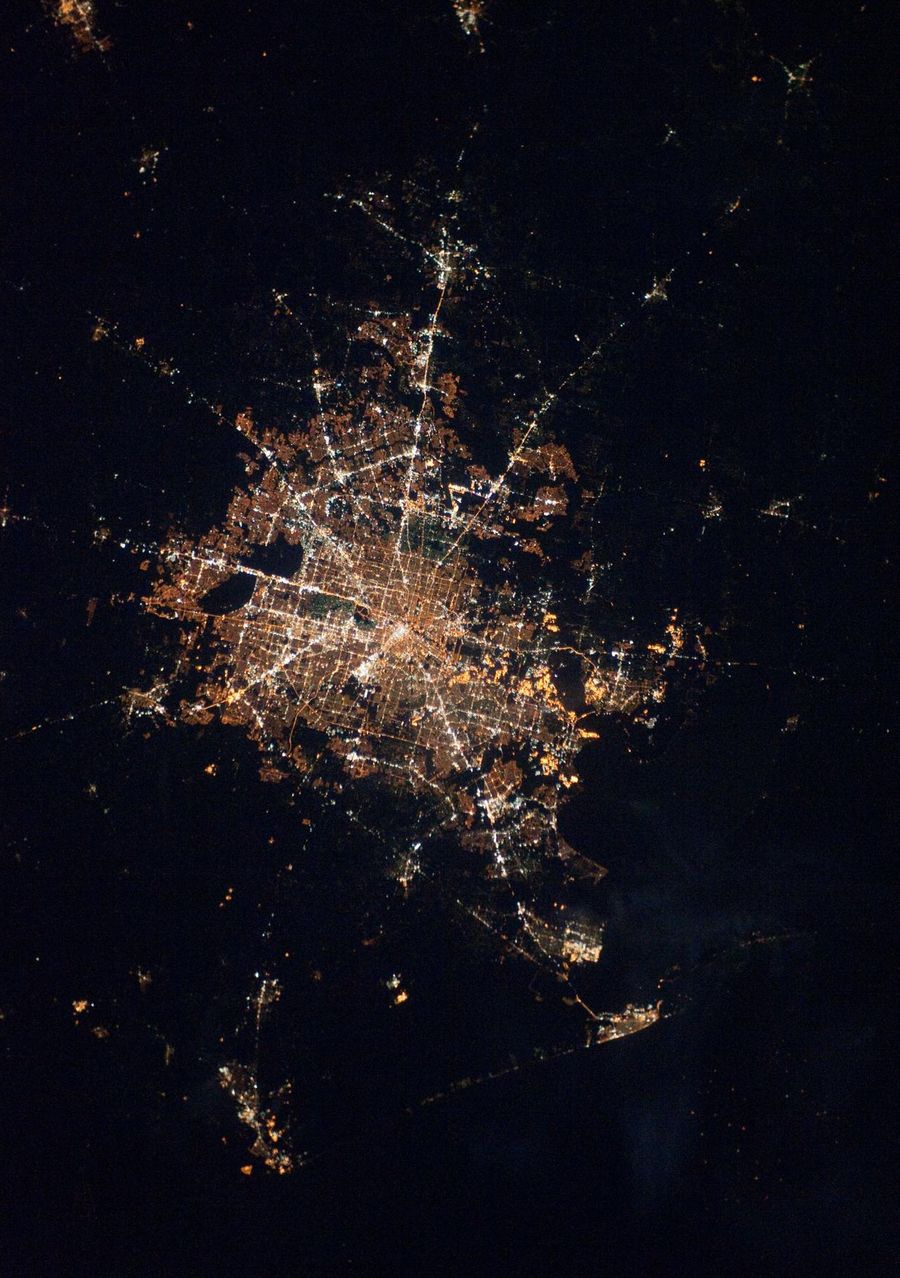
Houston at night photographed from the International Space Station, the light dome spreading across the flat coastal plain

Houston from the International Space Station. Nothing on the flat coastal plain blocks the glow; Galveston is the bright strip at the bottom right. Photo: NASA, Expedition 22.

Top Pick: Closest Big Telescope

George Observatory at Brazos Bend State Park

No other Texas city has this. Forty-five minutes south-west of downtown, inside the bottomland forest of Brazos Bend State Park near Needville, the George Observatory is run by the Houston Museum of Natural Science and opens its domes to the public every Saturday night of the year, weather permitting. The main instrument is the 36-inch Gueymard research telescope, one of the largest telescopes anywhere in the United States that ordinary visitors can look through, and two smaller domes and a line of volunteer-run scopes on the deck fill out the evening. Under a Bortle 5 sky that is bright by West Texas standards, 36 inches of aperture still shows Saturn's Cassini Division, the dust lanes of the Andromeda Galaxy and the central star of the Ring Nebula.

How it works. Saturday Stargazing runs in timed sessions, typically 7, 8 and 9 pm, and tickets are capacity-limited and sold only in advance through the museum box office, never at the door. The observatory ticket does not include the park: entry to Brazos Bend ends at 9:30 pm, so buy a separate park day pass from Texas State Parks and arrive before the gate closes. On overcast nights the observatory runs a cloudy-night programme with dome tours and docent talks and only cancels for rain. The docents are largely members of the Fort Bend Astronomy Club, which is why the explanations are so good.

Two local realities. Brazos Bend has one of the densest alligator populations of any Texas park, and they are active at night, so stay on the paved paths and the observatory deck and keep children and dogs close. And bring repellent: the observatory sits beside Forty Acre Lake, and the mosquitoes arrive the moment the Sun goes down. Campers in the park's campground can stay out after the day visitors leave, and the campground loop is a legitimate Bortle 5 observing site on non-Saturday nights.

The Milky Way and a meteor over a dark pine ridge, similar to the view from the George Observatory deck on a clear winter night

Photo: NASA/Bill Ingalls

Free Star Parties: The Houston Astronomical Society and Friends

The Houston Astronomical Society is one of the largest amateur clubs in the country, and its public star parties are the cheapest way to look through serious telescopes in the city. They are held inside the metro, which is the point: Memorial Park's North Lakeside Pavilion, the Barbara Bush Nature Center and Rustic Oaks Park in League City have all hosted recent events. You will not see the Milky Way from any of them, but you will see the Moon, planets, double stars and the brighter clusters through 10-inch and larger instruments with someone explaining what you are looking at. Dates move with the Moon, so check the society's events calendar rather than assuming a fixed night.

Membership buys something the public cannot otherwise get: access to the society's gated dark site west of the city near Columbus, where the sky reaches Bortle 4 and members observe on any clear night. For anyone in Houston who owns a telescope, the dues are the single best stargazing purchase available, cheaper than a drive to Enchanted Rock and repeatable every new Moon. Three other clubs complete the picture: the Fort Bend Astronomy Club staffs the George Observatory and meets in Stafford, the North Houston Astronomy Club meets at Lone Star College in Kingwood and observes in the Sam Houston National Forest, and the JSC Astronomical Society in Clear Lake draws members from the space-industry workforce around Johnson Space Center. Our Texas astronomy clubs directory lists meeting details for all of them.

North: Sam Houston National Forest, Huntsville and Lake Livingston

North is where Houston goes for a dark sky. The suburbs end abruptly past Conroe, and the 163,000-acre Sam Houston National Forest begins: pine plantation, hardwood bottoms and almost no permanent lights. The two recreation areas with campgrounds, Double Lake near Coldspring and Cagle on the shore of Lake Conroe, are both about 75 minutes from downtown and sit under a Bortle 4 to 5 sky with the Houston dome low in the south. Double Lake is the darker of the two and the one the North Houston Astronomy Club uses. Forest roads off FM 1375 and FM 945 offer pull-offs with open sky if the campgrounds are full, but the pines close in fast, so look for a clearing or a lake edge rather than a road cut.

Huntsville State Park, just south of the town of Huntsville, is the easiest overnight option: a reservable campground, a 210-acre lake that opens the southern horizon, and a Bortle 5 sky that is noticeably better than Brazos Bend because Huntsville itself is small. Lake Livingston State Park, 90 minutes north-east near Livingston, is the darkest state park within reach of a weeknight. The lake is 90,000 acres, the far shore is a line of pines with no towns behind it, and the sky reaches a true Bortle 4. Both parks close to day visitors at 10 pm, so a campsite is the price of a full night. Book the lakeside loops, which give the best horizon, and expect fog to form over the water after midnight in spring and autumn.

South: Galveston, Bolivar and the Gulf Horizon

The Gulf of Mexico is Houston's secret weapon. South of the beach there is nothing but water for 600 miles, so the southern horizon is as dark as any in Texas even though the Bortle class overhead is only a 5. That is exactly where the summer Milky Way core lives. From June to September, standing on the sand at Galveston Island State Park an hour south of downtown, the core of the galaxy rises straight out of the sea, and Scorpius, Sagittarius and the Lagoon Nebula are visible to the naked eye on a moonless night even with the lights of the Seawall glowing to the north-east. The park's beachside campground is open to campers around the clock, which makes it the only site on this page where you can observe from your tent with the surf in the background.

For a darker sky, take the free Galveston to Port Bolivar ferry and keep driving. The Bolivar Peninsula beaches past Crystal Beach allow vehicles on the sand with a permit from the county, there is no city of any size until Louisiana, and the sky drops to Bortle 4 to 5 with a dark horizon from south-west round to east. It is about 90 minutes from downtown including the ferry, and on summer weekends the beach is busy until late, so target a weeknight or the shoulder seasons. Two cautions apply to both beaches: salt spray coats optics faster than dew, so keep lens caps on until you are observing and wipe everything down afterwards, and check the tide tables before you park on the sand after dark.

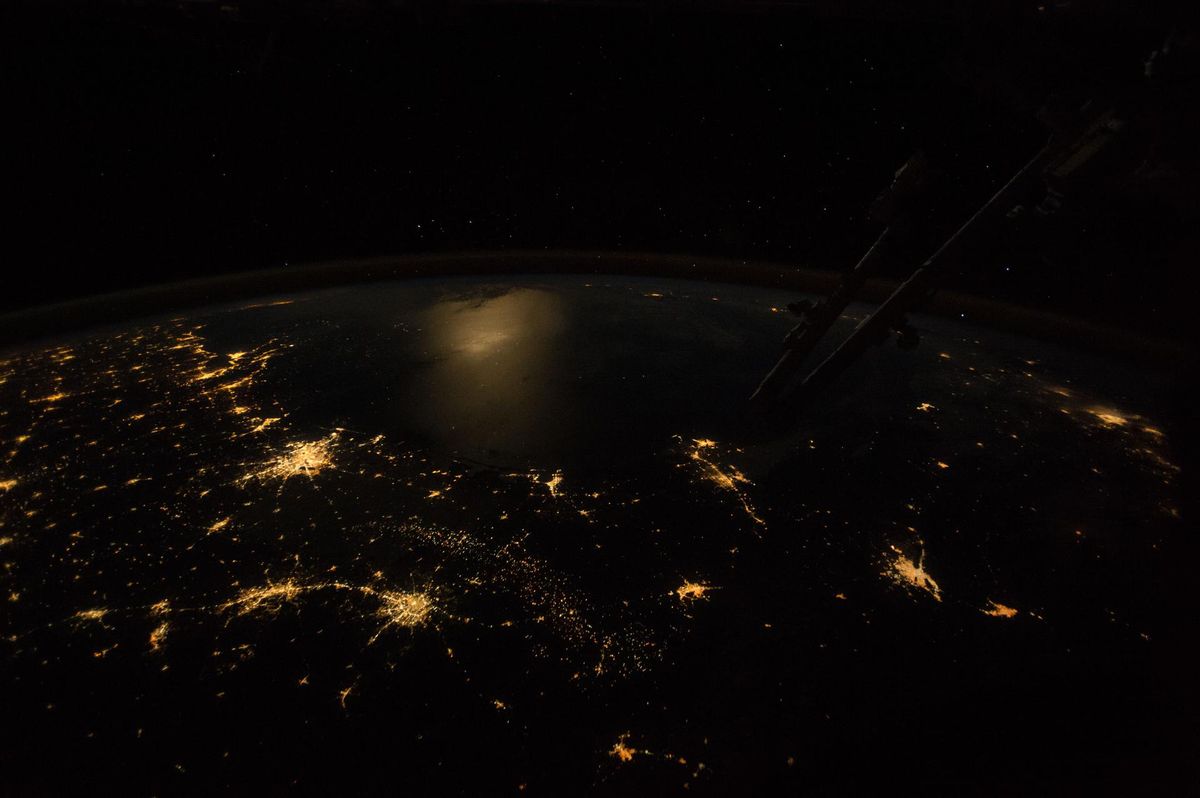
The Texas Gulf Coast at night from the International Space Station, with moonlight reflecting off the dark Gulf of Mexico beyond the city lights

The Gulf Coast at night from the International Space Station: Houston and the other Texas cities glow, while the Gulf itself is black apart from moonlight on the water. Photo: NASA, Expedition 42.

West and North-West: Stephen F. Austin, Big Thicket and Lake Somerville

Stephen F. Austin State Park at San Felipe, 50 minutes west on I-10, is the weeknight escape for Katy and the western suburbs. It is only a Bortle 5 to 6 sky, with the dome bright in the east, but it is open to campers after the 10 pm gate closure, the oxbow lake clears the horizon and it beats any backyard inside the Grand Parkway. Big Thicket National Preserve, 1 hour 45 minutes north-east near Kountze, is the opposite: remote, Bortle 4, open 24 hours, and so lightly visited that you may have the Hickory Creek Savannah trailhead to yourself. There are no developed campgrounds, so an overnight means a free backcountry permit from the preserve, and the humidity under the thicket canopy is the highest on this page.

Two hours north-west, Lake Somerville State Park's Nails Creek unit near Burton is where Houston's astrophotographers go when they want Bortle 4 without joining a club. The rolling post-oak country west of Brenham is almost empty of lights, the lake provides a wide open horizon to the north and east, and the camping loops are far enough from the day-use area to stay dark. Its only competition at this distance is the Houston Astronomical Society site near Columbus, and that one needs a membership card.

Worth the Drive: Enchanted Rock and Big Bend

Four hours west, past Austin, Enchanted Rock State Natural Area is the nearest certified International Dark Sky Park to Houston and a step change from anything on the Gulf Coast: Bortle 3, dry Hill Country air and a pink granite dome you can lie on while the Milky Way wheels overhead. Day passes and campsites both require reservations and sell out weeks ahead on new-Moon weekends. Big Bend National Park, nine hours away, has the darkest measured sky of any national park in the lower 48 and is the classic Houston long weekend; Thanksgiving week, when the Milky Way core is gone but the winter sky is at its best and the temperatures are perfect, is the local favourite. Both are covered in depth in our Texas stargazing guide, so this page stops at the city limits of the trip.

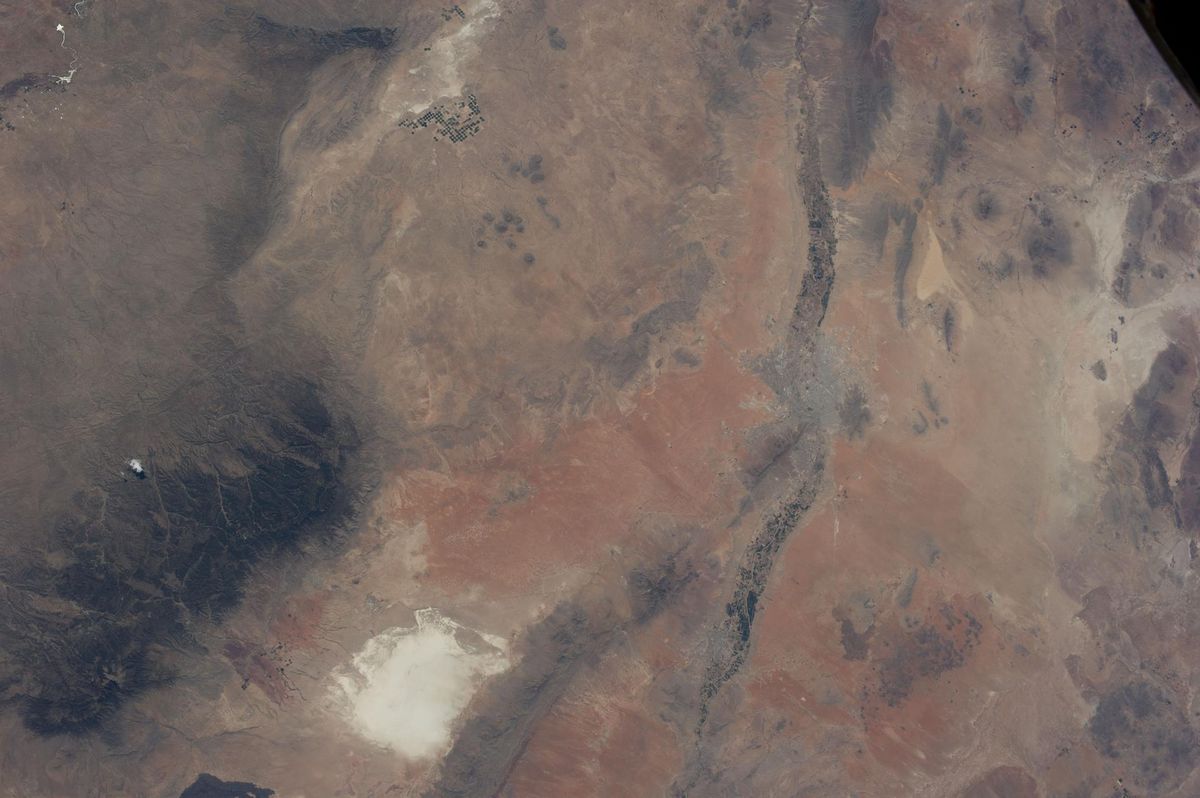
Big Bend National Park and the Rio Grande photographed from the International Space Station

Big Bend National Park and the Rio Grande from the International Space Station. The emptiness in this photo is why the park has the darkest measured sky in the lower 48. Photo: NASA, Expedition 36.

Stargazing in Houston Without Leaving the City

Visitors on a Space Center Houston trip, families with small children and anyone without a free Saturday still have good options inside the Beltway.

  • Burke Baker Planetarium. The Houston Museum of Natural Science's planetarium in Hermann Park is one of the best in the country, with daily shows under an 8K dome. It is the right first stop for a cloudy weekend, and the museum's astronomy staff are the same people who run the George Observatory.
  • Insperity Observatory in Humble. Humble Independent School District operates a real observatory, with research-grade telescopes in three domes, on the Jack M. Fields Sr. Elementary campus at 2505 South Houston Avenue. It opens to the public on scheduled public nights, historically one Friday a month from sunset to 10 pm, free of charge, with laser-guided sky tours and telescope viewing. Confirm the current date on the district's observatory page before you go.
  • Society star parties. The Houston Astronomical Society's Memorial Park and League City events are free, inside the city and reachable by rideshare. See the clubs section above.
  • Space Center Houston. Not a stargazing site, but the visitor centre for Johnson Space Center is the obvious daytime pairing with a George Observatory Saturday: 25 minutes from downtown in Clear Lake, with the Saturn V and the Independence shuttle replica.
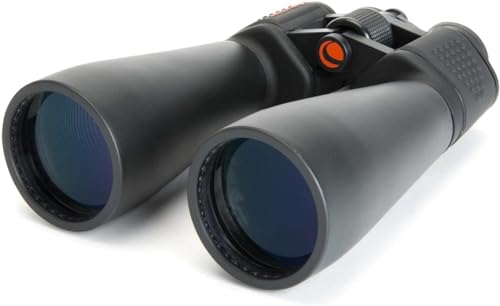
  • Your own backyard, honestly assessed. A Bortle 8 to 9 sky still gives you the Moon, the four naked-eye planets whenever they are above the horizon, Orion's belt in winter and a dozen bright stars. A pair of 15x70 binoculars adds lunar craters, Jupiter's four big moons, the Pleiades and, on a cold-front night, the Orion Nebula. Our pick is the Celestron SkyMaster 15x70, which also earns its place on the beach at Galveston.

When to Go: Houston Stargazing Month by Month

The Houston stargazing calendar runs in reverse compared with most of the country. The best nights are in winter, the worst are in late summer, and the single most useful habit is checking the dew point and the hurricane outlook before the Moon phase.

MonthsConditionsWhere to GoWhat to See
October – NovemberFirst cold fronts arrive; humidity drops; mosquitoes fade after the first freezeSam Houston NF, Lake Livingston, Lake SomervilleAndromeda overhead, last of the Milky Way core at dusk, Orionids
December – FebruaryThe best months: dry, transparent air behind each front; 30s and 40s at nightAny northern site; George Observatory SaturdaysOrion Nebula, Pleiades, Geminids December 13–14, winter Milky Way
March – AprilFronts weaken; fog and dew return; pollen and spring stormsLake Somerville, Huntsville SPGalaxy season in Leo and Virgo on front nights
May – JuneHot and humid; Saharan dust plumes can grey the sky for days in JuneGalveston, BolivarMilky Way core rising out of the Gulf after midnight
July – SeptemberPeak hurricane season and 80°F nights; haze, thunderstorms, relentless mosquitoesGalveston on a dry night, or save the drive for a frontCore over the water by 10 pm, Perseids August 12–13 if the sky allows

Match the trip to a new Moon using our 2026 astronomy events calendar, then watch the forecast for a front within four days of it. That combination comes along perhaps a dozen times a year in Houston, and those dozen nights are worth more than every other night combined.

What to Bring for a Gulf Coast Night

This is the mirror image of the desert checklist. Water is not the problem; water in the air is.

  • Dew control, every month except deep winter. A 12-volt dew heater strip on the objective or corrector plate, or at minimum a dew shield and a hair dryer run off a power bank. Without it a Schmidt-Cassegrain fogs over within an hour at Brazos Bend. Our guide to dew heaters versus dew shields explains which you need.
  • Repellent with DEET or picaridin, plus long sleeves. Brazos Bend, Big Thicket and the forest campgrounds are mosquito country from March to the first freeze.
  • A tarp or ground sheet. Gulf Coast grass is wet by 10 pm. Everything you set down on it will be soaked.
  • A red headlamp and a dimmed phone, especially at society events and the observatory deck.
  • The lightning rule. If you can hear thunder, pack up. Summer storms build fast over the coast, and a metal tripod in an open field is the wrong place to be.
  • Layers for winter fronts. The best nights of the year come with wind and temperatures in the 30s. A front night at Lake Livingston feels colder than the thermometer says.

Best Telescopes and Binoculars for Houston Skies

Humidity changes the gear advice. Open-tube Newtonians dew up more slowly than refractors and Schmidt-Cassegrains because the mirror sits deep inside the tube, which is one reason Dobsonians dominate at Houston star parties. Aperture also matters more here than in the desert, because a Bortle 5 sky needs light-gathering power to pull faint objects out of the glow.

Celestron SkyMaster 15x70 binoculars

Celestron SkyMaster 15x70

For the backyard and the beach

No dew problem, no setup, and wide enough to sweep the Milky Way core as it rises out of the Gulf at Galveston.

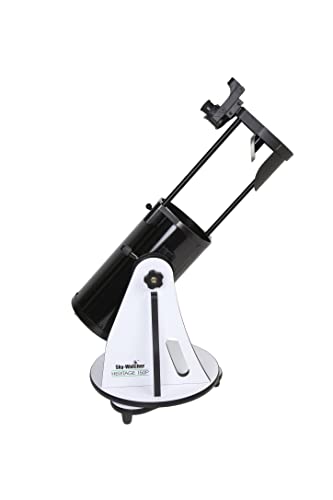
Sky-Watcher Heritage 130P tabletop Dobsonian

Sky-Watcher Heritage 130P

For state park camping trips

A 5-inch collapsible Dobsonian that rides in the trunk to Huntsville or Lake Livingston and sets up on a picnic table in two minutes.

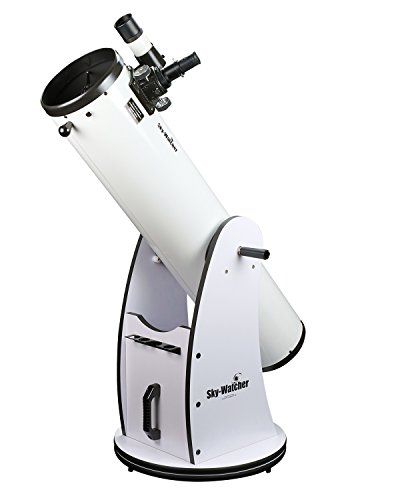
Sky-Watcher Classic 200P 8-inch Dobsonian

Sky-Watcher Classic 200P (8")

For the dark site and Somerville

The aperture a Bortle 4 to 5 sky needs. From Lake Somerville or the society dark site it reaches globulars, planetary nebulae and the brighter galaxies.

If most of your Houston stargazing happens in a Pearland or Katy backyard, start with our round-up of the best telescopes for urban stargazing, which is written for Bortle 8 to 9 conditions, and is dew bad for a telescope answers the question every Houston beginner asks after the first foggy night.


🔭

Not sure which telescope suits a humid Bortle 5 sky?

Tell the Finder Tool your budget, whether you observe from a Houston backyard or a state park campsite, and what you want to see. It recommends a specific model in under two minutes.

Find My Telescope →

Astronomy Clubs and Public Programmes in Greater Houston

The Houston Astronomical Society runs public star parties inside the city and a members-only dark site near Columbus. The Fort Bend Astronomy Club provides the docents and deck telescopes for Saturday Stargazing at the George Observatory. The North Houston Astronomy Club meets at Lone Star College Kingwood and observes in the Sam Houston National Forest. The JSC Astronomical Society serves the Clear Lake and Galveston Bay area. The Houston Museum of Natural Science operates both the George Observatory and the Burke Baker Planetarium, and Humble ISD opens the Insperity Observatory on scheduled public nights. For meeting details and other Texas clubs, see our Texas astronomy clubs directory, and if your group is missing you can submit it here.


Continue Exploring

Keep the session going with the next useful answer

Choose the next page based on whether you need a recommendation, a comparison, or a practical observing plan.

Use Finder Tool →

🎄 Holiday season: Telescope Christmas Gift Guide 2026 · Black Friday deal tracking

Houston Stargazing FAQ

Can you see stars in Houston?

From inside the Beltway, only the brightest ones: the Moon, Venus, Jupiter, Saturn and Mars when they are up, Orion's belt in winter and perhaps a dozen first-magnitude stars. The sky is Bortle 8 to 9. Binoculars add Jupiter's moons, lunar craters and the Pleiades. For the Milky Way you need to drive at least an hour, north to the Sam Houston National Forest or south to Galveston.

Where is the closest dark sky to Houston?

The closest meaningful improvement is Brazos Bend State Park, 45 minutes south-west, at Bortle 5. For a genuinely dark sky, Lake Livingston State Park, 90 minutes north-east, and Lake Somerville's Nails Creek unit, two hours north-west, both reach Bortle 4. The Houston Astronomical Society's dark site near Columbus is also Bortle 4 but is members only.

Is the George Observatory open to the public?

Yes, every Saturday night of the year, weather permitting, through the Houston Museum of Natural Science's Saturday Stargazing programme. Tickets are timed, capacity-limited and sold only in advance, not at the door. You also need a Brazos Bend State Park day pass, and the park gate closes at 9:30 pm.

What is the best month for stargazing in Houston?

December through February. Winter cold fronts strip the humidity out of the air for two or three nights at a time and produce the clearest, most transparent skies the Gulf Coast gets. October, November and early March are nearly as good. Late summer is the worst: haze, 80-degree nights, mosquitoes and hurricane season.

Can you see the Milky Way from Galveston?

Yes, in summer, looking south over the Gulf. The water provides a horizon with no lights for hundreds of miles, so from June to September the Milky Way core rises out of the sea on moonless nights even though the sky overhead is only Bortle 5. Galveston Island State Park's beach campground is the best spot; the Bolivar Peninsula beaches are darker still.

Where do Houston astrophotographers go?

Lake Somerville State Park's Nails Creek unit for a public Bortle 4 site, the Houston Astronomical Society dark site near Columbus for members, and Enchanted Rock or Big Bend for serious trips. In every case they go on the first clear night behind a cold front, when the dew point drops and the transparency is at its best.

Related Guides