San Diego Stargazing: Best Dark Sky Spots & Observatories
Telescope Advisor Logo Telescope Advisor
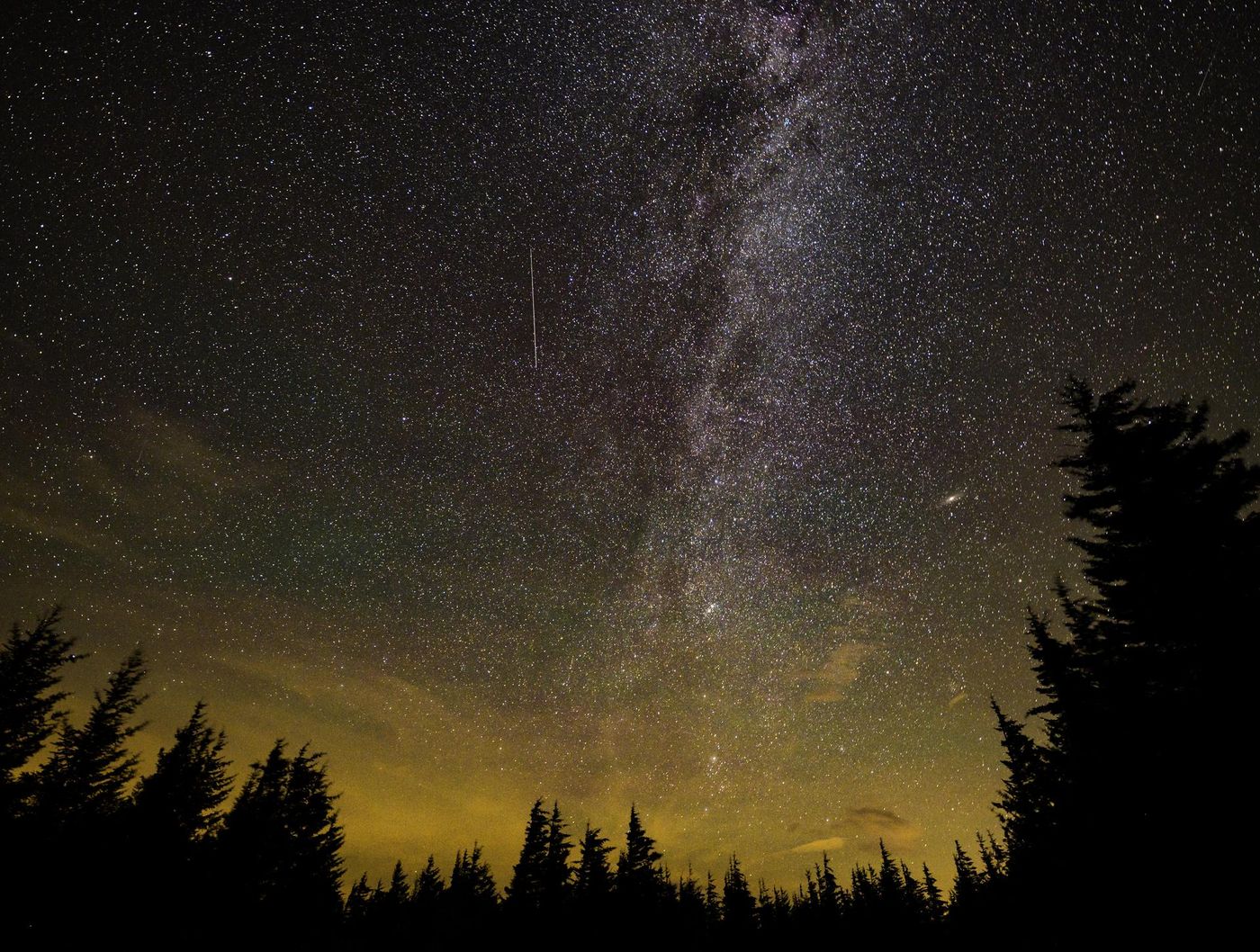
The Milky Way standing above a dark tree line with a Perseid meteor, the kind of sky Mount Laguna shows on a clear summer night

Stargazing Destination Guide · San Diego County

San Diego Stargazing: The Best Dark Sky Spots and Observatories Within 2 Hours (2026)

San Diego is the only big American city with a certified dark sky community, a 6,000-foot mountain range and a desert the size of Rhode Island inside its own county. Within 90 minutes of Balboa Park the sky goes from Bortle 8 to Bortle 2, and the marine layer that smothers the coast every spring evening stops dead at the mountains. This guide to stargazing near San Diego covers the backcountry sites, the two observatories you can actually visit, the free monthly star parties inside the city, and the one weather trick that separates a wasted drive from the best night of your year.

Sky DowntownBortle 8
Darkest Within 2 HoursBortle 2–3 (Blair Valley)
Certified Dark Sky TownsJulian (1 hr), Borrego Springs (2 hrs)
Best SeasonAutumn, and any Santa Ana night

Photo: a Perseid meteor and the Milky Way over Spruce Knob, August 2021. NASA/Bill Ingalls

By Telescope Advisor Editorial TeamPublished: Updated: Reviewed & approved by Juhi Sahni, Senior Editor Editorial Standards

Stargazing Near San Diego at a Glance

Drive times start at Balboa Park in normal evening traffic. El Cajon and La Mesa are 20 minutes closer to everything east; Escondido and Poway are 30 minutes closer to Palomar; Chula Vista adds 15 minutes to all of it. The Bortle classes are our estimates from light-pollution maps and local observing reports. San Diego's version of the usual caveat is the marine layer: a coastal site rated Bortle 7 can be socked in with fog while a Bortle 4 site in the mountains 40 miles away is perfectly clear, so the forecast for the site matters more than the forecast for the city.

LocationBortleDrive from Balboa ParkNight AccessBest For
Mission Trails Regional Park720 min NEFree star party first Friday of each monthFirst look through a big telescope
Cuyamaca Rancho SP455 min ECampers after sunset; Paso Picacho campgroundEasiest dark overnight
Lake Cuyamaca41 hr ECampground and lakeside pulloutsOpen horizon over water
Mount Laguna & Sunrise Highway3–41 hr EOpen; forest campgrounds and highway pulloutsBest all-round site in the county
Mount Laguna Observatory (SDSU)3–41 hr 5 min ESaturday nights late May to mid-AugustLooking through a 21-inch telescope
Julian41 hr 5 min NETown; certified Dark Sky CommunityWeekend base with lodging
Palomar Mountain SP3–41 hr 30 min NCampers after sunset; Doane Valley campgroundObserving beside the famous observatory
Palomar Observatory—1 hr 35 min NDaytime only, 9 am to 3:30 pmSeeing the 200-inch Hale Telescope
Blair Valley (Anza-Borrego)2–31 hr 45 min EOpen 24 hours; primitive campingDarkest sky within two hours
Borrego Springs32 hrs NETown; certified Dark Sky CommunityDesert weekend with lodging
Torrey Pines & the coast720 min NBeaches and bluffs; fog May to JulyMoon and planets over the Pacific

A County With Two Skies

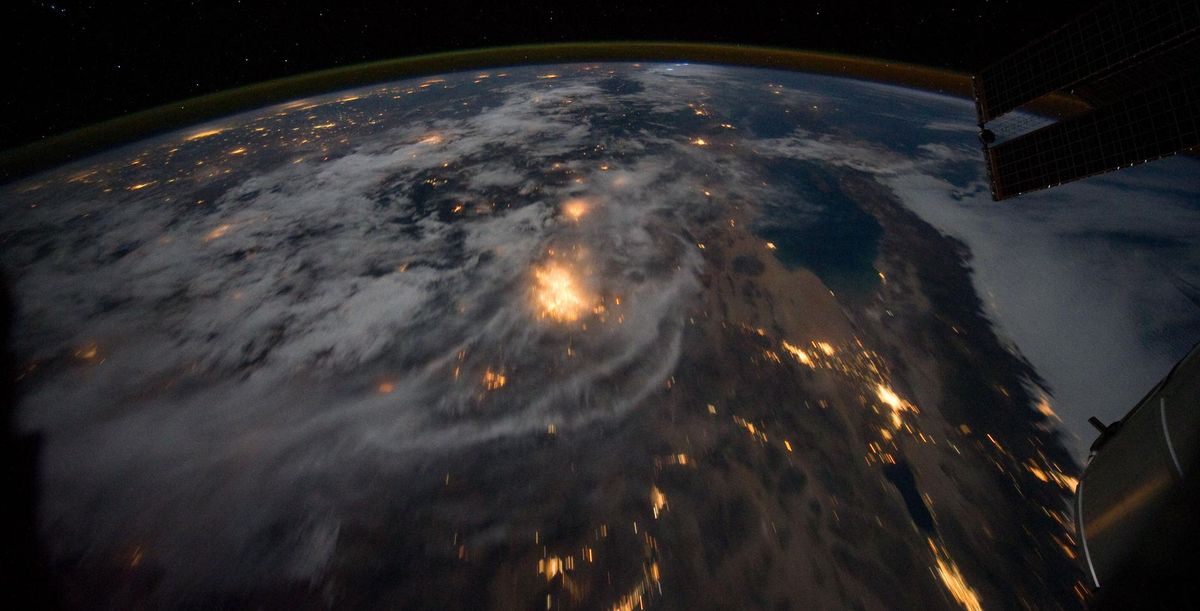
Look at San Diego from orbit at night and the geography explains itself. The coast from Oceanside to Tijuana is one unbroken band of light, Bortle 7 to 8 from the beach to the foothills. Then the Peninsular Ranges rise, Cuyamaca and Laguna and Palomar, all above 5,000 feet, and the lights stop. East of the crest the Anza-Borrego desert is black for 50 miles to the Salton Sea. No other large American city has a Bortle 2 sky that close to downtown, and none has a 6,000-foot ridge to climb above its own glow.

The ridge does more than block light. From May into July the coast sits under the marine layer, the low cloud deck that rolls in every evening and earns the months their local names, May Gray and June Gloom. The layer tops out around 2,000 feet, so on the same night that La Jolla is fogged in, Mount Laguna is above the clouds under a clear sky, often with the cloud deck spread out below like a white sea reflecting no light at all. Those nights are the best of the year for the mountain sites, because the fog covers the city lights too.

The other gift is the Santa Ana wind. When high pressure settles over the Great Basin in autumn and winter, dry desert air pours west over the mountains, humidity drops to single digits, and the air becomes as transparent as it ever gets in Southern California. The first night of a Santa Ana is the night to be at Mount Laguna or Blair Valley; experienced San Diego observers watch the dew point and the offshore-flow forecast, not just the clouds. The county's DarkSky International chapter is the best local source for what is being done to keep the backcountry dark. To see how San Diego County compares with the rest of the country, the USA dark sky map and light pollution guide ranks every state and translates Bortle classes into what a telescope will show you.

Southern California, Baja California and the Salton Sea at night from the International Space Station, the coastal cities bright and the desert dark

Southern California and Baja at night from the International Space Station. The coast glows; east of the mountains the desert around the Salton Sea is dark. Photo: NASA, Expedition 28.

Top Pick: Best All-Round Site

Mount Laguna and the Sunrise Highway

An hour east on Interstate 8, the Sunrise Highway climbs from the desert floor onto the Laguna Mountains at 6,000 feet, and the whole 24-mile scenic byway is a stargazing site. The ridge runs north to south with the Anza-Borrego desert dropping 4,000 feet away to the east, so every eastward pullout has a horizon with nothing on it but the distant glow of the Salton Sea towns. The sky is Bortle 3 to 4, the San Diego dome sits low in the west behind the ridge, and the altitude puts you above the marine layer and most of the summer haze. On a moonless night the Milky Way core rises over the desert and is bright enough to read by.

The pullouts along the highway in the Cleveland National Forest are where the San Diego Astronomy Association's members set up when they are not at their own dark site. Kwaaymii Point and the overlooks near the Desert View Picnic Area have room for a dozen telescopes. Laguna and Burnt Rancheria campgrounds let you sleep at altitude, and the Pine House and the Laguna Mountain Lodge store are the last supplies. An Adventure Pass is required to park in the forest. Fire season brings campfire bans and occasional closures, so check the forest alerts before a summer trip. Winter brings snow and chain controls above 4,000 feet, which is when the Laguna sky is at its clearest and coldest.

Two miles up the road, San Diego State University's Mount Laguna Observatory runs a Summer Visitors Program on Saturday nights from late May to mid-August: a public talk at the Harrington Visitors Center at 8 pm, then, weather permitting, viewing through the 21-inch Buller telescope until about 11. It is free, it fills the lower lot early, and the walk up from the car park is short but steep. The 2026 season ran May 23 to August 15 with an extra Wednesday session on August 12; confirm the dates and call ahead on uncertain nights.

The Milky Way and a meteor over a dark pine ridge, similar to the view from the Sunrise Highway pullouts on a clear night

Photo: NASA/Bill Ingalls

Julian: A Certified Dark Sky Community an Hour From Downtown

In May 2021 the mountain town of Julian became an International Dark Sky Community, the thirtieth in the world and only the second in California after Borrego Springs. That mattered more than it sounds, because Julian is unincorporated and could not pass its own lighting law; the designation came only after San Diego County adopted new rural lighting standards in November 2020 and dimmed the streetlights to meet them. The result is a town of 1,500 people, an hour from downtown at 4,200 feet, where you can walk out of a bed-and-breakfast and see the Milky Way from Main Street.

Julian is the right base for a weekend rather than a single night. It has the only real lodging in the backcountry, the Julian Dark Sky Network runs public star parties and the autumn Wonderfest includes one, Caltrans has installed stargazing signs on the approach roads, and the town is 20 minutes from both Cuyamaca Rancho State Park and the top of the Banner Grade, where Highway 78 drops into Anza-Borrego and the sky falls to Bortle 3. The apple pie is the daytime draw everyone searches for; the dark sky is the reason to stay. The sky in town itself is about Bortle 4, with a faint dome from the coast in the west, which is excellent for a town and a long way behind Blair Valley 40 minutes down the hill.

Palomar: The Observatory by Day, the State Park by Night

Ninety minutes north of the city, Palomar Mountain holds the most famous telescope in America. The 200-inch Hale Telescope was the largest in the world from 1949 to 1993, and Caltech still runs it every clear night. The observatory is open to visitors from 9 am to 3:30 pm, with a self-guided gallery looking into the Hale dome and a visitor centre and gift shop. Guided weekend tours run from April to early November, at 10:30, 12:30 and 2 pm on Saturdays and Sundays; tickets are sold on the day only, from 9:15 am at the visitor centre, by card, and the 2026 price was $8 for adults. The site closes without notice in snow, so check the status page in winter.

You cannot look through the Hale, and the observatory grounds close in the afternoon, so the way to stargaze on Palomar is Palomar Mountain State Park, ten minutes back down the road. Doane Valley campground sits at 5,500 feet in a conifer forest under a Bortle 3 to 4 sky, with the Los Angeles glow visible to the north-west and the San Diego dome to the south, and a clear patch of sky between them that the observatory itself was built to exploit. The meadow at Doane Pond is the open-horizon spot. Reserve the campground well ahead for autumn weekends. The combination of a daytime tour and a night in the campground is the best single astronomy day trip in Southern California.

Cuyamaca Rancho and Lake Cuyamaca: The Easiest Dark Overnight

Cuyamaca Rancho State Park is 55 minutes east on Highway 79, which makes it the closest genuinely dark overnight to the city. Paso Picacho campground at 4,900 feet is the one to book: it sits in a bowl of oaks and pines below Stonewall Peak, the sky reaches Bortle 4, and the nearest town is Julian, which has dimmed its lights. Day visitors must leave at sunset, so a campsite is the price of the night, and the park's reservable sites go fast from September to November when the weather is best.

Five minutes further up the highway, Lake Cuyamaca is the open-horizon alternative. The lake's own campground and the pullouts along its eastern shore give a flat western horizon over the water and a low ridgeline to the east, with the Milky Way core rising over the lake in summer. The lake is a popular fishing spot and the store and restaurant close early, so bring everything. On a cold winter night both Cuyamaca sites can be 30 degrees colder than the coast, and the 2003 Cedar Fire left the slopes open, which means wind: a low-profile Dobsonian beats a tall refractor here.

Blair Valley and Borrego Springs: The Desert Sky

East of the mountains the sky drops another two classes. Blair Valley, 1 hour 45 minutes from Balboa Park on Highway 78 and S2, is a flat, open basin inside Anza-Borrego Desert State Park with free primitive camping, no lights for 20 miles and a Bortle 2 to 3 sky that is the darkest you can reach from San Diego without a motel. The San Diego Astronomy Association uses it for public outreach nights, the horizon is clear in every direction, and from October to April the temperatures are ideal. Avoid it from June to September, when the valley floor is still above 90 degrees at midnight.

Two hours out, Borrego Springs was California's first International Dark Sky Community, certified in 2009, and the park around it is a Silver Tier Dark Sky Park with a public astronomy programme that runs from October to May. Both are covered in depth in our California stargazing guide, so this page stops at the top of the Banner Grade. The short version for San Diegans: Blair Valley for a single dark night, Borrego Springs for a weekend with a pool.

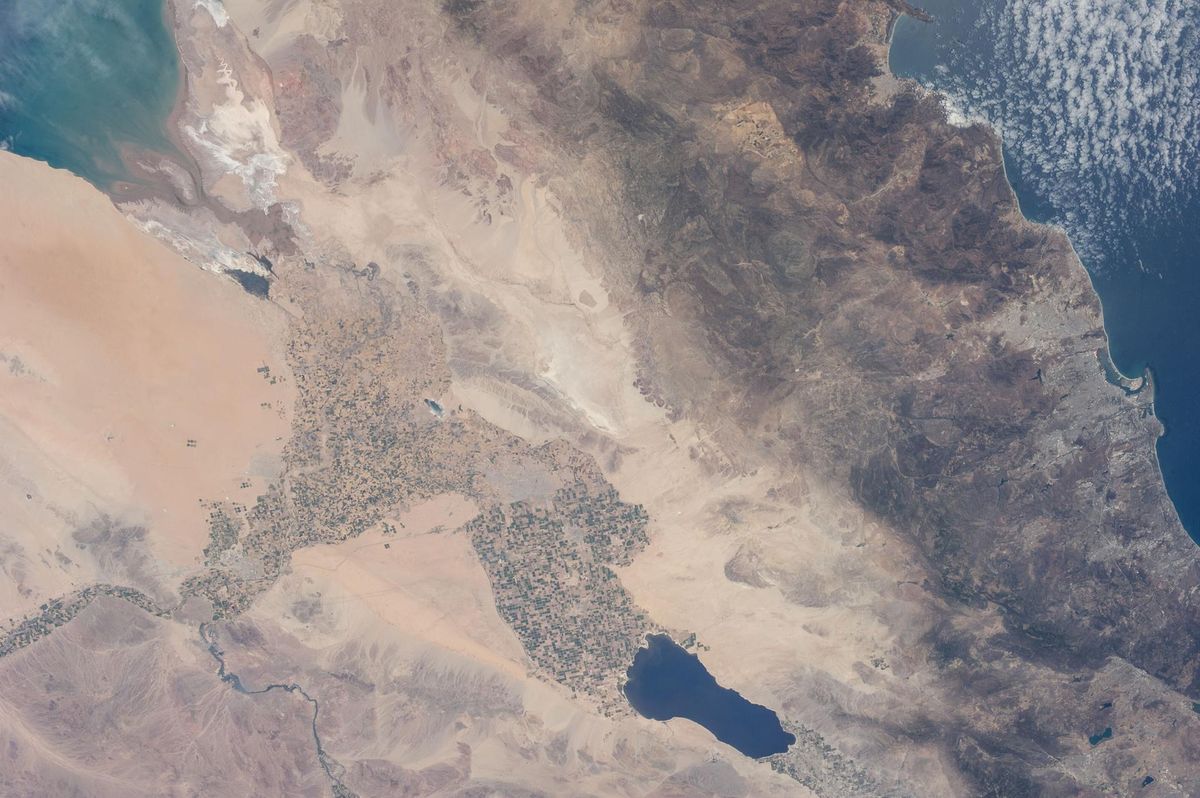
The Salton Trough, the Anza-Borrego mountains and the San Diego coastline photographed from the International Space Station

From the International Space Station: the San Diego coast at right, the Peninsular Ranges in the centre, and the Anza-Borrego desert and Salton Sea beyond. Photo: NASA, Expedition 36.

Inside the City: Free Star Parties and the Fleet

You do not need to drive to the mountains to look through a serious telescope. The San Diego Astronomy Association holds a free public star party at Mission Trails Regional Park on the first Friday of every month, starting at sunset in the day-use lot of the Kumeyaay Lake campground, 20 minutes from downtown. The sky is Bortle 7, so expect lunar craters, planets, coloured double stars and the showpiece clusters rather than faint galaxies, but the telescopes are 10 inches and up and the members are generous with explanations. The association also sets up on the Prado in Balboa Park on the first Wednesday of the month and runs a family night at Oak Oasis in Lakeside. Rain or heavy cloud cancels, so check the events page the same afternoon.

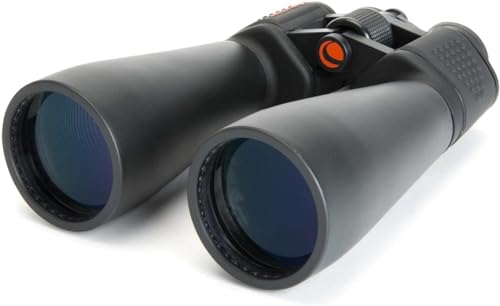
The Fleet Science Center in Balboa Park has the city's planetarium, the Heikoff Giant Dome Theater, and is the right call on a May Gray evening when nothing outdoors is going to work. A coastal backyard or a Mission Bay beach still shows the Moon, the bright planets whenever they are above the horizon, and Orion in winter, and a pair of 15x70 binoculars adds Jupiter's moons, the Pleiades and the Orion Nebula. Our pick for the beach and the balcony is the Celestron SkyMaster 15x70.

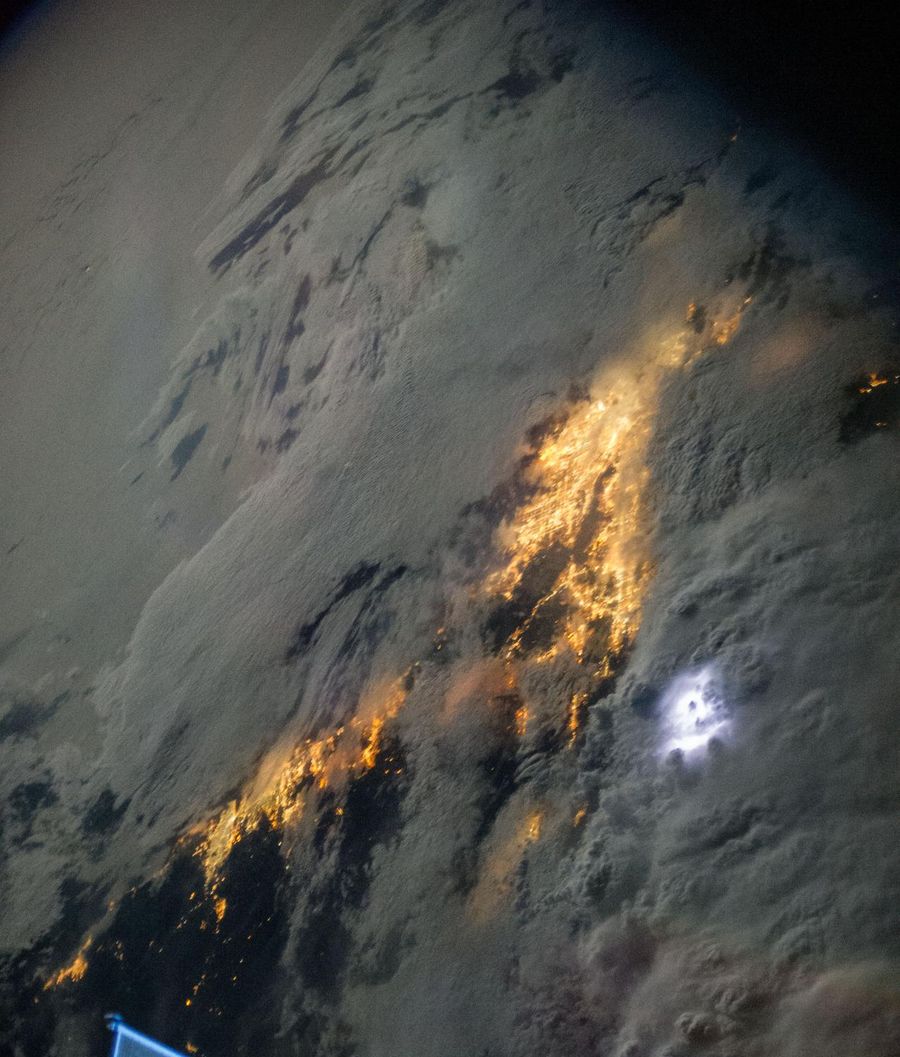
Southern California at night from the International Space Station with city lights glowing through a low cloud deck and a lightning flash

Southern California at night under a low cloud deck, photographed from the International Space Station. This is what the marine layer looks like from above: the coast glows through it while the mountains stay clear. Photo: NASA, Expedition 36.

When to Go: San Diego Stargazing Month by Month

San Diego's weather is famously mild, which hides the fact that its stargazing is strongly seasonal. The rule is simple: the coast is for winter and autumn, the mountains are for summer, and a Santa Ana wind overrides everything.

MonthsConditionsWhere to GoWhat to See
September – NovemberThe best months: marine layer gone, first Santa Ana winds, warm dry nightsMount Laguna, Blair Valley, CuyamacaMilky Way core at dusk, Andromeda overhead, Orionids
December – FebruaryClear between Pacific storms; snow and chain controls on Laguna and PalomarBlair Valley, Julian, the coast on clear nightsOrion Nebula, Pleiades, Geminids December 13–14
March – AprilPleasant inland; wildflowers in Anza-Borrego bring crowds to Borrego SpringsBlair Valley, CuyamacaGalaxy season in Leo and Virgo
May – JulyMay Gray and June Gloom on the coast; clear above 2,000 feet; desert too hotMount Laguna only; Palomar Mountain SPMilky Way core rising over the desert, Mount Laguna Observatory nights begin
AugustWarm, mostly clear; monsoon moisture some weeks; fire seasonMount Laguna, Palomar Mountain SPPerseids August 12–13, core overhead, last observatory nights

Plan around the new Moon with our 2026 astronomy events calendar, then check two things the night before: the marine-layer forecast for the coast and the offshore-flow forecast for the mountains. A new Moon that coincides with a Santa Ana is the best night San Diego offers, and it happens a handful of times a year.

What to Bring: Coast, Mountain and Desert in One County

  • Layers for a 40-degree swing. A 70-degree afternoon in Mission Valley is a 35-degree night on Mount Laguna. Pack as if you are going to the mountains, because you are.
  • Dew control on the coast and at the lakes. Beach and Lake Cuyamaca sessions fog optics within an hour. The mountain and desert sites are usually dry enough to skip it on Santa Ana nights.
  • An Adventure Pass or a state park day pass. Forest pullouts need the former; Cuyamaca and Palomar Mountain need the latter. Both are cheap and checked.
  • Snow chains from December to March for the Sunrise Highway and Palomar, and a look at the Caltrans road conditions before you leave.
  • Fire-season awareness. No campfires or charcoal in the national forest during restrictions, and a flashlight check that the area is not closed. Red-flag warnings close roads fast.
  • A red headlamp, a chair and water. Blair Valley has no water, no shade and no cell service. The nearest services are in Julian or Borrego Springs.

Best Telescopes and Binoculars for San Diego Skies

San Diego observers own two kinds of gear: something that lives in the car for the mountain drive, and something small enough for the beach. Aperture pays off here, because the mountain and desert sites are dark enough to reward it, but weight matters on the Sunrise Highway pullouts and in the Blair Valley sand.

Celestron SkyMaster 15x70 binoculars

Celestron SkyMaster 15x70

For the beach and the balcony

Enough aperture for Jupiter's moons from Mission Bay and for sweeping the Milky Way core over the desert from the Sunrise Highway.

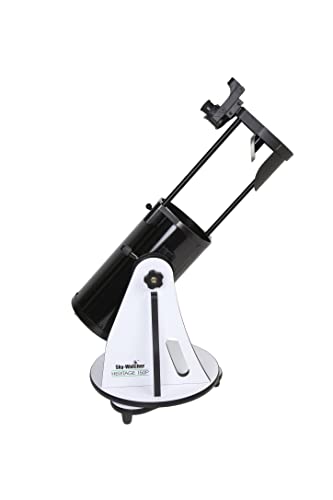
Sky-Watcher Heritage 130P tabletop Dobsonian

Sky-Watcher Heritage 130P

For the Sunrise Highway pullouts

A 5-inch collapsible Dobsonian that sits on a car tailgate at Kwaaymii Point and resolves globular clusters under a Bortle 3 sky.

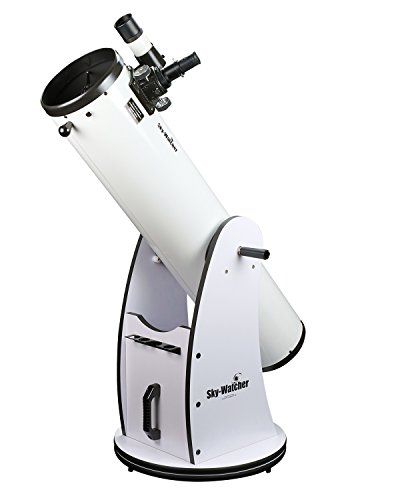
Sky-Watcher Classic 200P 8-inch Dobsonian

Sky-Watcher Classic 200P (8")

For Blair Valley and Cuyamaca camping

The 8-inch that makes a Bortle 2 desert night worth the drive: spiral arms in galaxies, the Veil Nebula with a filter, and a low profile that shrugs off the wind.

If most of your San Diego stargazing happens in a Clairemont or Chula Vista backyard, start with the best telescopes for urban stargazing, and if you are choosing between a scope for the car and one for the house, our best portable telescopes guide settles it.


🔭

Not sure which telescope suits a county with two skies?

Tell the Finder Tool your budget, whether you observe from a coastal backyard or drive to Mount Laguna, and what you want to see. It recommends a specific model in under two minutes.

Find My Telescope →

Astronomy Clubs and Public Programmes in San Diego County

The San Diego Astronomy Association runs the free Mission Trails, Balboa Park and Oak Oasis star parties and owns a members-only observatory and dark site at Tierra del Sol in the East County, which is reason enough to join if you own a telescope. DarkSky San Diego County, the local chapter of DarkSky International, coordinates Dark Sky Week events at Mission Trails and in Borrego Springs each April. San Diego State University opens the Mount Laguna Observatory on summer Saturday nights. Caltech runs the Palomar Observatory visitor programme. The Julian Dark Sky Network hosts star parties in town, and the Fleet Science Center provides the planetarium. For meeting details and other Southern California clubs, see our California astronomy clubs directory, and if your group is missing you can submit it here.


Continue Exploring

Keep the session going with the next useful answer

Choose the next page based on whether you need a recommendation, a comparison, or a practical observing plan.

Use Finder Tool →

🎄 Holiday season: Telescope Christmas Gift Guide 2026 · Black Friday deal tracking

San Diego Stargazing FAQ

Can you see the Milky Way from San Diego?

Not from the city or the coast, where the sky is Bortle 7 to 8. Drive an hour east to Mount Laguna or Cuyamaca and the summer Milky Way is obvious to the naked eye; from Blair Valley in Anza-Borrego, under two hours away, it is bright enough to cast faint shadows on a moonless night.

What is the closest dark sky to downtown San Diego?

Cuyamaca Rancho State Park, about 55 minutes east, reaches Bortle 4 and is the closest genuinely dark overnight. Mount Laguna, an hour out on the Sunrise Highway, is darker at Bortle 3 to 4 and has pullouts you can use without camping. For the darkest sky within two hours, Blair Valley in Anza-Borrego is Bortle 2 to 3.

Is Palomar Observatory open to the public?

Yes, by day. The grounds and the gallery overlooking the 200-inch Hale Telescope are open from 9 am to 3:30 pm, and guided weekend tours run from April to early November with tickets sold on the day at the visitor centre. You cannot look through the telescope. To stargaze on the mountain, camp at Palomar Mountain State Park next door.

What is the best month for stargazing in San Diego?

September through November. The marine layer is gone, the first Santa Ana winds bring the driest, clearest air of the year, and the nights are still warm in the desert. May through July is the worst on the coast because of May Gray and June Gloom, but Mount Laguna sits above the cloud deck and is excellent in those months.

Where are the free star parties in San Diego?

The San Diego Astronomy Association holds a free public star party at Mission Trails Regional Park on the first Friday of every month at sunset, in the day-use lot of the Kumeyaay Lake campground, plus sessions on the Prado in Balboa Park on the first Wednesday and a family night at Oak Oasis. SDSU's Mount Laguna Observatory opens free on summer Saturday nights.

Is Julian really a Dark Sky Community?

Yes. DarkSky International certified Julian as an International Dark Sky Community in May 2021, the second in California after Borrego Springs, after San Diego County adopted rural lighting standards and dimmed the town's streetlights. The sky in town is about Bortle 4, good enough to see the Milky Way from Main Street on a moonless night.

Related Guides