Las Vegas Stargazing: Best Dark Sky Spots Near the Strip
Telescope Advisor Logo Telescope Advisor
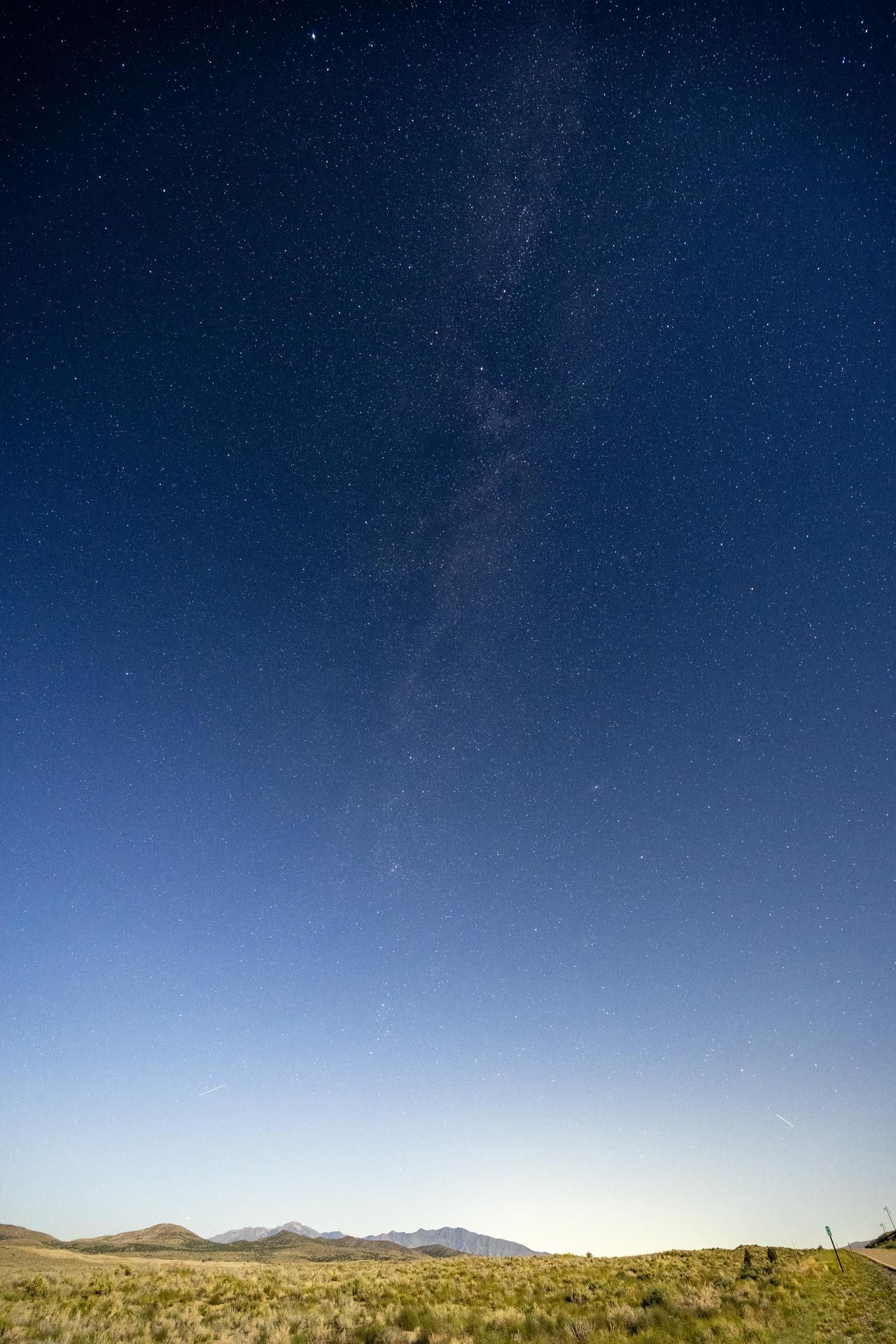
The Milky Way standing over the Great Basin desert at Dugway, Utah, the same high-desert sky found north of Las Vegas

Stargazing Destination Guide · Las Vegas Metro

Las Vegas Stargazing: The Best Dark Sky Spots Within 3 Hours of the Strip (2026)

Las Vegas is routinely called the brightest city on Earth when seen from orbit, and the Strip really is a Bortle 9 sky where only the Moon and a handful of planets survive. Drive 30 minutes in almost any direction, though, and the Mojave Desert takes over: public land, dry air, mountain ridges that block the glow, and some of the darkest certified skies in the United States within a half-day drive. This guide to stargazing near Las Vegas covers every realistic option from a red-rock star party you can reach by rideshare to a Gold Tier dark sky park, with the honest access rules that most lists leave out.

Sky on the StripBortle 9
Darkest Within 1 HourBortle 3–4 (Valley of Fire)
Closest Star PartiesRed Rock Canyon, 30 min
Certified Park in RangeDeath Valley, Gold Tier

Photo: the Milky Way over the Great Basin desert at Dugway, Utah. NASA/Keegan Barber

By Telescope Advisor Editorial TeamPublished: Updated: Reviewed & approved by Juhi Sahni, Senior Editor Editorial Standards

Stargazing Near Las Vegas at a Glance

Every drive time below is measured from the centre of the Strip at the Bellagio fountains in normal evening traffic. Henderson residents can subtract 15 minutes for Lake Mead and add 15 for Red Rock; Summerlin is the reverse. Bortle figures are our estimates from current light-pollution maps and our own observing notes, so treat them as a guide to what you will see rather than a laboratory measurement. The column most lists skip is night access. Several of the closest parks lock their gates at sunset, and knowing that before you drive out is the difference between a great night and a U-turn.

LocationBortleDark Sky CertifiedDrive from StripNight AccessBest For
Red Rock Canyon NCA5–6No (BLM land)30 min WGate closes at sunset; society event nights onlyClosest public star parties
Spring Mountain Ranch SP5No35 min WEvent nights onlyFamily star parties on a lawn
Mount Charleston / Lee Canyon4No (USFS)50–60 min NWOpen; roads, pullouts and campgroundsCool summer nights at altitude
Lake Mead NRA (Echo Bay)4No (NPS)45–75 min EOpen 24 hours with entry passOnly round-the-clock site close to town
Valley of Fire SP3–4No1 hr NEDay use closes at sunset; campers stayDarkest sky within an hour
Mojave National Preserve (CA)2–3No (NPS)1.5–2 hrs SOpen 24 hours; free campgroundsDarkest sky under two hours
Death Valley NP (CA)1–2Gold Tier Dark Sky Park2–2.5 hrs WOpen 24 hoursBest sky within three hours
Zion NP (UT)3No (Cedar Breaks nearby is certified)2.5 hrs NEOpen 24 hoursCanyon-rim weekend
Cathedral Gorge SP2–3No2.5 hrs NCampers; state park star partiesHoodoos with almost no crowds
Great Basin NP1–2International Dark Sky Park4.5 hrs NOpen 24 hoursThe weekend trip worth the extra drive

Why the Brightest City on Earth Is a Great Stargazing Base

The Luxor Sky Beam is visible from aircraft 250 miles away, the Sphere runs a 580,000-square-foot LED skin, and the casino corridor packs more lumens into four miles than most mid-sized cities emit in total. None of that changes the geography. Las Vegas sits in a basin ringed by the Spring Mountains to the west, the Sheep Range to the north and the Muddy and Black Mountains to the east, and more than 80 percent of Nevada is public land managed by the BLM, the Forest Service or the Park Service. Those ridgelines act as a physical screen. Once you are on the far side of one, the city glow collapses into a dome low on one horizon and the rest of the sky belongs to you.

The climate finishes the job. The valley averages close to 300 sunny days a year and only about four inches of rain. Relative humidity on a winter night is often below 20 percent, which is why dew, the bane of stargazers near Chicago or Atlanta, barely exists here. The trade-offs are heat, wind and the July to September monsoon, all covered in the seasonal section below.

One rule of thumb will serve you better than any Bortle number: put the city behind you, on the opposite side of the sky from what you want to see. The summer Milky Way core rises in the south-east, so a site where Las Vegas lies to your north or west, such as Mojave National Preserve or Lake Mead's Echo Bay, keeps the brightest part of the galaxy over the darkest part of your horizon. For winter targets like Orion and the Pleiades, which ride high in the south, almost any site east or west of the valley works. Red Rock Canyon sits due west of the city, so its eastern sky carries the glow, but the west and the zenith are far better than the Bortle rating suggests.

Southern Nevada is also starting to protect what it has. Boulder City has retrofitted its municipal streetlights with the stated goal of becoming an International Dark Sky Community, Nevada created a state-level Starry Skies certification in 2021, and the two existing DarkSky International sites in the state, Great Basin National Park and the Massacre Rim sanctuary in the far north-west, give the region credibility it lacked a decade ago. If you want the national context for how Bortle classes translate into what a telescope shows, our USA dark sky map and light pollution guide is the place to start.

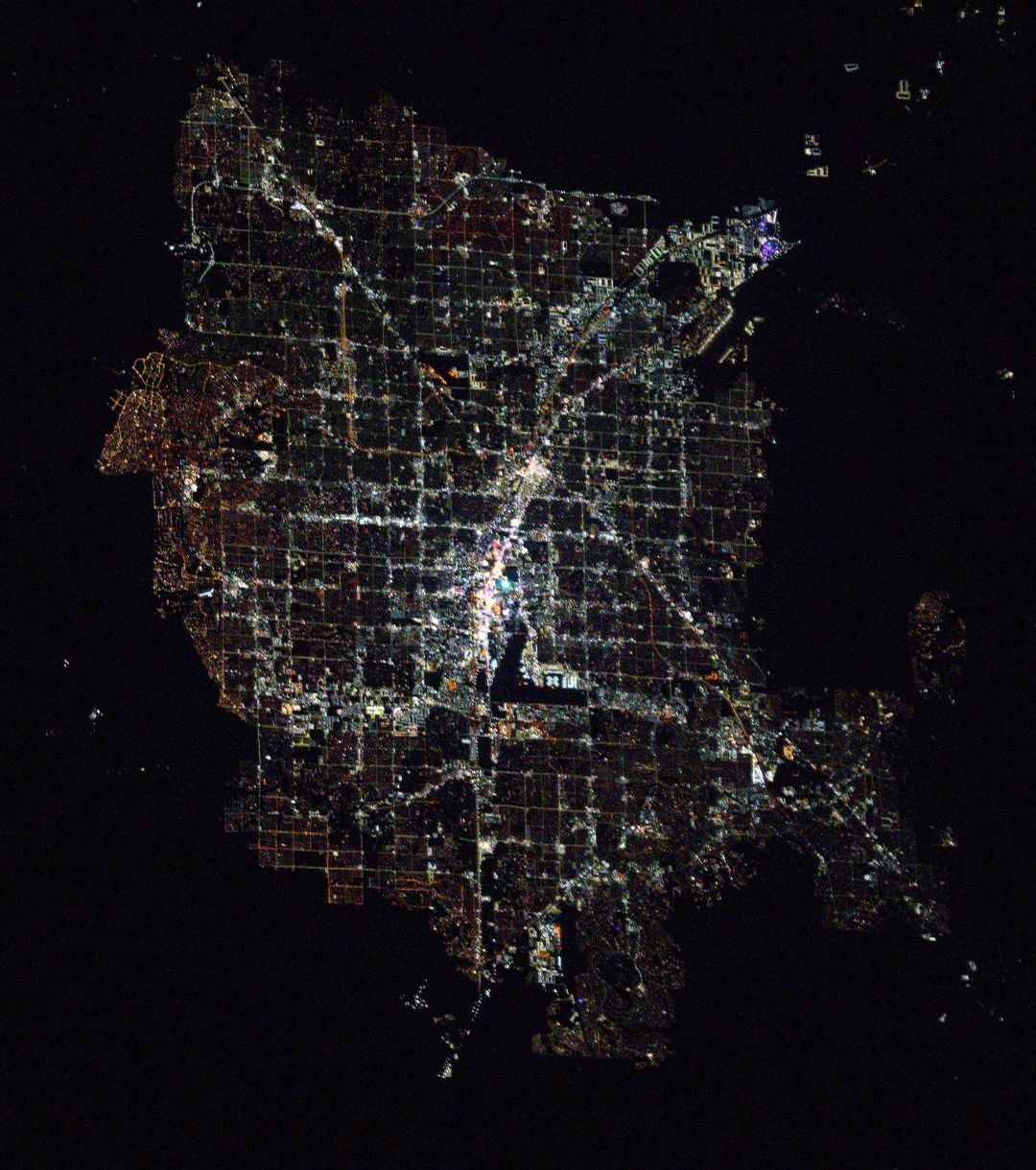
Las Vegas at night photographed from the International Space Station in May 2025, the Strip a bright line through the grid

Las Vegas from the International Space Station, May 2025. The bright line is the Strip; beyond the grid the desert is black. Photo: NASA.

Top Pick Within One Hour

Valley of Fire State Park: Red Sandstone Under a Bortle 3 Sky

Nevada's oldest state park is an hour north-east of the Strip on I-15 and the Valley of Fire Highway, and it is the darkest sky you can reach in that time. Forty thousand acres of Aztec sandstone, the same rock that forms the cliffs at Red Rock, sit far enough behind the Muddy Mountains that the Las Vegas dome is a low smudge in the south-west. On a moonless night the Milky Way is obvious to the naked eye from the Atlatl Rock campground, the Andromeda Galaxy is a naked-eye smudge, and an 8-inch telescope shows the spiral structure in M51 and the dust lane in M82.

Know the access rule before you go. The park is open 365 days a year, but day-use areas close at sunset and rangers do sweep the scenic drive. The way to stay after dark is to camp. The two campgrounds at Atlatl Rock and Arch Rock are first come, first served with no reservations, and they fill by early afternoon on winter weekends. Campers have round-the-clock access to the campground roads, which is where you set up. The other legitimate route in after dark is a Nevada State Parks night sky viewing event, run with the Las Vegas Astronomical Society, which typically opens the parking area from 8 to 11 pm with telescopes from 9 pm.

Campground etiquette matters more here than anywhere else on this page. Headlights sweeping the loop every time someone drives in are the single biggest complaint from Valley of Fire stargazers, so park facing away from the sites, switch to parking lights before you enter the loop, and use a red headlamp once you are out of the car. Bring every drop of water you need. There is no shade worth the name, and in July the rock is still radiating 90-degree heat at midnight, which is why the prime season runs from October to April.

The Milky Way over the Great Basin desert, the kind of sky Valley of Fire shows on a moonless night

Photo: NASA/Keegan Barber

Closest to the Strip: Red Rock Canyon and Spring Mountain Ranch

Red Rock Canyon National Conservation Area is 30 minutes west of the Strip on Charleston Boulevard and is the first place every Las Vegas stargazing search sends you. The catch is that the 13-mile Scenic Drive is a fee area that closes at sunset, and the late-exit passes the BLM issues through Recreation.gov are for climbers on long routes, not for stargazers. Pulling off the drive after hours earns a citation and possibly a tow. So Red Rock is not a place you simply turn up to at 10 pm.

Astronomy in the Park: the way in after dark

What makes Red Rock the best first stop anyway is the Las Vegas Astronomical Society. The society runs public "Astronomy in the Park" nights every month except December, rotating between Red Rock Canyon, Spring Mountain Ranch State Park, Lake Mead, the Desert National Wildlife Refuge and the Spring Mountains visitor centre. On Red Rock nights the visitor centre plaza stays open after the gate closes, members set up a line of telescopes from 8-inch Dobsonians to 14-inch Schmidt-Cassegrains, and admission is a few dollars per adult with children free. The February 2026 "Mars in Your Hand" night, for example, charged $6 for adults. From the plaza the eastern sky carries the Las Vegas dome, which is why the Bortle rating is a 5 to 6, but overhead and to the west the Milky Way is visible in summer and the Orion Nebula is spectacular in winter. Check the society's calendar for dates, arrive before the gate closes, and bring a red light.

Spring Mountain Ranch State Park

Five minutes further along State Route 159, Spring Mountain Ranch is a former working ranch with a broad irrigated lawn beneath the Wilson Cliffs. It is the society's most family-friendly venue: you spread a blanket on grass instead of gravel, the cliffs block the city to the east, and the winter events run early, typically 5 to 8 pm, so children see Jupiter's moons and Saturn's rings before bedtime. Entry is a per-vehicle state park fee. Like Red Rock, the park closes at dusk on ordinary nights, so this is an event-only destination. Both parks are an easy rideshare from the Strip, which makes them the obvious answer for visitors without a car when an event falls on your dates.

Mount Charleston and Lee Canyon: Altitude Beats Heat

The Spring Mountains National Recreation Area starts 45 minutes north-west of the Strip on US-95 and climbs to the base of Lee Canyon at about 8,500 feet. That altitude is the point. In July, when it is 95 degrees on the Strip at midnight, Lee Canyon is in the 60s, and the thinner, drier air above 8,000 feet gives steadier planetary views than anywhere else on this list. The Las Vegas dome sits to the south-east, so the north and west are dark and the zenith reaches a solid Bortle 4.

The two paved canyons, Kyle and Lee, are joined by Deer Creek Road (State Route 158), and its pullouts are where local observers set up: wide shoulders, no streetlights, and a view north over the Sheep Range. Hilltop and Mahogany Grove campgrounds are the pay-to-stay options if you want to sleep at altitude, and the Spring Mountains Visitor Gateway on Kyle Canyon Road hosts society star parties several times a year. Two cautions. Winter brings snow, chain requirements and occasional road closures above the Gateway, and the forest is prime habitat for the Mount Charleston blue butterfly and other protected species, so stay on established pullouts and never drive onto meadows. From late May to September this is the best close-in site on the page; from November to March, Lake Mead or Valley of Fire are easier.

Lake Mead: The Only 24-Hour Option Close to Town

Lake Mead National Recreation Area never closes. The entry pass is per vehicle and valid for seven days, and once you are inside you can stay all night at designated areas without a camping reservation. That single fact makes it the default for residents who want a spontaneous session on a clear weeknight. Boulder Beach, 35 minutes from the Strip just past Boulder City, is the closest shoreline and sits at Bortle 5 with the city dome to the west. Echo Bay, an hour and a quarter up Northshore Road, drops to Bortle 4 and is the better choice for anything faint.

The lake itself is the feature. Water to the east means no light sources in that direction for 50 miles, so the eastern horizon is genuinely black and moonrise over the lake is worth planning a trip around. Government Wash, between the two beaches, allows dispersed overnight parking and is popular with astrophotographers for exactly that reason. Spring and autumn are ideal. Summer is hot but tolerable near the water, and the afternoon winds that whip the lake usually drop after sunset. Expect boat traffic and the occasional headlight on holiday weekends; midweek it is often silent.

Two-to-Three-Hour Trips: Death Valley, Mojave, Zion and Cathedral Gorge

With a full evening or an overnight, Las Vegas becomes one of the best stargazing bases in the country, because three different states' worth of dark desert fall inside a three-hour radius.

Death Valley National Park, Bortle 1 to 2, Gold Tier

Two to two-and-a-half hours west on US-95 and State Route 190, Death Valley has held Gold Tier International Dark Sky Park status since 2013 and is the darkest certified sky you can reach from Las Vegas in an evening. Dante's View, at 5,476 feet above the salt flats, is the classic spot for the Milky Way arching over Badwater Basin; Harmony Borax Works near Furnace Creek is the easy, flat alternative. From November to March the park is perfect. From May to September it can be lethally hot even at night, and the park service recommends against evening hikes. Our California stargazing guide covers Death Valley in depth, so we will not repeat it here.

Mojave National Preserve, Bortle 2 to 3

The sleeper on this list. Ninety minutes south on I-15 and Cima Road, Mojave National Preserve is 1.6 million acres of Joshua tree forest, cinder cones and dunes with no entry fee, no gate and almost no visitors. Kelso Dunes, about two hours from the Strip, puts the city dome behind the Clark Mountains to the north and leaves the whole southern sky, including the summer Milky Way core, untouched. Hole-in-the-Wall and Mid Hills campgrounds are first come, first served, and dispersed roadside camping is allowed at established sites. There are no services, no fuel and no cell coverage inside the preserve, so arrive full and self-sufficient. For a resident who wants a Bortle 2 sky without a hotel night, this is the answer.

Zion National Park and Cedar Breaks, Bortle 3 and 2

Two and a half hours north-east on I-15, Zion's main canyon is lit by the town of Springdale, but Kolob Terrace Road and the Lava Point area reach Bortle 3, and the canyon walls frame the Milky Way dramatically. An hour further, Cedar Breaks National Monument at 10,000 feet is a certified International Dark Sky Park with a summer star party programme. Both are covered in our Utah stargazing guide; from Las Vegas, treat them as a weekend rather than an evening.

Cathedral Gorge State Park, Bortle 2 to 3

Two and a half hours north on US-93 near Pioche, Cathedral Gorge is the Nevada state park almost nobody outside the state has heard of. Bentonite clay has eroded into cathedral-like spires and slot canyons, the nearest town has a few hundred people, and the campground is rarely full. Nevada State Parks runs occasional night sky viewing events here, and the drive up US-93 through the Pahranagat Valley passes some of the emptiest desert in the lower 48. If Valley of Fire feels crowded, this is its quiet cousin.

Worth the Extra Drive: Great Basin National Park

Four and a half hours north on US-93 is further than this guide's three-hour rule, but Great Basin is Nevada's only International Dark Sky Park, certified in 2016, and it earns the exception. The park sits at the base of 13,063-foot Wheeler Peak with the nearest town, Baker, home to a few dozen people, and the result is a Bortle 1 to 2 sky where the Milky Way casts a shadow and the zodiacal light is routine before dawn. Rangers run astronomy programmes through the summer with the park's own telescopes, and the Great Basin Astronomy Festival each September draws observers from across the West for three nights of public viewing. Lehman Caves tours fill the daytime. Plan it as a two-night trip, book the cave tour in advance, and bring the biggest telescope you own.

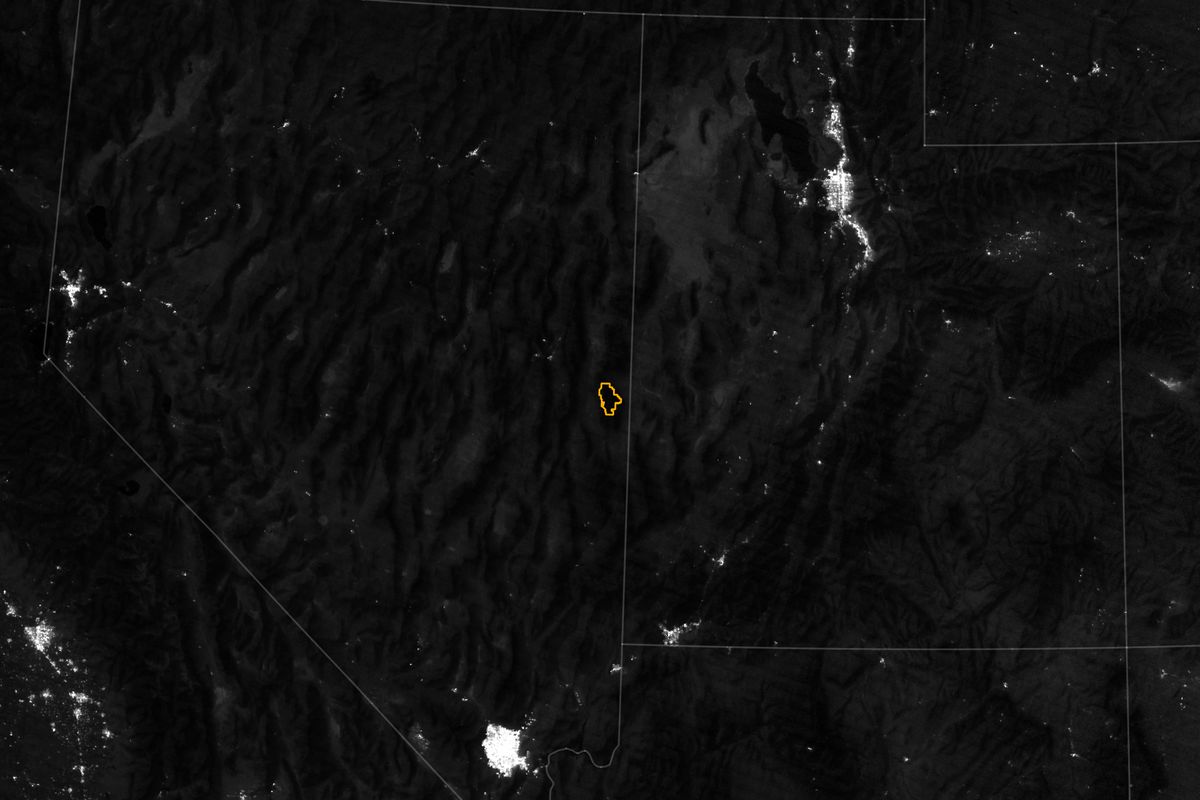
NASA Earth Observatory night-lights image of Nevada and Utah with Great Basin National Park outlined, Las Vegas glowing at the bottom left

Night lights over the Great Basin from NASA's VIIRS instrument. The park is outlined in orange; the bright patch at bottom left is Las Vegas, Salt Lake City is top right. Image: NASA Earth Observatory, Wanmei Liang.

Stargazing in Las Vegas Without a Car

Most people searching for stargazing in Las Vegas are visitors, and many of them do not have a rental car. You still have four good options.

  • CSN Planetarium telescope nights. The College of Southern Nevada's Dale Etheridge Planetarium on the North Las Vegas campus at 3200 East Cheyenne Avenue is the only public planetarium in southern Nevada, and it offers free telescope viewing after the 8 pm Friday and Saturday shows, weather permitting. It is a 20-minute rideshare from the Strip and the cheapest telescope experience in the city. Confirm the schedule on the college website before you go, because sessions are cancelled when it is cloudy or windy.
  • A society star party by rideshare. If an Astronomy in the Park night at Red Rock or Spring Mountain Ranch lands on your dates, a rideshare out and back is about the cost of a show ticket and buys you a line of serious telescopes with people who love explaining what you are looking at. Book the return ride before you lose signal.
  • A guided Las Vegas stargazing tour. Several operators run evening tours to Red Rock Canyon or Valley of Fire with hotel pickup, a guide and a telescope. They typically last four to five hours, are priced per person, and are the only practical way for a car-free visitor to reach Valley of Fire after dark. Choose one that advertises telescope viewing rather than just a night drive, and check that the date is at least four days from the full Moon.
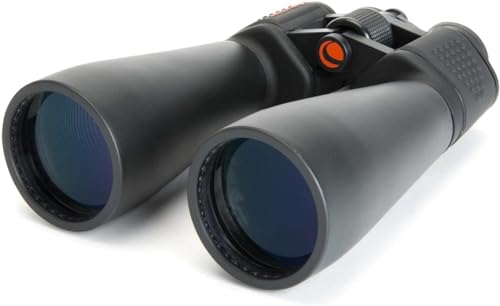
  • Your hotel balcony, with realistic expectations. From a Strip balcony you will see the Moon in detail, Venus, Jupiter, Saturn and Mars when they are up, and the bright outline of Orion in winter. That is it for the naked eye. A pair of 15x70 binoculars changes the picture: lunar craters, Jupiter's four big moons, Saturn as an oval, the Pleiades cluster and the Orion Nebula are all within reach from a Bortle 9 balcony. Our pick for travellers is the Celestron SkyMaster 15x70, which fits in a carry-on and costs less than one show ticket.

When to Go: Las Vegas Stargazing Month by Month

Las Vegas has no bad season for stargazing, only bad site choices for the season. The rule is simple: low desert sites from October to April, altitude from May to September, and never within four days of the full Moon if you want the Milky Way.

MonthsConditionsWhere to GoWhat to See
October – NovemberThe best all-round window: 70s by day, 40s at night, very dry, calmValley of Fire, Lake Mead, Death ValleyLast of the Milky Way core at dusk, Andromeda overhead, Orionids
December – FebruaryClearest, steadiest air of the year; freezing at altitude, 30s in the low desertValley of Fire, Death Valley, Red Rock eventsOrion Nebula, Pleiades, Geminids on December 13–14, winter Milky Way
March – AprilPleasant temperatures but the windiest months; dust can cut transparencyLake Mead, Mojave Preserve, Cathedral GorgeGalaxy season in Leo and Virgo, zodiacal light after dusk
May – JuneHeat builds past 100°F; nights still comfortable at altitudeMount Charleston, Lee Canyon, Great BasinMilky Way core rising by midnight in May, by 10 pm in June
July – SeptemberMonsoon: afternoon thunderstorms, clearing by late evening; low desert stays above 90°F all nightMount Charleston only, or Great Basin for a weekendCore overhead, Perseids August 12–13, Great Basin Astronomy Festival in September

Plan around the Moon first and the calendar second. Our 2026 astronomy events calendar lists every new Moon, meteor shower peak and planetary conjunction so you can match a trip to a dark week.

What to Bring for a Mojave Desert Night

Desert stargazing is the mirror image of Midwestern stargazing. Dew heaters stay at home; water and layers do not. Every site on this page except Red Rock and the planetarium is beyond reliable cell coverage, so prepare as if nobody is coming to help.

  • Water, one gallon per person, even in winter. Dry air pulls moisture out of you faster than you notice, and the nearest tap at Valley of Fire or Mojave is at the campground.
  • Layers for a 30-degree drop. A 75-degree October afternoon at Valley of Fire becomes a 42-degree night. Mount Charleston in June goes from shorts at 6 pm to a down jacket at 1 am.
  • A red headlamp and a dimmed phone. Red light preserves night vision and keeps you welcome at star parties. White phone screens are the most common offence; set the screen to its lowest brightness and use a red-filter app.
  • Wind protection and a stable mount. Spring winds at Lake Mead and Mojave will shake a lightweight tripod. A Dobsonian's low centre of gravity is a real advantage here.
  • Offline maps and a full tank. Cima Road, Northshore Road and US-93 have no fuel for long stretches. Download the map before you leave the Strip.
  • A chair, a thermos and snacks. The best nights are long. Comfort is what keeps you out until the Milky Way core clears the horizon.

Best Telescopes and Binoculars for Las Vegas Stargazing

The right instrument depends on how you are getting to the dark. A visitor on foot, a visitor with a rental car and a Henderson resident with a garage have three different answers, and in Bortle 2 to 4 skies all three see far more than the same gear would show from a suburb back east.

Celestron SkyMaster 15x70 binoculars

Celestron SkyMaster 15x70

For visitors without a car

Carry-on sized, no setup, and enough aperture to show Jupiter's moons from a Strip balcony and dozens of clusters from a tour stop at Red Rock.

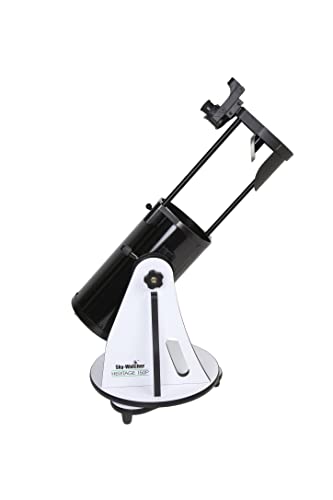
Sky-Watcher Heritage 130P tabletop Dobsonian

Sky-Watcher Heritage 130P

For the rental-car trunk

A collapsible 5-inch Dobsonian that fits in a duffel, sets up on a picnic table at Lake Mead in two minutes, and resolves globular clusters from Valley of Fire.

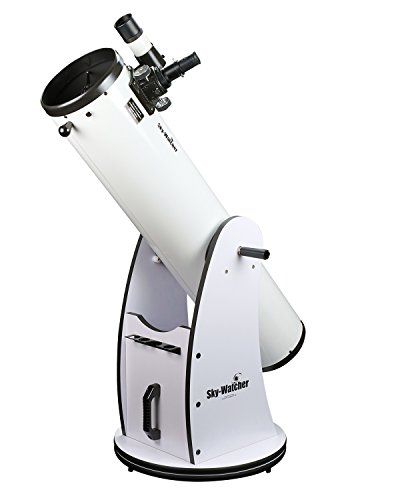
Sky-Watcher Classic 200P 8-inch Dobsonian

Sky-Watcher Classic 200P (8")

For residents who drive to the dark

The classic 8-inch Dobsonian. From Mojave Preserve or Death Valley it shows spiral arms in galaxies and the Veil Nebula with a filter, and its low profile shrugs off desert wind.

Living in the valley and observing from a Henderson or Summerlin backyard most nights? Our guide to the best telescopes for urban stargazing covers what works under a Bortle 8 to 9 sky, and the best binoculars for stargazing compares the SkyMaster against lighter 10x50 options.


🔭

Not sure which telescope to pack for a desert trip?

Tell the Finder Tool your budget, how you travel and what you want to see from Valley of Fire or Death Valley, and it recommends a specific model in under two minutes.

Find My Telescope →

Astronomy Clubs and Public Programmes in Las Vegas

The Las Vegas Astronomical Society is the hub of amateur astronomy in southern Nevada. Its monthly Astronomy in the Park nights are the easiest way to look through a large telescope under a decent sky, it holds member observing sessions at darker sites, and its meetings are open to newcomers. The CSN Planetarium adds free weekend telescope viewing and partners with the society on larger events such as the Las Vegas Science and Technology Festival. Nevada State Parks schedules night sky viewing at Valley of Fire and Cathedral Gorge, and Friends of Red Rock Canyon co-hosts the visitor centre star parties, including the unveiling of a new public telescope on Earth Day. Across the state line, Death Valley and Great Basin both run ranger-led astronomy programmes. For contact details and other regional clubs, see our US astronomy club directory, and if your group is missing you can submit it here.


Continue Exploring

Keep the session going with the next useful answer

Choose the next page based on whether you need a recommendation, a comparison, or a practical observing plan.

Use Finder Tool →

🎄 Holiday season: Telescope Christmas Gift Guide 2026 · Black Friday deal tracking

Las Vegas Stargazing FAQ

Can you see stars from the Las Vegas Strip?

Only the brightest ones. The Strip is a Bortle 9 sky, so you can see the Moon, Venus, Jupiter, Saturn and Mars when they are up, plus a few first-magnitude stars such as Sirius and the outline of Orion in winter. Binoculars add lunar craters, Jupiter's moons and the Pleiades. For real stargazing near Las Vegas you need to drive at least an hour, to Valley of Fire or Lake Mead's Echo Bay.

Is Red Rock Canyon open at night for stargazing?

No. The Scenic Drive closes at sunset and the late-exit passes sold through Recreation.gov are for climbers only. The way to stargaze at Red Rock is to attend a Las Vegas Astronomical Society "Astronomy in the Park" night at the visitor centre, held most months except December for a small admission fee.

What is the closest dark sky to Las Vegas?

For a genuinely dark sky, Valley of Fire State Park, about an hour north-east, reaches Bortle 3 to 4 and is the best within an hour; you need to camp or attend a park night-sky event to stay after sunset. For a site you can visit any night without camping, Lake Mead's Echo Bay, about 75 minutes away, is open 24 hours at Bortle 4.

What is the best month for stargazing in Las Vegas?

October and November offer the best combination: dry, calm, comfortable nights and the Milky Way core still visible at dusk. December to February has the clearest air of the year if you dress for freezing temperatures. From June to September, go up to Mount Charleston rather than the low desert, which stays above 90 degrees all night.

Can I go stargazing in Las Vegas without a car?

Yes. The CSN Planetarium in North Las Vegas offers free telescope viewing after its 8 pm Friday and Saturday shows, a 20-minute rideshare from the Strip. Astronomy society star parties at Red Rock Canyon are also reachable by rideshare, and guided evening tours to Red Rock or Valley of Fire include hotel pickup and a telescope.

Is Death Valley worth visiting from Las Vegas for stargazing?

From October to April, absolutely. It is a Gold Tier International Dark Sky Park about two and a half hours west with a Bortle 1 to 2 sky, and Dante's View is one of the best Milky Way viewpoints in the country. Avoid summer, when night temperatures remain dangerously high. Mojave National Preserve is a closer Bortle 2 to 3 alternative at under two hours.

Related Guides