
Best Stargazing Near Los Angeles: Top Dark-Sky Sites & Telescope Guide
Telescope Advisor Logo Telescope Advisor
Star-filled night sky over a dark landscape — the kind of view LA-area stargazers drive to find

Stargazing Destinations · Southern California

Best Stargazing Near Los Angeles: Dark-Sky Sites Within Two Hours

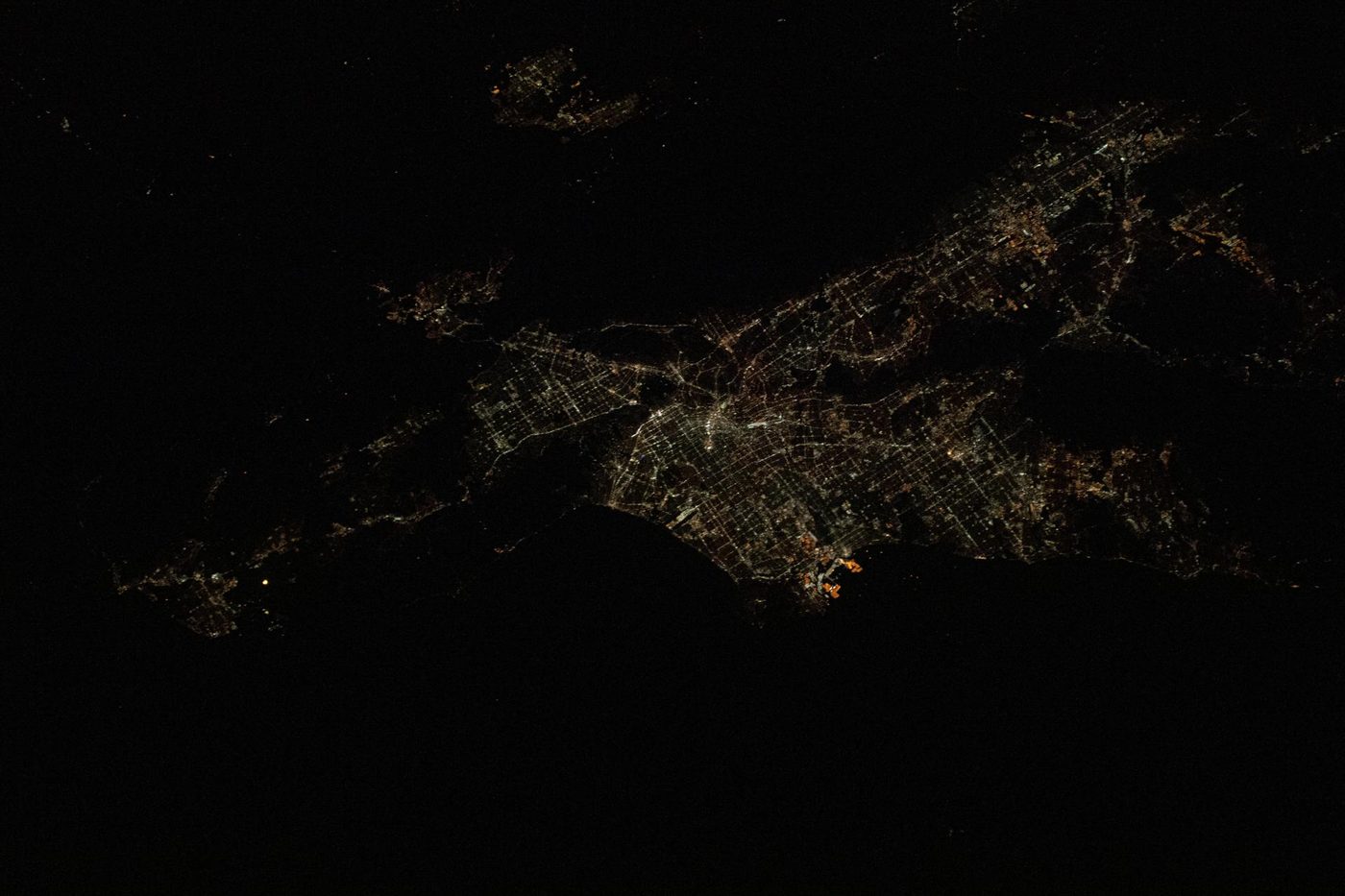
Los Angeles has some of the worst light pollution in the world — but also some of the best dark-sky sites within a short drive. This guide covers the best stargazing locations near LA, from Griffith Observatory to the high desert, with Bortle ratings and telescope recommendations for each.

Closest dark siteAngeles National Forest
Darkest near LAJoshua Tree NP (Bortle 2-3)
Drive time30 min to 2.5 hours
Best forBeginners to advanced
By Telescope Advisor Editorial Team Published: Updated: Reviewed & approved by Juhi Sahni, Senior Editor Editorial Standards

Los Angeles is notorious among astronomers for its light pollution. The sprawling urban glow of the Greater LA area creates a Bortle 7–9 sky — meaning only the Moon, planets, and brightest stars are visible from most backyards. But what sets LA apart from many other light-polluted cities is the quality and accessibility of dark skies within a short drive. Head north into the Angeles National Forest, east into the Mojave Desert, or south toward the Anza-Borrego desert, and within one to two hours you can reach Bortle 2–4 skies that rival the best observing sites in the country.

This guide covers the best stargazing locations within reach of Los Angeles, with Bortle ratings, driving directions, what to expect, and recommended equipment for each site. Whether you are a beginner with binoculars or an experienced observer with a 10-inch Dobsonian, there is a site here that fits your needs and drive tolerance.

Stargazing Site Comparison

SiteDrive from DTLABortleBest ForNotes
Griffith Observatory~30 min8-9Public viewing, Moon, planetsFree public telescopes on weekends. Great for urban outreach. Limited deep-sky.
Mount Wilson Observatory~1 hr4-5Dark skies, historic siteHistoric 100-inch telescope. Public observing nights. Cooler temperatures year-round.
Angeles Crest Highway (NF-1)~45 min4-5Quick getaways, dark skiesPull-offs along Angeles Crest at 5,000-7,000 ft elevation. No facilities. Check road closures.
Castaic Lake State Recreation Area~45 min5-6Family camping, moderate darkCampground with lake views. Good for beginners. Light dome from Santa Clarita.
Frazier Park / Mt. Pinos~1.5 hr3-4Serious deep-sky, clubsElevation 8,800 ft. LAAS observing site. Very dark. Cold even in summer. Excellent deep-sky.
Anza-Borrego Desert State Park~2.5 hr2-3Pristine dark skies, astrophotographyInternational Dark Sky Park. Bortle 2 skies. Winter best. Summer very hot. Limited water.
Joshua Tree National Park~2.5 hr2-3Iconic dark skies, astrophotographyGold-tier IDA Dark Sky Park. Stunning landscapes. Winter best. Entrance fee required.
Red Rock Canyon State Park~2 hr4-5Family camping, moderate darkHigh desert, dramatic geology. Good for wide-field observing. Darker than Angeles.

Griffith Observatory — Urban Astronomy at Its Best

Griffith Observatory is the most accessible stargazing destination for LA residents. Perched on the southern slope of Mount Hollywood, Griffith offers free public telescope viewing on weekend nights, with knowledgeable volunteers guiding visitors through views of the Moon, planets, and brighter deep-sky objects. The observatory's 12-inch Zeiss refractor and coelostat are available for public viewing, and the grounds provide sweeping views of the LA basin that are spectacular even without a telescope.

The light pollution at Griffith is severe (Bortle 8–9), making deep-sky observing impractical. But for lunar and planetary observing, the location is excellent — the Moon, Venus, Mars, Jupiter, and Saturn all appear brilliant through the observatory's telescopes. Griffith is also an ideal place for beginners to learn the sky before venturing to darker sites. The free monthly star parties hosted by the Los Angeles Astronomical Society (LAAS) and The Planetary Society are excellent opportunities to see the sky through a variety of telescopes and talk to experienced observers.

For Griffith Observatory, we recommend bringing a pair of 10×50 binoculars for wide-field views of the Moon and bright planets. A small portable telescope like the Celestron Travel Scope 70 is also easy to carry up the short trail from the parking lot. The parking lot fills early on weekends, so arrive before sunset to secure a spot.

Mount Pinos — The LA Astronomer's Dark-Sky Destination

Mount Pinos, at 8,831 feet in the Los Padres National Forest, is the premier dark-sky site for serious LA-area astronomers. The Los Angeles Astronomical Society (LAAS) holds regular observing sessions at the Mount Pinos campground, and the Bortle 3–4 skies provide excellent conditions for deep-sky observing. The high elevation means thin, stable air that is ideal for high-magnification planetary observing as well.

From the Mount Pinos parking area, the summer Milky Way is bright enough to cast a faint shadow. A 10-inch or larger Dobsonian reveals hundreds of galaxies in the Virgo Cluster, structure in the Andromeda Galaxy, and the Veil Nebula with an O-III filter. The elevation also means cooler temperatures year-round — even in summer, a jacket is needed after sunset. Snow closes the road in winter months, so plan your trips between late spring and early autumn.

The campground at Mount Pinos has basic facilities (vault toilets, no running water) and the parking area is large enough for a dozen telescopes. Arrive early to set up before dark, and bring warm clothing even in July — the temperature drops dramatically after sunset at 8,800 feet. The LAAS observing schedule can be found on their website, and non-members are generally welcome at public sessions.

Joshua Tree National Park — An International Dark Sky Park

Joshua Tree National Park is designated as a Gold-Tier International Dark Sky Park by the International Dark-Sky Association, with Bortle 2–3 skies that are among the darkest in Southern California. At 2.5 hours from downtown LA, it is a longer drive, but the combination of pristine dark skies, iconic Joshua tree silhouettes, and year-round accessibility makes it a weekend destination for astrophotographers and serious observers.

The park offers designated stargazing areas, periodic night sky programs led by park rangers, and campgrounds that allow overnight observing. Winter nights are cold but the skies are at their clearest. Summer temperatures are extreme during the day (often exceeding 100°F) but the dry air provides excellent transparency at night. The park's entrance fee is $30 per vehicle for a 7-day pass. The best stargazing locations within the park are Ryan Mountain, Keys View (at 5,185 feet), and the Hidden Valley area. The Cottonwood Campground near the south entrance tends to have the darkest skies within the park.

For Joshua Tree, a portable telescope with a GoTo mount is ideal — you can set up quickly at a campground or pull-off and let the mount find dozens of deep-sky targets. A 6-inch or 8-inch Dobsonian is also excellent for the dark skies.

Angeles Crest Highway — Quick Dark-Sky Getaway

For LA astronomers who cannot commit to a 2-hour drive, the Angeles Crest Highway (State Route 2) offers accessible dark skies in just 45 minutes. The highway climbs from the La Cañada Flintridge area to over 7,000 feet in the Angeles National Forest, with numerous pull-offs and parking areas that provide Bortle 4–5 skies. The Charlton Flat picnic area, the Mount Wilson road junction, and the Vincent Gulch pull-off are popular spots among local astronomers.

The Angeles Crest Highway is open year-round, but snow can close sections in winter. Check the Caltrans website before heading up after a storm. There are no facilities along the highway after leaving the suburbs, so bring water, food, and warm clothing. The light dome from LA reduces the darkness toward the southern horizon, but the zenith and northern sky are excellent.

For quick sessions along Angeles Crest, a portable setup is key. A 5-inch tabletop Dobsonian or a 70mm refractor on a lightweight tripod can be set up in minutes and packed up just as quickly. This is also an excellent location for binocular observing — a 15×70 pair reveals dozens of deep-sky objects from the 5,000-foot elevation.

Recommended Telescopes for LA Stargazing

The best telescope for LA-area stargazing depends on how you observe. If you mostly observe from home under light-polluted skies, a 4–6 inch telescope optimised for lunar and planetary viewing is the practical choice. If you are willing to drive to dark sites, a larger Dobsonian delivers the aperture needed for deep-sky observing.

Sky-Watcher Heritage 130P — portable tabletop Dobsonian ideal for dark-sky trips
BEST PORTABLE DOBSONIAN

Sky-Watcher Heritage 130P (5-inch Dobsonian)

The Heritage 130P is the ideal compromise between portability and aperture for LA stargazers. Its collapsible tube fits in a car boot alongside camping gear for Joshua Tree trips, and the tabletop Dobsonian base sets up in seconds. At Mount Pinos or Angeles Crest, the 130mm aperture reveals dozens of Messier objects, the Orion Nebula in detail, and the Andromeda Galaxy's dust lanes under dark skies. From LA backyards, it shows Jupiter's belts, Saturn's rings, and the Moon in stunning detail. At under $300, it is also the best value telescope for the LA-area astronomer.

Aperture: 130mmWeight: 5.9 kgFocal: 650mm
Celestron Travel Scope 70 — lightweight grab-and-go scope for quick sessions
BEST GRAB-AND-GO

Celestron Travel Scope 70

The Travel Scope 70 is the perfect companion for quick LA-area stargazing sessions. Its lightweight design (under 2 kg) and included backpack make it easy to carry up to Griffith Observatory or toss in the car for an Angeles Crest run. The 70mm aperture shows the Moon brilliantly, resolves Jupiter's main cloud belts, and reveals Saturn's rings. From dark sites, it picks up the Orion Nebula, the Pleiades, and Andromeda's core. For the LA astronomer who wants maximum portability with zero setup hassle, the Travel Scope 70 is the answer.

Celestron SkyMaster 15x70 binoculars — ideal for LA dark-site trips
ESSENTIAL ACCESSORY

15×70 Binoculars for Dark-Site Sweeping

A quality pair of 15×70 binoculars is the LA stargazer's most versatile tool. They are portable enough for Griffith Observatory, powerful enough for Mount Pinos dark-sky sessions, and require zero setup. From Joshua Tree's Bortle 2 skies, 15×70 binoculars reveal dozens of Messier objects, the Milky Way's structure, and even the Andromeda Galaxy's dust lanes. For the LA astronomer who wants to travel light, a pair of binoculars plus a star chart is a complete observing setup that fits in a daypack.

Essential Accessories for Dark-Site Trips

A successful dark-site trip from LA requires more than just a telescope. Here are the accessories that make the difference between a frustrating evening and a productive night under the stars.

  • Red LED flashlight. Critical for preserving night vision while setting up equipment and reading star charts. A dimmable red flashlight with a magnetic base can be attached to your telescope mount for hands-free operation. This is the single most important accessory for any dark-site trip.
  • Warm clothing and blankets. Even Joshua Tree can drop below 40°F on winter nights. Mount Pinos at 8,800 feet is cold even in July. Multiple layers, a warm hat, gloves, and insulated boots are essential for extended sessions. Hand warmers are inexpensive and let you operate eyepiece controls with bare fingers.
  • Camping chair and table. A small folding table keeps eyepieces, charts, and accessories off the ground. A comfortable camping chair makes the difference between a 30-minute session and a 3-hour session. Consider a chair with a side pocket for eyepiece storage.
  • Water and snacks. Dark-sky sites near LA typically have no facilities. Bring more water than you think you need — the desert air is deceptively dehydrating. High-energy snacks like trail mix, granola bars, and fruit help maintain focus during long sessions.
  • Star chart or planetarium app. SkySafari 7 Pro or a printed Pocket Sky Atlas are essential for navigating the night sky. For Joshua Tree and Mount Pinos deep-sky sessions, a detailed chart of the Virgo Cluster region is particularly valuable during galaxy season (March–May).
  • Dew shield and heater. Coastal moisture can cause dew even in the desert on humid nights. A dew shield for your telescope's objective and a 12V dew heater for longer sessions prevent the fogging that ends sessions prematurely.

Anza-Borrego Desert State Park — International Dark Sky Park

Anza-Borrego Desert State Park is California's largest state park and an International Dark Sky Park with Bortle 2–3 skies comparable to Joshua Tree. At 2.5 hours from LA, it is a similar drive distance but tends to be less crowded than Joshua Tree. The park's vast desert floor at 800 feet elevation provides unobstructed 360° horizons and exceptionally steady air for planetary observing.

The park offers three primitive campgrounds with no hookups or water (bring your own) and miles of unpaved roads that provide access to remote observing spots. The best stargazing areas are along the Henderson Canyon Road and the Blair Valley area. The park also hosts an annual Dark Sky Festival in winter with guest speakers, telescope viewing, and photography workshops.

Anza-Borrego is particularly well-suited for astrophotography. The dark skies and clear horizons allow wide-field Milky Way images with Joshua trees and desert landscapes in the foreground. Winter is the prime season, with the galactic centre prominent in the pre-dawn sky and comfortable daytime temperatures for exploration.

Seasonal Stargazing Guide for LA Sites

Winter (December–February): The best season for deep-sky observing. Long nights, clear skies, and comfortable temperatures at desert sites. Orion, Taurus, and Gemini dominate the evening sky. The winter Milky Way is at its best in the evening. Bundle up for Mount Pinos — temperatures can drop below freezing. Joshua Tree and Anza-Borrego are at their most comfortable.

Spring (March–May): Galaxy season begins. The Virgo Cluster, Leo Triplet, and spring galaxies are well placed. Mount Pinos road may still be closed from snow. Angeles Crest Highway is open at lower elevations. Griffith Observatory is excellent for planetary observing as Mars fades after opposition.

Summer (June–August): The Milky Way is spectacular at Mount Pinos and Joshua Tree. Galactic centre objects like the Lagoon Nebula, Trifid Nebula, and Sagittarius star clouds are prime targets. Desert sites are extremely hot during the day (100°F+) but the nights are warm and clear. Mount Pinos is the best summer option — high elevation provides comfortable temperatures even in August.

Autumn (September–November): Transition months. Mount Pinos road remains open through October typically. The Andromeda Galaxy is well placed in the evening sky. Jupiter and Saturn are prominent evening planets. A great time for beginners — comfortable temperatures and bright planets provide easy targets for learning the sky.

Mount Wilson Observatory — Astronomy History Within an Hour

Mount Wilson Observatory, at 5,710 feet in the San Gabriel Mountains, is just a 1-hour drive from downtown LA and offers Bortle 4–5 skies that are significantly darker than the city. The observatory is home to the historic 100-inch Hooker Telescope (where Edwin Hubble discovered the expansion of the universe) and the 60-inch telescope that first revealed the spiral structure of the Andromeda Galaxy.

Mount Wilson offers public observing nights through the Mount Wilson Observatory Association, where visitors can view through the historic telescopes and attend talks by professional astronomers. The observing deck provides a flat, stable surface for setting up personal telescopes, and the mountain top's elevation above the inversion layer means exceptionally steady air for planetary observing. The Mount Wilson Trail also connects to the Angeles Crest Highway network, making it easy to combine with a dark-site session at Charlton Flat or Vincent Gulch.

Frequently Asked Questions

Where is the best stargazing near Los Angeles?

Mount Pinos offers the best balance of dark skies (Bortle 3–4), drive time (1.5 hours), and elevation (8,800 ft). For the darkest skies, Joshua Tree National Park (Bortle 2–3) is worth the 2.5-hour drive. For a quick session, Angeles Crest Highway provides Bortle 4–5 skies in 45 minutes.

How dark are the skies at Griffith Observatory?

Griffith Observatory is Bortle 8–9 — deep-sky observing is not practical. However, lunar and planetary views through the public telescopes are excellent, and the location is ideal for beginners learning the sky.

Can I see the Milky Way from near Los Angeles?

Yes, from Mount Pinos, Joshua Tree, and Anza-Borrego, the summer Milky Way is bright enough to see structure and cast a faint shadow. From within the LA basin, the Milky Way is not visible due to light pollution.

What telescope should I use from LA's light-polluted skies?

For urban observing from LA backyards, a 4–6 inch SCT or Mak is ideal for lunar and planetary viewing. For dark-site trips, a 6–10 inch Dobsonian provides the aperture needed for deep-sky observing at Mount Pinos or Joshua Tree.

Are there astronomy clubs near Los Angeles?

Yes. The Los Angeles Astronomical Society (LAAS) is the largest club in the area, with regular observing sessions at Mount Pinos, Griffith Observatory, and other sites. The club is beginner-friendly and welcomes new members. See our astronomy club directory for more.

Is Joshua Tree safe for solo stargazing at night?

Joshua Tree is generally safe for solo stargazing, but take standard precautions. Let someone know your location and expected return time. Bring plenty of water, warm clothing, and a charged phone. Wildlife (coyotes, snakes) is present but rarely approaches humans. Stay near your vehicle and avoid hiking alone at night.

What is the best time of year for stargazing near LA?

Winter (December–February) offers the longest nights and clearest skies at Joshua Tree and Anza-Borrego. Spring (March–May) is galaxy season at Mount Pinos. Summer (June–August) provides the Milky Way at its best but is very hot at desert sites. Mount Pinos is the best summer option due to its high elevation.

Can I drive to Mount Pinos in winter?

The road to Mount Pinos is often closed by snow from December through April. Check the Los Padres National Forest road conditions before planning a winter trip. When the road is open, the site is accessible with a standard vehicle as long as there is no active snow on the roads.

Plan Your LA Stargazing Trip

Los Angeles may be one of the most light-polluted cities in the world, but it is also one of the best-positioned cities for accessing dark skies. Within a 1.5-hour drive, you can reach Bortle 3 skies at Mount Pinos. Within 2.5 hours, you can reach Bortle 2 skies at Joshua Tree. Few major cities offer this combination of dark-sky proximity.

Start with Griffith Observatory for an easy introduction, graduate to Mount Pinos for your first dark-sky session, and plan an overnight trip to Joshua Tree or Anza-Borrego for the full experience. Each site offers a different aspect of the night sky, and together they provide a complete stargazing curriculum for the LA-area astronomer.

The key to successful LA stargazing is preparation. Check the weather, moon phase, and road conditions before heading out. Pack warm clothing, water, and snacks even for short trips. Bring a red flashlight and a star chart or app. And remember — the best telescope is the one you actually take to a dark site. A 5-inch Dobsonian at Mount Pinos outperforms a 12-inch SCT in a backyard under LA's light-polluted skies every time.

Related Guides

Elena Reyes — Senior Science Editor

Elena Reyes

Senior Science Editor

Covers NASA missions, space science discoveries, and astronomical events for Telescope Advisor. Translates complex astrophysical research into practical insights for backyard observers. Based in the San Francisco Bay Area.

Content reviewed by our editorial team. Research and drafting assisted by AI to ensure unbiased, data-driven analysis. Learn more about our editorial process.