
Quadrantids Meteor Shower 2027: Peak Viewing Guide (Jan
Telescope Advisor Logo Telescope Advisor
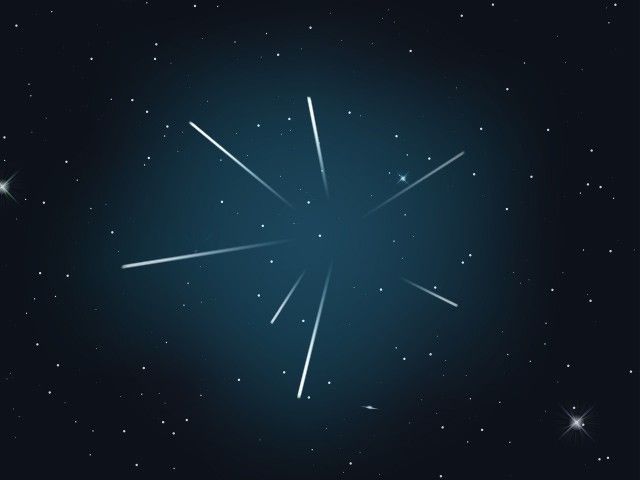
Bright meteor streaking across the night sky during a meteor shower peak

Meteor Shower Guide · January 2027

Quadrantids Meteor Shower 2027: Peak Viewing Guide for January 3-4

The Quadrantids kick off 2027 with one of the year's best meteor displays — up to 80 meteors per hour under dark skies. This guide covers the peak window, radiant location, Moon conditions, and the best way to watch this often-overlooked shower.

Peak nightJanuary 3-4, 2027
Expected ZHR~80 meteors/hour
Moon phaseWaning crescent (favorable)
RadiantBootes (NE horizon)
By Elena Reyes Reviewed by Juhi Sahni Updated Editorial Standards

The Quadrantid meteor shower is one of the three best annual meteor showers — alongside the Perseids in August and the Geminids in December — yet it is the least known and most infrequently observed. Its peak is narrow, lasting only six to eight hours, and it occurs during the cold Northern Hemisphere winter when few casual observers venture outside. But those who make the effort are rewarded with a shower that regularly produces 60 to 120 bright, fast meteors per hour from a dark site, often with a higher percentage of fireballs than either the Perseids or Geminids.

The 2027 Quadrantids peak overnight on January 3-4, with the best viewing anticipated in the pre-dawn hours of January 4. The Moon is a waning crescent, rising in the early morning but providing minimal interference — one of the best Moon conditions for this shower in several years. Combined with the peak falling on a Sunday night into Monday morning, the 2027 Quadrantids are unusually well positioned for a dedicated observing session.

This guide covers everything you need to know: the exact peak timing, the radiant location, expected rates, equipment recommendations, and tips for maximising your meteor count during this short but intense shower.


What Are the Quadrantids?

The Quadrantids are named after the now-defunct constellation Quadrans Muralis (the Mural Quadrant), which was located between Boötes, Draco, and Hercules. Although the International Astronomical Union removed Quadrans Muralis from the official 88-constellation list in 1922, the name stuck in the meteor shower nomenclature. The radiant — the point in the sky from which the meteors appear to originate — now lies in the constellation Boötes, near the handle of the Big Dipper.

Unlike most meteor showers, which originate from cometary debris, the Quadrantids are believed to originate from asteroid 2003 EH1, a possible extinct comet fragment. This gives Quadrantid meteors a distinctive character: they are typically bright, with a higher-than-average fireball rate, and they enter Earth's atmosphere at a moderate 41 km/s — slower than the Perseids (59 km/s) but faster than the Geminids (35 km/s). The moderate entry speed creates persistent trains: glowing ionised trails that linger for one to three seconds after the meteor has passed.

2027 Peak: Timing and Expected Rates

The Quadrantid peak is notoriously narrow. Unlike the Perseids, which produce elevated rates for two to three days around the peak, the Quadrantids reach their maximum ZHR (zenithal hourly rate) for only six to eight hours. This means the difference between observing at the right time and six hours early or late can be the difference between 80 meteors per hour and 15 meteors per hour.

For the 2027 Quadrantids, the peak is predicted to occur around 8:00 UTC on January 4, 2027. This corresponds to:

  • 3:00 AM Eastern Standard Time (Jan 4)
  • 2:00 AM Central Standard Time (Jan 4)
  • 1:00 AM Mountain Standard Time (Jan 4)
  • 12:00 AM Pacific Standard Time (Jan 4)
  • 8:00 AM GMT (Jan 4) — best for Western Europe pre-dawn

The expected ZHR under optimal conditions (dark sky, radiant overhead) is approximately 80 meteors per hour. Actual observed rates from suburban locations (Bortle 5–6) are typically 15–25 meteors per hour. From a Bortle 3–4 dark site, 40–60 meteors per hour is realistic. The best strategy is to observe for at least two hours centred on the peak time, as rates can fluctuate significantly within the narrow window.

Moon Phase and Observing Conditions

The Moon is a significant factor for any meteor shower. For the 2027 Quadrantids, the Moon is a waning crescent — roughly 20% illuminated — rising around 3:30–4:00 AM local time. This means the pre-dawn hours before 3 AM are completely Moon-free, providing excellent dark-sky conditions during the predicted peak. After 3 AM, the crescent Moon rises but its low brightness does not significantly impact meteor visibility. This is one of the most favourable Moon conditions for the Quadrantids in recent years.

How to Watch the Quadrantids: No Telescope Required

Meteor showers are best observed with the naked eye. Binoculars and telescopes have narrow fields of view that show only a tiny fraction of the sky; you will miss far more meteors than you catch. Instead, follow these guidelines:

  • Find a dark site: The further from city lights, the better. A Bortle 3–4 site is ideal. If you cannot leave the city, shelter behind a building or tree line that blocks direct streetlights.
  • Let your eyes adapt: Dark adaptation takes 20–30 minutes. Avoid looking at your phone — even a quick glance at a screen resets adaptation. If you must check a chart, use a red-light app or a red-filtered flashlight.
  • Dress warmly: January nights are cold across the Northern Hemisphere. Multiple layers, a hat, gloves, and insulated boots are essential. Hand warmers make a significant difference in comfort during extended sessions.
  • Look toward the radiant: The radiant is in Boötes, near the handle of the Big Dipper. Meteors will appear to radiate from this point but can appear anywhere in the sky. Facing northeast toward the radiant gives the best concentration.
  • Use a reclining chair: A zero-gravity chair or a sleeping bag on a ground pad lets you look straight up without neck strain. This is the single best equipment investment for meteor observing.

While you do not need a telescope for meteor observing, binoculars are useful for examining persistent trains — the glowing ionised trails that some bright Quadrantids leave behind. A pair of 10×50 binoculars gives you a wide enough field to catch a persistent train within seconds of a meteor's passage, and the magnification reveals the train's structure as it twists and fades in the upper atmosphere.

Celestron SkyMaster 15x70 binoculars for meteor train observing
RECOMMENDED

Celestron SkyMaster 15×70 Binoculars

While not essential for meteor watching, the SkyMaster 15×70 is excellent for examining persistent trains and scanning the radiant area during lulls. The 70mm objectives gather enough light to show faint trains clearly, and the 15× magnification reveals fine structure that 10× binoculars miss. A tripod is essential for steady viewing — at 15×, hand-holding is not practical for extended sessions.

Quadrantids vs Perseids vs Geminids: How They Compare

FeatureQuadrantidsPerseidsGeminids
Peak date 2027Jan 3-4Aug 12-13Dec 14-15
ZHR (dark sky)~80~100~120
Peak duration6-8 hours2-3 days1-2 days
Fireball rateHighModerateHigh
Meteor speed41 km/s59 km/s35 km/s
Moon 2027Favorable (crescent)TBDTBD
Parent bodyAsteroid 2003 EH1Comet 109P/Swift-TuttleAsteroid 3200 Phaethon

Frequently Asked Questions

When is the best time to watch the Quadrantids in 2027?

The peak is predicted around 8:00 UTC on January 4, 2027, which corresponds to the pre-dawn hours of January 4 for North America (3 AM ET, 2 AM CT, 1 AM MT, midnight PT). The best viewing is in the two to three hours centred on this time.

Where is the Quadrantid radiant?

The radiant is in the constellation Bootes, near the handle of the Big Dipper. It rises in the northeastern sky around midnight local time and is highest in the pre-dawn hours. Meteors can appear anywhere in the sky but will trace back to this point.

Do I need a telescope to see the Quadrantids?

No. Meteor showers are best observed with the naked eye. Binoculars and telescopes have too narrow a field of view. If you want to examine persistent meteor trains after they appear, a pair of 10x50 or 15x70 binoculars on a tripod can be useful.

How many Quadrantid meteors will I see per hour?

From a dark rural site (Bortle 3-4), 40-60 meteors per hour is realistic. From suburban skies (Bortle 5-6), expect 15-25 per hour. The ZHR under ideal conditions is approximately 80, but actual observed rates depend heavily on your sky darkness and the radiant's altitude.

What makes the Quadrantids different from other meteor showers?

The Quadrantids have an unusually narrow peak of only 6-8 hours, compared to 2-3 days for the Perseids. They also produce a higher percentage of fireballs, and their parent body is an asteroid (2003 EH1) rather than a comet. The meteors are moderately fast at 41 km/s.

Why is it called the Quadrantids if there is no Quadrans constellation?

The shower is named after the obsolete constellation Quadrans Muralis (the Mural Quadrant), which was removed from the official 88-constellation list in 1922. The radiant now lies in Bootes, but the historical name remains in use by convention.

Mark Your Calendar for January 3-4, 2027

The Quadrantids do not get the attention they deserve. A narrow peak in the depths of winter means fewer observers, but those who brave the cold are rewarded with bright, fast meteors, a high fireball rate, and in 2027, excellent Moon-free conditions during the peak.

The 2027 Quadrantids are an ideal introduction to meteor observing for anyone who has never watched them before. The peak falls on a weekend night, the Moon cooperates, and the preparation is simple: warm clothes, a reclining chair, and dark skies east of a city. The reward is one of the most intense meteor displays of the year.

Related Guides

Elena Reyes — Senior Science Editor

Elena Reyes

Senior Science Editor

Covers NASA missions, space science discoveries, and astronomical events for Telescope Advisor. Translates complex astrophysical research into practical insights for backyard observers. Based in the San Francisco Bay Area.

Content reviewed by our editorial team. Research and drafting assisted by AI to ensure unbiased, data-driven analysis. Learn more about our editorial process.