Cold Moon 2026: December's Full Moon and the Longest Nights
Telescope Advisor Logo Telescope Advisor
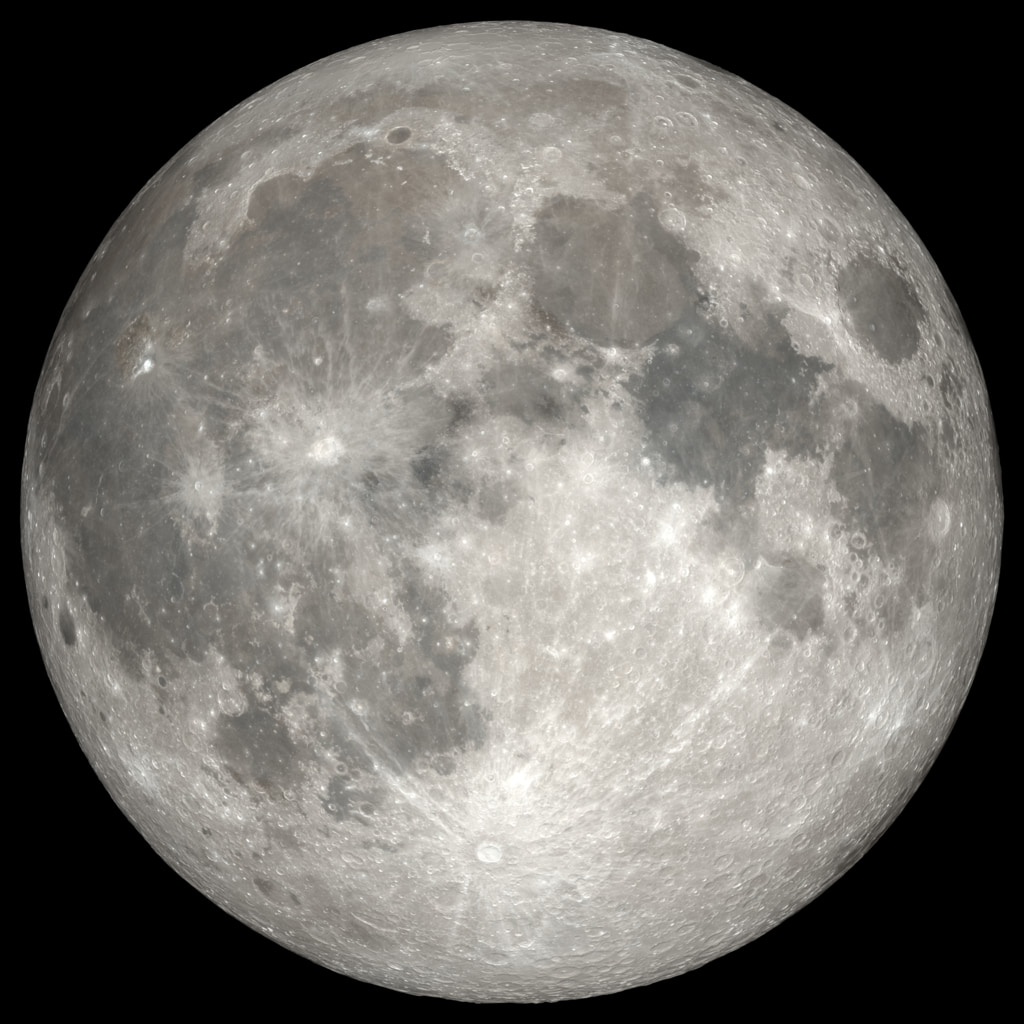
The full Moon photographed by NASA — the Cold Moon, the final and highest-riding full Moon of the year, rises on December 27, 2026

Named Full Moon Series · December 2026

Cold Moon 2026: The Year's Last, Highest Full Moon

The Cold Moon of 2026 is the full Moon of December 27 — the year's final full Moon, rising six nights after the winter solstice and two nights after Christmas. Also called the Long Night Moon, it does something no other full Moon of the year can: opposite the lowest Sun of the year, it climbs nearly to the top of the sky at midnight and stays above the horizon longer than any other full Moon, presiding over the longest nights of 2026. Here is the date, the folklore, the solstice geometry, and the Christmas-week observing plan.

Full MoonDecember 27, 2026
Winter SolsticeDecember 21, 2026
Its signatureHighest full Moon of the year
Christmas nightNearly full — first-light ready
By Telescope Advisor Editorial Team Published: Updated: Editorial Standards

Quick Answer: When Is the Cold Moon in 2026?

The Cold Moon in 2026 falls on Sunday, December 27, 2026. The Cold Moon is the traditional name for December's full Moon — the last full Moon of the calendar year — and in 2026 it lands six nights after the December 21 winter solstice and two nights after Christmas, crowning the holiday week.

Two things make this particular full Moon special. First, altitude: a full Moon always mirrors the Sun, and with the Sun at its lowest arc of the year, the Cold Moon takes the highest — standing close to the top of the sky at local midnight, higher than any other full Moon of 2026, in the cold, steady air that makes December the sharpest lunar observing month. Second, duration: riding the longest nights of the year, the Cold Moon is above the horizon longer than any other full Moon — the source of its other traditional name, the Long Night Moon. Moonrise comes around sunset on the 27th, as with every full Moon; check a local table for your exact time, and enjoy the fact that on Christmas night itself, two evenings earlier, a nearly full waxing gibbous Moon hangs ready-made for every telescope unwrapped that morning.

The date

Full Moon: December 27, 2026 — the year's final full Moon, six nights after the winter solstice and two nights after Christmas.

The phenomenon

Opposite the year's lowest Sun, the Cold Moon rides the year's highest full-Moon arc — near the zenith at midnight — and stays up through the longest nights.

The best view

Late evening, high overhead, through a Moon filter — the crispest full-Moon views of the year. And Christmas night is the perfect first-light warm-up.


🔭

Not sure which telescope actually fits your goals?

Answer 5 quick questions about your budget, observing targets, and experience level — our Telescope Finder Tool recommends a specific model in under 2 minutes.

Find My Telescope →

The 2026 Date — and the December Sky Around It

The Cold Moon closes the busiest observing month of the year. Here is how December 2026's key dates line up:

Date Event Why It Matters
December 1 New Moon The month's deep-sky window opens — faint targets before moonlight builds
December 13–14 Geminid meteor shower peak The year's best shower, up to 120/hr, with a moonlight-free peak window (Geminids guide)
December 21 Winter Solstice The longest night of 2026 — and the geometric reason the Cold Moon rides so high
December 22 Ursid meteor shower peak (minor) ~8–12/hr — but the waxing Moon, ~90% lit on its way to full, washes most of them out
December 25 Christmas night — waxing gibbous Moon Nearly full, up all evening: the ideal first target for every telescope unwrapped that morning
December 27 Full Moon — the Cold Moon The year's final full Moon — highest of 2026 at midnight, above the horizon longer than any other
January 3–4, 2027 Quadrantid meteor shower peak The next dark-sky headline as the Cold Moon wanes (Quadrantids 2027 guide)

Like the Beaver Moon before it, the Cold Moon is a calendar name — December's full Moon carries it every year, wherever in the month it falls. In 2026 its placement is a gift: far enough past the December 13–14 Geminid peak to leave that night dark, and perfectly timed to give Christmas-week skywatchers a headline Moon. For the complete month plan, see What to See With a Telescope in December 2026 and the calendar-style Night Sky in December 2026.

Why Is It Called the Cold Moon?

Of all the traditional full Moon names, December's needs the least explanation. In the seasonal calendars of pre-industrial North America and Europe, this was the Moon of deep cold's arrival — the full Moon that rose over the first long freeze, when the growing, harvesting, hunting, and trapping Moons were all behind and the only work left was enduring. The name Cold Moon appears across Native American naming traditions and the colonial almanacs that borrowed from them.

Its best-known alternate name is more poetic and more astronomical: the Long Night Moon, for the full Moon nearest the winter solstice — the Moon that presides over the longest nights of the year and, fittingly, stays aloft through more of them than any other full Moon. European traditions add the Oak Moon, a name with old druidic associations, and the phrase "the Moon before Yule" survives in almanac tradition for a December full Moon that precedes Christmas — in 2026, the full phase lands two nights after Christmas, with the Moon waxing brilliantly through the holiday itself.

For observers, the folklore maps neatly onto practice: the Cold Moon's season is genuinely the coldest, stillest observing of the year — and cold, still air is exactly what high-magnification lunar work wants. The Moon named for the freeze is best observed because of it.

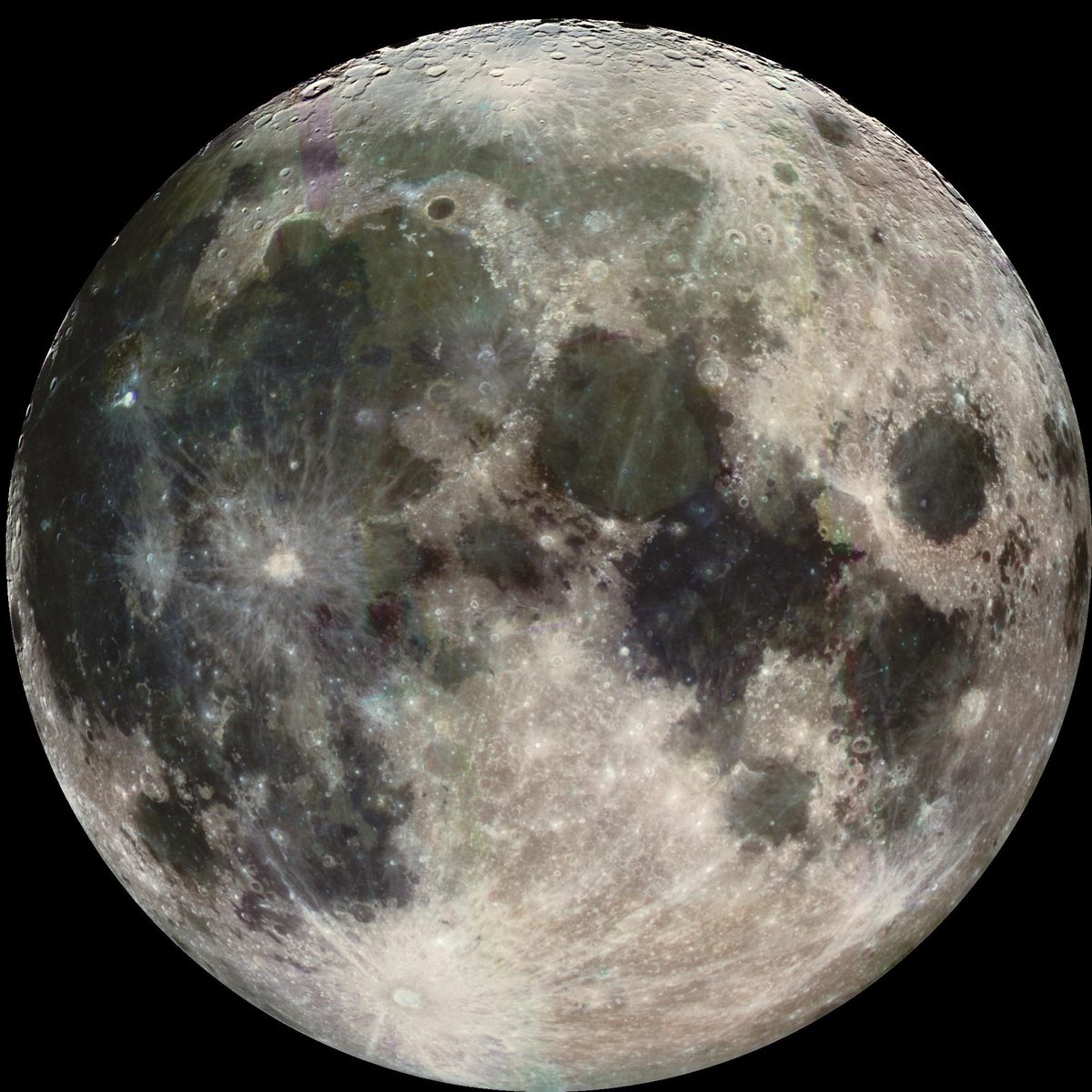
The Moon's limb photographed by NASA — even at full phase the lunar limb shows mountains and crater rims in profile

The Limb Keeps Its Relief

At full phase the disk looks flat — but the extreme limb still shows terrain in profile, and the Cold Moon's high altitude gives the year's steadiest view of it. Credit: NASA.

The Solstice Connection: Why the Cold Moon Rides Highest and Longest

The Cold Moon's two superlatives — highest full Moon of the year, longest time above the horizon — both fall out of one fact: a full Moon stands opposite the Sun, and in late December the Sun is at its yearly extreme low.

Highest

Whatever arc the Sun traces by day, the full Moon traces the opposite season's arc by night. The December 21 solstice pins the Sun to its lowest, shortest daily path — so the full Moon nearest that date inherits the June Sun's path: rising far in the northeast, climbing close to the top of the sky at local midnight, setting far in the northwest. From mid-northern latitudes no other full Moon of 2026 culminates as high. For a telescope, that altitude is everything: the Moon at the zenith shines through the thinnest possible slice of atmosphere, so contrast and sharpness peak exactly when the Moon does.

Longest

The same high arc is also a long arc. Just as the June Sun spends the most hours above the horizon of any Sun of the year, the Cold Moon spends the most hours aloft of any full Moon — rising around sunset and not setting until around the late December sunrise, spanning a night that itself runs 15+ hours of darkness at mid-latitudes. Hence "Long Night Moon": the longest night of the year, moonlit virtually end to end. It is the one night of 2026 when the full Moon genuinely never leaves you.

This is the finale of a three-act autumn progression our series has traced: the Harvest Moon owned the horizon, the Beaver Moon began the climb, and the Cold Moon tops out the cycle. From January onward, each full Moon's arc eases back down toward spring. The underlying mechanics live in our Moon Phases Explained guide.

Is the Cold Moon 2026 a Supermoon?

As with every named Moon, the label is independent of the name. A supermoon is a full Moon that coincides with perigee — the Moon's closest orbital approach to Earth — making it appear about 14% larger and 30% brighter than an apogee full Moon. The Cold Moon is simply December's full Moon, whatever its distance happens to be that month. We make no supermoon claim for the December 27, 2026 full Moon.

And the Cold Moon does not need the badge. Its distinctions — peak altitude, maximum hours aloft, the year's steadiest air — are locked in by solstice geometry, not orbital distance, and they matter far more at the eyepiece than a few percent of apparent diameter ever could. If the Moon looks gigantic climbing over the rooftops on the 27th, that is the familiar Moon illusion doing its winter encore; by the time the Cold Moon stands high at midnight, looking almost straight up at it, the illusion is gone and the genuinely superior view has replaced it.

Christmas Night 2026: First Light Under a Nearly Full Moon

More telescopes point at the sky for the first time on the night of December 25 than on any other night of the year — and in 2026 the Cold Moon's timing hands them a perfect opening act. On Christmas night the Moon is a bright waxing gibbous, two nights from full: risen by evening, up all night, impossible to miss, and forgiving of every beginner mistake.

Why a gibbous beats a full Moon for first light

Two nights before full, a slim terminator still survives on the limb — a strip where the Sun hangs low over the lunar surface and crater walls throw real shadows. A first-time observer gets both the easy grandeur of the nearly full disk and a taste of the 3D relief that makes lunar observing addictive.

The 15-minute first-light script

Lowest-power eyepiece first: whole disk in the field, focus until the edge snaps sharp. Then a medium eyepiece along the terminator. Then swing to Jupiter, blazing high in Gemini — four moons in a line at 50×, cloud belts at 100×. Moon plus Jupiter is the unbeatable Christmas double bill.

Manage expectations for the week

Moonlight will wash out the faint nebulae and galaxies the new telescope's box art promised — that is normal, not a defect. Those targets return with the dark skies of early January. Christmas week belongs to the Moon, Jupiter, and bright double stars, and they are more than enough.

Still shopping in the run-up? The Telescope Christmas Gift Guide 2026 covers every budget, the deepest discounts land around Black Friday (November 27) and Cyber Monday (November 30), and the full December observing plan is in What to See With a Telescope in December 2026.

How to Observe the Cold Moon With a Telescope

The Cold Moon is the best full Moon of the year to point a telescope at — not despite being full, but because its altitude and the December air cancel full phase's usual penalties. The plan:

1. Open with the moonrise, close with the zenith

Catch the disk coming up golden around sunset at low power for the spectacle — then come back late. By 11 PM–midnight the Cold Moon stands nearly overhead in the steadiest air of the year: this is when to run magnification up to 150–250× and let the surface hold detail no low Moon ever could.

2. Filter it — seriously

A high, full, winter Moon is the brightest thing a telescope will show you all year. A neutral-density Moon filter or a variable polarizer is the difference between squinting and studying. Picks: best Moon filters · variable filters.

3. Work the rays and the maria contrast

Full phase is ray season at maximum contrast: Tycho's system spans a third of the disk, with Copernicus and Kepler adding their sprays, and the dark maria stand out at their boldest against the bright highlands. At the Cold Moon's altitude the rays stay crisp at magnifications that smear on autumn's low full Moons. Technique: How to Observe the Moon.

4. Patrol the limb

The one part of a full Moon that keeps its 3D relief is the extreme edge — foreshortened crater rims and mountains in profile, with libration tipping a slightly different sliver into view each month. The zenith-high Cold Moon gives the year's steadiest limb seeing. Sweep it slowly at 150×+ with the filter in.

5. Photograph the year's last full Moon

High altitude means minimal atmospheric smearing — the Cold Moon is the easiest full Moon of the year to shoot sharp. Short exposures (it is a sunlit rock), low ISO, smartphone-at-the-eyepiece or DSLR at prime focus. Walkthrough: How to Photograph the Moon.

6. Respect the cold that named it

Late-December sessions are the year's harshest: thermal layers, insulated boots, chemical hand warmers, and a telescope given 30–45 minutes to cool. Keep eyepieces in an inside pocket against fogging, and keep sessions in comfortable shifts — the Moon will still be up when you come back out. It always is, on the Long Night Moon.

The Honest Downside: Full Moon Is the Worst Night for Deep Sky

The Cold Moon's brilliance has a cost, and it is worth stating plainly: for everything faint, the nights around December 27 are the worst of the month — and because this full Moon rides so high and stays up so long, its light pollutes the sky more thoroughly than any other full Moon of the year. The Orion Nebula at its annual prime, the winter Milky Way, the Rosette, M33 — all washed down to shadows of themselves.

Skip during Cold Moon week (∼Dec 24–30)

  • The Orion Nebula's faint outer wings — save the deep views for early January
  • Galaxies (M31, M33) and faint nebulae (Rosette) — washed out
  • The winter Milky Way — the star clouds vanish
  • The Ursid meteor tail-end — already Moon-suppressed at its Dec 22 peak

Great during Cold Moon week

  • The Moon itself — the year's best filtered, high-power full-Moon views
  • Jupiter — belts, moons, shadow transits, utterly moonproof
  • Bright double stars and the Pleiades at low power
  • The Trapezium core of M42 — bright enough to survive moonlight

The smart December plan: faint deep-sky work in the windows of December 1–8 and December 15–20, the Geminids on the dark peak night of the 13th–14th, and Christmas week handed to the Moon and Jupiter — then dark skies return just in time for the January 3–4 Quadrantid peak. Tonight's menu, sorted by conditions: What Can You See With a Telescope Tonight?

The Named Moons Around the Cold Moon

The Cold Moon is the finale of the year's named-Moon sequence — and of our 2026 series:

The autumn run

The Harvest Moon (September 26) hugged the sunset horizon for nights on end; the Hunter's Moon (October) echoed it more mildly; the Beaver Moon (November 25) traded the horizon show for altitude.

Now: Cold Moon — December 27

The Long Night Moon tops out the cycle: the year's final full Moon, its highest at midnight, and its longest above the horizon — presiding over Christmas week and the longest nights of 2026.

Next: the Wolf Moon — January 2027

January's full Moon traditionally takes the Wolf Moon name, still riding high in deep winter. Before it arrives, dark skies return for the January 3–4 Quadrantid meteor peak — the first headline event of 2027.


Cold Moon 2026 FAQ

When is the Cold Moon in 2026?

The Cold Moon in 2026 is the full Moon of December 27, 2026 — the final full Moon of the year, six nights after the December 21 winter solstice and two nights after Christmas. The Cold Moon is the traditional name for December's full Moon, so it falls in December every year. It rises around sunset on the 27th (check a local moonrise table for your exact time) and stays above the horizon longer than any other full Moon of the year.

Why is it called the Cold Moon?

December's full Moon rose over the arrival of deep winter cold in the seasonal calendars of pre-industrial North America and Europe, and the plain name stuck. Its best-known alternate name is the Long Night Moon — the full Moon nearest the winter solstice, presiding over the longest nights of the year — and European traditions also record the Oak Moon and "the Moon before Yule" for December full Moons that precede Christmas. In 2026 the full phase falls two nights after Christmas instead, with the Moon waxing brightly through the holiday.

Why does the Cold Moon ride higher than any other full Moon?

A full Moon always stands opposite the Sun, so it follows the sky path the Sun takes six months away. At the December solstice the Sun traces its lowest, shortest arc of the year — which hands the nearby full Moon the June Sun's arc: rising in the northeast, climbing near the top of the sky at local midnight, and setting in the northwest. No other full Moon of 2026 culminates as high or stays up as long. For telescopes, that means the least atmosphere in the way and the sharpest full-Moon views of the year.

Is the Cold Moon 2026 a supermoon?

The labels are independent: a supermoon is a full Moon coinciding with lunar perigee, appearing about 14% larger and 30% brighter than an apogee full Moon, while the Cold Moon is simply the calendar name for December's full Moon. We make no supermoon claim for December 27, 2026. The Cold Moon's real distinctions — the year's highest full-Moon arc, the most hours above the horizon, and December's steady air — come from solstice geometry and matter far more at the eyepiece than orbital distance.

Is there a full Moon on Christmas 2026?

Not exactly — but close. The full Cold Moon falls on December 27, 2026, so on Christmas night (December 25) the Moon is a bright waxing gibbous, two nights from full: risen by evening, up all night, and looking full to the casual eye. For the thousands of telescopes unwrapped that morning it is the ideal first target, because the surviving strip of terminator near the limb still throws crater shadows that a precisely full Moon lacks. Pair it with Jupiter, high in Gemini, for the perfect first-light double bill.

Do I need a filter to observe the Cold Moon through a telescope?

Not for safety — moonlight cannot damage your eyes — but for the Cold Moon especially, a filter transforms the session. Riding near the zenith through clean winter air, it is the brightest full Moon view of the year, dazzling enough to flatten detail and wreck your dark adaptation for a long while. A neutral-density Moon filter restores comfort; a variable polarizing filter lets you tune brightness as the Moon climbs. See our Moon filter guide and variable filter picks.

Will the Cold Moon interfere with the Geminid or Ursid meteor showers?

The Geminids escape it entirely: their December 13–14 peak comes almost two weeks before the full Cold Moon, with only a thin crescent that sets in mid-evening — the peak window is dark. The Ursids are not so lucky: their December 22 peak lands under a waxing Moon around 90% illuminated on its way to full, which suppresses all but the brightest meteors. Prioritize the Geminids; treat the Ursids as a bonus for dedicated observers only.

Is the Cold Moon a good night for stargazing generally?

For the Moon itself, it is the best full-Moon night of the year; for Jupiter, double stars, and the Pleiades at low power, excellent; for everything faint, the worst week of the month — the high, long-lasting Cold Moon washes out galaxies, nebulae, and the winter Milky Way from roughly December 24–30. Do faint deep-sky work in the December 1–8 and 15–20 windows, and dark skies return in time for the January 3–4 Quadrantid peak. The full month plan is in What to See With a Telescope in December 2026.