
Halloween Night Sky 2026: What to See on October 31
Telescope Advisor Logo Telescope Advisor
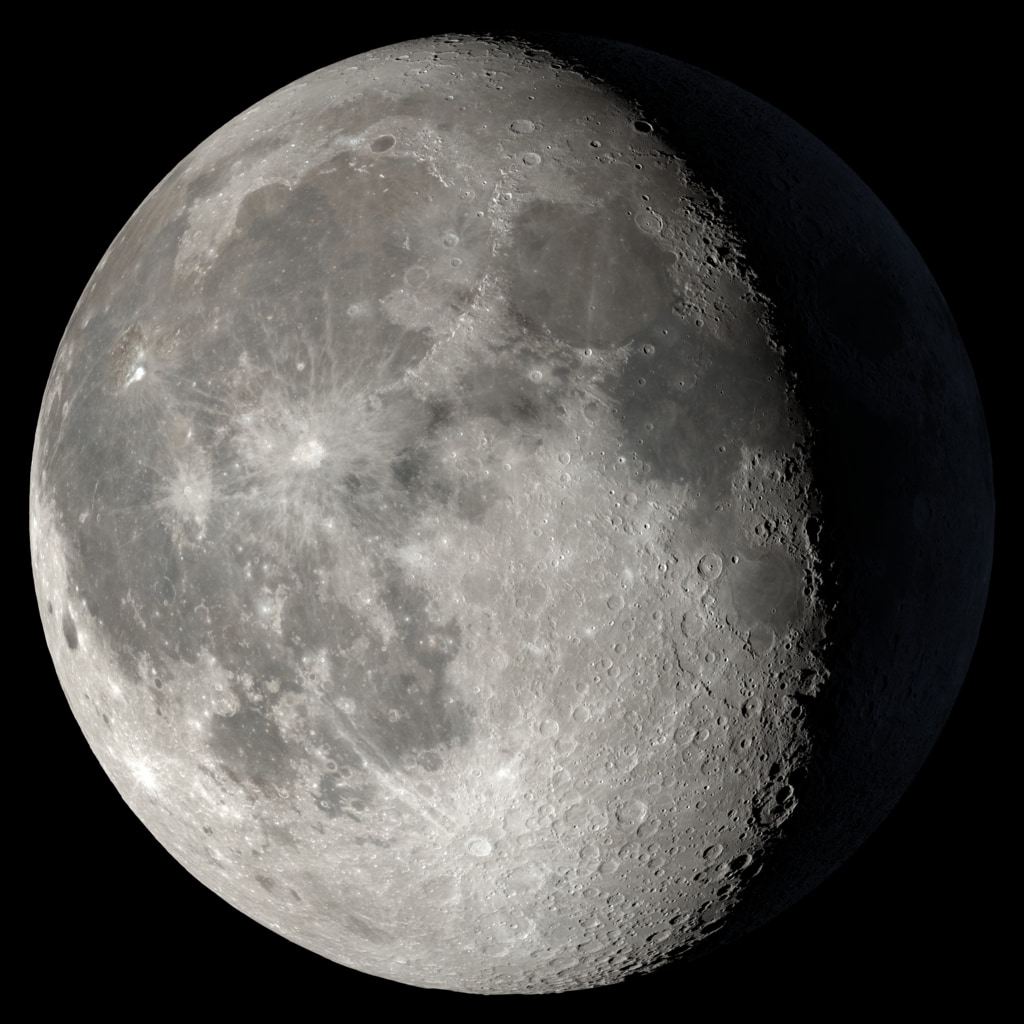
Waning gibbous Moon imaged by NASA's Lunar Reconnaissance Orbiter — the Moon phase that rises late on Halloween night 2026

Seasonal Sky Guide · October 31, 2026

Halloween Night Sky 2026: What to See on October 31

Halloween 2026 is quietly one of the best nights of the autumn to be outside with your eyes on the sky. Saturn — just four weeks past its October 4 opposition — rules the evening at magnitude 0.3 with its rings on full display. The waning gibbous Moon, five nights past the Hunter's Moon, holds off until later in the evening, leaving the trick-or-treat hours dark enough for the Pleiades and the ghostly Andromeda Galaxy. And Taurid "fireball season" is under way, so any glance upward might catch a slow, brilliant meteor. Here is the complete hour-by-hour plan.

SaturnAll evening — mag 0.3, rings 7.5°
The MoonWaning gibbous, rises late evening
Taurid FireballsSeason under way
BonusAlgol, the "Demon Star," rides high
By Telescope Advisor Editorial Team Published: Updated: Editorial Standards

Quick Answer: What Can You See in the Sky on Halloween 2026?

The headline of Halloween night 2026 is Saturn. Four weeks after its October 4 opposition, the ringed planet is still essentially at its best of the year — magnitude 0.3, brighter than any star in its part of the sky, with rings tilted 7.5° that show plainly in any telescope of 60mm or more at 50×. It is well up in the evening sky during prime trick-or-treat hours, which makes October 31 a tailor-made sidewalk astronomy night.

The supporting cast is strong. Brilliant Venus hangs low in the west for the first couple of hours after sunset. The Moon — a waning gibbous five nights past the October 26 Hunter's Moon — rises later in the evening, so the early hours stay reasonably dark for the Pleiades, the Double Cluster, and the Andromeda Galaxy, and then the orange, rising Moon becomes its own spectacle for the late crowd. Taurid fireball season is active, delivering occasional slow, brilliant meteors, with a few lingering Orionids still possible. And overhead, Perseus carries Algol — the star medieval astronomers named the Demon's Head — a fittingly spooky naked-eye target for the night.

Telescope highlight

Saturn's rings at near-opposition quality, all evening. One eyepiece view converts more people to astronomy than any other object. How to see Saturn →

Naked-eye highlight

Taurid fireballs — slow, bright meteors from Comet Encke's debris trail, active through late October and November. Fireball season guide →

Late-night highlight

The waning gibbous moonrise — big, orange, and low in the east. Five nights earlier it was the full Hunter's Moon. Hunter's Moon 2026 →

This page is the October 31 deep-dive. For the whole month's telescope plan, see What to See With a Telescope in October 2026; for the general monthly calendar, Night Sky in October 2026.


🔭

Not sure which telescope actually fits your goals?

Answer 5 quick questions about your budget, observing targets, and experience level — our Telescope Finder Tool recommends a specific model in under 2 minutes.

Find My Telescope →

Halloween Night 2026, Hour by Hour

October 31, 2026 falls on a Saturday — no school night, no early alarm — and the sky cooperates by staging its acts in a convenient sequence. Times below are described relative to your local sunset, since exact clock times vary by location.

When What's Happening What to Do
Dusk – ~2 hours after sunset Venus brilliant but sinking low in the west Catch Venus first — it sets early. Through a telescope it shows a small gibbous disk, dazzlingly bright
Early evening (trick-or-treat hours) Saturn well placed in the southern half of the sky; Moon not yet risen Sidewalk telescope time: Saturn at 100–150×, then the Pleiades and Double Cluster at low power in the darker sky
Mid evening Andromeda Galaxy near its highest; Algol high in Perseus Show the "ghost galaxy" in binoculars or a wide-field scope while the sky is still Moon-free
Later in the evening The waning gibbous Moon rises in the east, orange and huge-looking Watch the moonrise with the naked eye or at low power — the perfect closing act for a Halloween crowd
Late night Jupiter climbing in the east; Taurid fireball chances continue all night Night owls get Jupiter's cloud belts and Galilean moons as a nightcap, with Orion rising behind it

The key scheduling fact

Five nights after the October 26 Hunter's Moon, the waning gibbous Moon rises noticeably later each evening — which is exactly what makes Halloween work as an observing night. The early evening belongs to planets, clusters, and the Andromeda Galaxy; the Moon arrives later as a finale instead of washing out the whole night. Check a local moonrise table for your exact time.

Saturn: The Trick-or-Treat Showpiece

If you own a telescope — any telescope — Halloween 2026 is the night to park it on the driveway. Saturn reached opposition on October 4, 2026 at magnitude 0.3 with a 19.7-arcsecond disk, and four weeks later the view has barely degraded: the planet is still brighter than any star near it, still up all evening, and its rings are still tilted a healthy 7.5° after 2025's near-edge-on vanishing act.

The practical numbers: a 60–70mm refractor at 50× shows the rings cleanly separated from the globe — enough to draw gasps from anyone who has never looked. An 80–100mm scope at around 100× begins to reveal the Cassini Division on steady nights, plus Titan glowing amber nearby. A 130mm+ telescope at 150× splits the division cleanly and lines up several moons. Saturn transits the southern sky around mid-evening by late October, so the trick-or-treat window catches it at a comfortable altitude.

One setup tip matters more than any other: put the telescope outside 30–45 minutes before your first visitor. A telescope still warm from the house produces wobbly, disappointing views; a cooled one snaps the rings into focus. Full technique guide: Saturn Opposition October 2026 →

Saturn on Halloween night 2026

Status4 weeks past Oct 4 opposition
Magnitude~0.3 — still at its annual best
Ring tilt7.5° — clearly separated
Minimum scope60mm at 50× shows rings
Cassini Division80–100mm+ at 100×, steady seeing
Best crowd magnification100–150×

Don't forget Venus at dusk

Before Saturn takes over, brilliant Venus — around magnitude −4 — hangs low in the west for the first couple of hours after sunset, showing a small gibbous disk through the eyepiece. It sets early, so make it the opening act, not an afterthought.

The Halloween Moon: A Late-Rising Waning Gibbous

There is no full Moon on Halloween 2026 — and for once, that is good news. The full Hunter's Moon came five nights earlier, on October 26, so October 31 gets a waning gibbous Moon that rises well after dark. That timing splits the night into two distinct acts: dark early-evening skies for deep-sky objects, then a dramatic moonrise as the closing spectacle.

Why the rising Moon looks orange and huge

Low on the horizon, moonlight crosses a thick slice of atmosphere that scatters away blue wavelengths — the same physics as a sunset — tinting the disk orange-gold. The "huge" impression is the famous Moon illusion: a perceptual trick, not optics. Photograph it low and again later, high, and the disk measures the same. On Halloween the effect is pure theater, and it needs no equipment at all.

Telescope targets on a gibbous Moon

A waning gibbous is actually better in the eyepiece than a full Moon: the terminator — the sunset line creeping across the disk — has returned, throwing crater walls into long shadow relief along its edge. Work the terminator at 100–150× once the Moon climbs. A Moon filter keeps the brightness comfortable: see our Moon filter guide.

For the story of the full Moon that preceded it — why October's full Moon is called the Hunter's Moon, its near-sunset rises, and its odd same-night pairing with Uranus at opposition — see the Hunter's Moon 2026 guide. For the phase cycle behind it all: Moon Phases Explained.

Fireball Watch: Taurids and Late Orionids

Halloween sits inside the year's most atmospheric meteor window: Taurid fireball season. The Taurid streams — debris shed over thousands of years by Comet 2P/Encke — produce fireballs every October and November. Counts are low, a few meteors per hour at best, but the individual meteors are the opposite of forgettable: slow, long, and occasionally brilliant enough to light up a street. A fireball during trick-or-treating is a genuine possibility every Halloween that falls in Taurid season, and 2026 qualifies.

A few stragglers from October's other shower may show too: the Orionids, which peaked October 21–22, stay active into early November. Orionid meteors are the stylistic opposite of Taurids — fast streaks from Halley's Comet debris hitting the atmosphere at 66 km/s, often leaving glowing trains. If you see a slow, dramatic fireball, credit the Taurids; a quick pencil-line of light, the Orionids.

No equipment needed — fireball watching is a naked-eye sport. Just keep glancing up between eyepiece views, especially toward the east once Taurus rises with the Pleiades. The complete strategy for the whole fireball season, including how the Moon phases shape each week: Draconid & Taurid Meteor Showers 2026 →

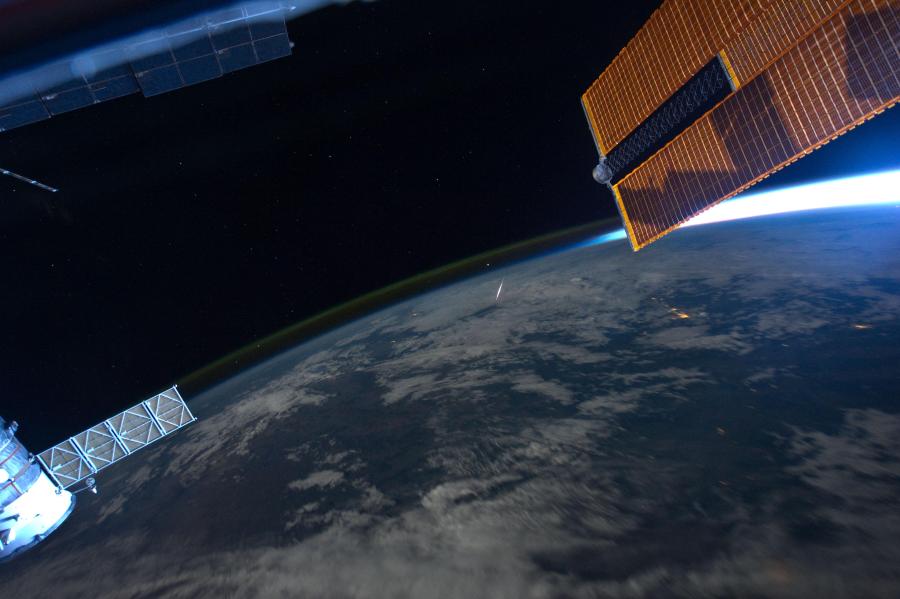
A meteor burning up in Earth's atmosphere photographed from the International Space Station — Taurid fireball season is active on Halloween 2026

A meteor seen from orbit

Taurid meteors are slow and bright — the classic "fireball" profile — and their season spans Halloween. Credit: NASA.

The Spooky Sky: Algol, a Ghost Galaxy, and the Seven Sisters

Halloween's sky comes pre-loaded with its own gothic cast — objects whose names and looks have unsettled skywatchers for centuries. All three below are easy from a suburban driveway in the dark hours before moonrise.

Algol — the Demon Star

High in Perseus on Halloween evening shines Algol, from the Arabic ra's al-ghul — "the demon's head." Ancient sky-lore cast it as the eye of Medusa, and the star earns the reputation: it is an eclipsing binary that visibly "winks," dimming noticeably for several hours as its companion star passes in front, on a cycle of just under three days. No telescope needed — compare its brightness to nearby stars across the evening and you may catch the demon mid-blink.

M31 — the ghost in Andromeda

Near its highest of the year on late-October evenings, the Andromeda Galaxy is the sky's best apparition: a pale, elongated glow — light from a trillion suns, 2.5 million years old when it reaches your eye. Naked-eye from dark sites, unmistakable in binoculars, and best at your telescope's lowest power. Find it before the Moon rises: Andromeda star-hop guide →

The Pleiades & the Double Cluster

The Pleiades — the Seven Sisters, whose evening return has marked the turn to winter in cultures worldwide — clear the eastern horizon by mid-evening, a tight box of blue-white stars that explodes into dozens in binoculars. Higher up, the Double Cluster in Perseus packs two star swarms into one low-power field. Both survive moonlight better than any galaxy, making them the late-shift targets after moonrise.

Running a Halloween Sidewalk Astronomy Night

Halloween delivers something astronomy outreach usually has to work hard for: a steady stream of visitors already walking past your house after dark. A telescope on the driveway converts that foot traffic into first light for dozens of people. A few hard-won tips for making it work:

1. Pick one target and stay on it

Saturn, at 100–150×. Re-centering between visitors takes seconds; re-finding a new object with a line forming does not. A tracking mount is a luxury here, but a Dobsonian with a practiced nudge works fine.

2. Set the eyepiece height for kids

Most of your visitors are under four feet tall. Aim the scope while it is low, keep a small step stool at hand, and tell each viewer to hold the stool — not the telescope. Expect to re-center after every third viewer anyway.

3. Guard your optics from the chaos

Cap the finder, keep spare eyepieces in a closed case, and park the scope away from the candy bowl crowd flow. Sticky fingerprints on an eyepiece are the one Halloween horror that follows you home.

4. Have a one-sentence script

"That's Saturn — the rings are real, and the light you're seeing left it over an hour ago." One fact per viewer lands better than five. Point out Venus and the rising Moon for the waiting line.

5. Use red light, not porch light

A red flashlight preserves everyone's night vision and adds to the ambience. If you can, switch the porch light off and let the jack-o'-lanterns do the illuminating.

The gift-season connection

Every Halloween, sidewalk Saturn views launch a thousand December telescope requests. If one lands in your family, our Telescope Christmas Gift Guide 2026 sorts the scopes genuinely worth wrapping from the trap "hobby killers."

Why Halloween Is Secretly an Astronomical Date

Halloween is not a random spot on the calendar. It is a cross-quarter day — falling roughly midway between the autumnal equinox (September 22 in 2026) and the December winter solstice. The ancient festival of Samhain, Halloween's ancestor, marked exactly this astronomical midpoint: the moment the year tips decisively from the light half toward the dark. The other cross-quarter days survive in the calendar too — Groundhog Day, May Day, and Lammas in early August — each sitting halfway between a solstice and an equinox.

For observers, the cross-quarter point has a practical meaning: nights are now long and getting longer fast. Full darkness arrives early enough for children to see a proper night sky before bedtime, and the winter showpieces — the Pleiades, Taurus, and eventually Orion — are climbing back into the evening. Halloween night, with Orion's return visible late in the evening for the patient, is a fitting threshold: the summer sky exits stage west while the great winter constellations file in from the east. It is, quite literally, the turning of the sky's year — which is exactly what the holiday has always been about.


Halloween Night Sky 2026 FAQ

What can I see in the night sky on Halloween 2026?

Halloween 2026 offers Saturn at near-opposition quality (magnitude 0.3, rings tilted 7.5°) well placed all evening, brilliant Venus low in the west for the first couple of hours after sunset, dark early-evening skies for the Pleiades, Double Cluster, and Andromeda Galaxy, a dramatic orange waning gibbous moonrise later in the evening, and ongoing Taurid fireball season with occasional slow, brilliant meteors. Jupiter rises for night owls, with Orion following in the late evening.

Is there a full Moon on Halloween 2026?

No. The full Moon of October 2026 — the Hunter's Moon — falls on October 26, five nights before Halloween. On October 31 the Moon is a waning gibbous that rises well after dark. That is actually ideal: the early trick-or-treat hours stay reasonably dark for stars and deep-sky objects, and the late moonrise becomes its own spectacle. A "Halloween full Moon" is genuinely rare — the last one was the Blue Moon of October 31, 2020.

Can I see Saturn on Halloween night with a small telescope?

Yes — easily. Saturn is only four weeks past its October 4, 2026 opposition and remains around magnitude 0.3, well placed in the evening sky through the trick-or-treat hours. A 60–70mm telescope at 50× shows the rings clearly separated from the planet; an 80–100mm scope at about 100× can add the Cassini Division on a steady night, plus the moon Titan. Let the telescope cool outside for 30–45 minutes first for the sharpest view.

Are there meteor showers on Halloween 2026?

Yes — two overlapping ones, both past or between peaks but still active. The Taurids, from Comet 2P/Encke's debris, produce fireballs every October and November: counts are low, but the meteors that do appear are slow, long, and often brilliant. And late Orionids — fast Halley's Comet meteors — linger into early November after their October 21–22 peak. No equipment needed; just look up regularly, especially toward the east as Taurus rises.

What is the "Demon Star," and can I see it on Halloween?

Algol, in the constellation Perseus, takes its name from the Arabic for "the demon's head" and was pictured as the eye of Medusa in classical sky-lore. It rides high in the sky on Halloween evening and is an easy naked-eye star. Its spooky claim is real astronomy: Algol is an eclipsing binary that dims noticeably for several hours roughly every three days as its dimmer companion crosses in front. Compare it to nearby stars over the course of the evening and you can watch the "wink" happen with no equipment at all.

What is the best telescope target to show trick-or-treaters?

Saturn, without question. Its rings are the most reliable "wow" object in amateur astronomy, it is bright enough that porch lights and street lamps barely matter, and at 100–150× it fits perfectly into a five-second sidewalk view. Keep the scope on Saturn all evening rather than hopping between targets, use a small step stool for younger viewers, and point out Venus and the rising Moon to people waiting in line.

Why is Halloween called a cross-quarter day?

Because it falls roughly midway between the autumnal equinox and the winter solstice — one of four such midpoints in the year, along with Groundhog Day, May Day, and Lammas. Halloween's ancestor festival, Samhain, marked this astronomical halfway point into the dark season. That is why Halloween belongs to the sky as much as to the calendar: it is the night the year visibly tips toward winter, with the Pleiades and the winter constellations returning to the evening sky.