Draconid and Taurid Meteor Showers 2026: Fireball Season
Telescope Advisor Logo Telescope Advisor
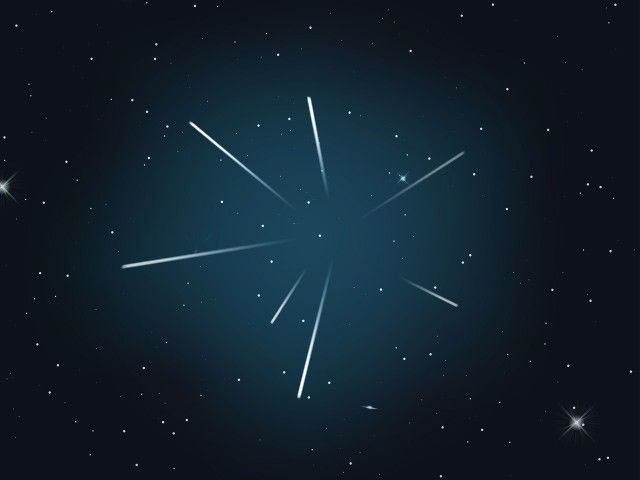
A bright meteor streaking through the night sky — Draconid and Taurid fireball season spans October and November 2026

Meteor Shower Guide · October–November 2026

Draconid & Taurid Meteor Showers 2026: Welcome to Fireball Season

Neither the Draconids nor the Taurids will ever top a "best meteor showers" list by the numbers — and both are worth your attention anyway. The Draconids peak near dusk on October 8, 2026, the rare shower you can watch at a civilized hour, with dark skies just three nights before New Moon. Then the Taurids — the long, slow debris trail of Comet 2P/Encke — take over from late October through November, delivering few meteors but an outsized share of genuine fireballs: slow, brilliant meteors that can light up a whole street. This is the complete plan for autumn's fireball weeks.

Draconid PeakOctober 8 — near dusk
Taurid SeasonLate October – November
Taurid ParentComet 2P/Encke
EquipmentNone — naked eye only
By Telescope Advisor Editorial Team Published: Updated: Editorial Standards

Quick Answer: When Are the Draconids and Taurids in 2026?

The Draconid meteor shower peaks on October 8, 2026, with its brief best window near dusk — unusual among meteor showers, which normally favor the hours before dawn. Expect modest rates of roughly 5–10 meteors per hour, drifting slowly away from the radiant in Draco, high in the northwest at nightfall. Conditions in 2026 are favorable: the peak lands just three nights before the October 11 New Moon, so the evening sky is properly dark.

The Taurids are not a one-night event at all — they are a season. Earth spends weeks from late October through November wading through the broad, ancient debris trail of Comet 2P/Encke, producing a low simmer of meteors with one famous specialty: fireballs, every October and November. Counts stay in the single digits per hour, but Taurid meteors are slow, long, and disproportionately brilliant — the kind that trigger doorbell-camera compilations and local news segments. The traditional prime fireball stretch arrives in the first half of November, with the added quirk that Taurid activity comes in two overlapping branches (Southern and Northern) that keep the season burning for weeks.

Draconids: the dusk shower

October 8, best near dusk, 5–10/hour, radiant in Draco high in the northwest. Dark skies with New Moon three nights away. Watch early — this one goes to bed when you do.

Taurids: the fireball weeks

Late October through November. Low rates, high drama: slow, brilliant fireballs from Comet Encke's debris. Any clear evening is a lottery ticket — including Halloween night.

Between them: the Orionids

October 21–22 brings the month's main shower — fast Halley's Comet meteors, best before dawn despite a bright Moon. Orionid 2026 guide →


🔭

Not sure which telescope actually fits your goals?

Answer 5 quick questions about your budget, observing targets, and experience level — our Telescope Finder Tool recommends a specific model in under 2 minutes.

Find My Telescope →

The Fireball Season Calendar: October Through December 2026

Meteor coverage usually jumps straight from October's Orionids to November's Leonids and December's Geminids. That skips the connective tissue: the weeks-long Draconid–Taurid stretch that quietly produces many of autumn's most spectacular individual meteors. Here is the whole season in one table:

When Shower / Event Character & Strategy
Oct 8 Draconid peak Brief, near dusk, 5–10/hr — watch the northwest in early evening under dark, nearly Moon-free skies
Oct 11 New Moon Darkest skies of October — good for late Draconids and early Taurid outriders
Oct 21–22 Orionid peak Fast Halley's Comet meteors, 10–20/hr; bright ~80% Moon — work the pre-dawn window (guide)
Oct 26 Hunter's Moon (full) Moonlight hides faint meteors for about a week — but true Taurid fireballs punch through it (guide)
Late Oct – Nov Taurid fireball season Low rates, weeks-long plateau, traditional prime fireball stretch in the first half of November — watch every clear evening
Nov 17 Leonid peak 10–15/hr of the fastest shower meteors (71 km/s), best after midnight (guide)
Dec 13–14 Geminid peak The year's best: up to 120/hr under ideal skies, active from nightfall (guide)

For everything else happening around these dates — Saturn's October 4 opposition, the Jupiter occultation, Uranus at opposition — see What to See With a Telescope in October 2026 and the Night Sky in October 2026 calendar.

The Draconids: October's Strange Little Dusk Shower

Almost everything about the Draconids is backwards. Most meteor showers build toward dawn, when your side of Earth faces into the oncoming debris stream; the Draconids instead put on their brief show in the early evening, near dusk, because their radiant — in Draco, the dragon coiled between the Big and Little Dippers — rides highest in the northwest sky at nightfall and sinks as the night goes on. Most showers reward staying up late; the Draconids reward stepping outside right after dinner on October 8 and giving the northwestern sky half an hour.

Expect modesty in numbers — a typical year delivers 5–10 meteors per hour — but note the asterisk that keeps observers loyal to this shower: its parent comet, 21P/Giacobini-Zinner, has a history of turning the Draconids into full meteor storms, most famously in 1933 and 1946, when rates briefly reached thousands per hour, with notable outbursts in several years since. No storm is predicted for 2026, and none is expected — but the Draconids are the lottery ticket of autumn showers, and in 2026 the draw is free: the peak falls just three nights before the October 11 New Moon, so the early-evening sky is properly dark.

How to watch: No telescope, no binoculars — just a chair facing the northwest, starting as soon as the sky darkens on October 8 (with October 7 and 9 as backup evenings). Draconid meteors are among the slowest of any shower, drifting rather than streaking, which makes even the modest ones easy to catch and identify. It is also a perfect warm-up act: watch meteors at dusk while your telescope cools for a Saturn session — the ringed planet is four nights past opposition and superb the rest of the evening.

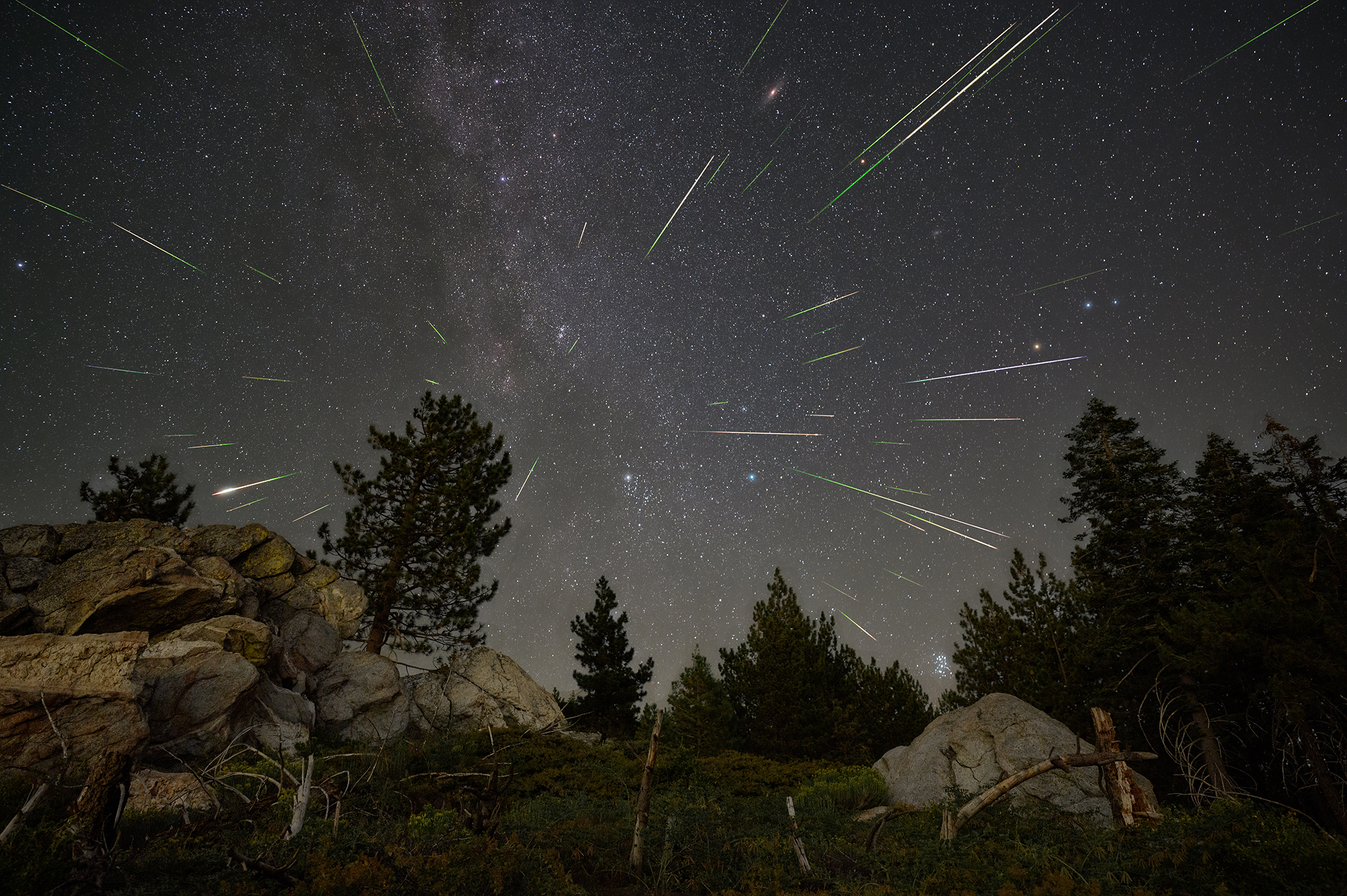
Meteors streaking over a dark forest landscape — the Draconid meteor shower peaks near dusk on October 8, 2026

Meteor watching is a naked-eye sport

A reclining chair and a dark northwestern horizon are the only equipment the Draconids require — and the 2026 peak arrives with a nearly Moon-free evening sky. Credit: NASA/Preston Dyches.

The Taurids: Comet Encke's Slow-Burning Fireball Factory

The Taurids are the anti-Draconids: no sharp peak, no single appointment night, and no hurry whatsoever. Their parent is Comet 2P/Encke — a small, dynamically old comet with a nucleus roughly 4.8 kilometres across that has been circling the Sun and shedding material for many thousands of years. All that ancient debris has spread into a stream so broad that Earth takes weeks to cross it, every October and November, producing the long, flat activity plateau observers call Taurid season. The stream is actually two overlapping branches — the Southern Taurids and Northern Taurids, with radiants a few degrees apart in Taurus — which is part of why the season lasts so long, with the traditional prime fireball stretch arriving in the first half of November.

What Taurid watching is actually like

Honest expectations: on a typical Taurid-season evening you may count only a handful of shower meteors per hour. But the ones you do see are unlike any other shower's. Taurid meteors enter the atmosphere slowly, so they cross the sky in long, lazy, often fragmenting arcs — and the stream is unusually rich in large particles, which is why it produces so many true fireballs: meteors brighter than Venus, occasionally bright enough to cast shadows, light up clouds, and set off doorbell cameras across a whole region. You are not counting meteors during Taurid season; you are fishing for one unforgettable catch.

Working around the Moon

Because Taurid activity spans weeks, the Moon matters less than for a one-night shower — you simply pick your evenings. The Hunter's Moon on October 26 floods late-October evenings with light (though genuine fireballs punch through moonlight easily), while the darker windows before and after full Moon favor the fainter majority. Any clear, dark evening from late October through November is a valid Taurid session — including Halloween night, which sits squarely inside fireball season with a late-rising gibbous Moon.

The radiant region rises in the east with Taurus in the evening — look for the Pleiades clearing the horizon, then give the sky a wide, relaxed gaze rather than staring at any one point. Meteors can appear anywhere; the radiant only tells you where their paths trace back to. Curious about the comet behind it all? Encke is a telescope target in its own right this season: Comet 2P/Encke Observing Guide →

Why Taurid Meteors Turn Into Fireballs

A meteor's brightness comes down to two things: how big the particle is, and how much of its energy gets deposited where you can see it. The Taurids score on both counts, in an unusual way.

Big particles

Most shower meteors are sand-grain sized. The ancient, well-mixed Taurid stream carries an unusually high proportion of pebble-sized and larger debris shed by Encke over millennia — and bigger particles burn brighter, longer, and lower in the atmosphere.

Slow entry

Taurid meteors are among the slowest of any major shower — a fraction of the speed of Orionid or Leonid meteors. Slow entry stretches the burn across seconds instead of a blink, producing the long, dramatic, sometimes fragmenting arcs that make Taurid fireballs so photogenic.

A season, not a night

Because Earth spends weeks in the stream, the modest nightly fireball probability compounds across the whole season. Watch ten October and November evenings and your odds of catching at least one genuine fireball are surprisingly good — which is exactly how the Taurids earned the "Halloween fireballs" reputation.

How to Watch — and Photograph — Fireball Season

Meteor watching is the least gear-dependent branch of astronomy, and fireball season doubles down on that: the targets are bright enough that even suburban skies stay in the game. What matters is time under the sky and comfort while you log it.

1. Optimize for duration, not optics

A reclining chair, a sleeping bag or blankets, a warm drink, and a red flashlight beat any telescope for meteors. Face the darkest part of your sky (northwest for the October 8 Draconids at dusk; generally east toward rising Taurus for the Taurid weeks) and settle in for at least 30–45 minutes — dark adaptation alone takes 20.

2. Keep the phone dark and the eyes wide

One glance at a bright screen resets your night vision for many minutes. Use a wide, unfocused gaze — peripheral vision is your meteor detector — and resist staring at the radiant: meteors near it have foreshortened, stubby trails, while those 40–60 degrees away stretch long and satisfying.

3. Run a telescope session in parallel

Fireball season overlaps the best planetary stretch of the year — Saturn just past its October 4 opposition, Uranus at opposition October 26, Jupiter rising late. Let the telescope work the planets while your eyes work the sky between eyepiece turns; the biggest Taurid of the night is as likely to arrive during a Saturn view as any other minute.

4. Photograph it with any camera that holds still

Fireballs are the easiest meteors to capture: a phone or camera on a small tripod, widest lens, high ISO, and repeating exposures of several seconds each, aimed at your darkest sky. Then leave it running all session. Most fireball photos are accidents of persistence, not skill — the camera just has to be looking when the sky delivers.

5. Report the big ones

See a meteor brighter than Venus — especially one that fragments or leaves a lingering train? Note the time and direction. Fireball reports from ordinary observers help meteor scientists reconstruct trajectories and occasionally recover meteorites, and Taurid season generates more reportable events than any comparable stretch of the year.

Binocular bonus: persistent trains

Keep binoculars in your lap. When a bright meteor leaves a glowing train, binoculars show it twisting and dispersing in the upper-atmosphere winds for seconds — sometimes longer. It is the one moment optics genuinely improve a meteor session. Picks: best stargazing binoculars.

After the Taurids: The Meteor Year's Grand Finale

Fireball season hands off to the two showers that close the meteor year in style — and both have full guides ready:

Leonids — November 17 peak

The stylistic opposite of the Taurids: the fastest shower meteors of all at 71 km/s, producing bright, quick streaks from a radiant in Leo, best after midnight. Rates run 10–15 per hour in normal years; the Leonids' legendary storms (1,000+ per hour) are not forecast for 2026, but the shower's speed makes every meteor memorable. Leonid 2026 guide →

Geminids — December 13–14 peak

The year's best shower by raw numbers: up to 120 meteors per hour under ideal conditions, bright and colorful, from asteroid 3200 Phaethon rather than a comet — and unusually family-friendly, active from nightfall instead of only pre-dawn. If fireball season hooks someone in your house on meteors, the Geminids are the payoff. Geminid 2026 guide →

And if those December meteor nights create a telescope wish in your household, the season's buying window opens between the showers: our Telescope Black Friday Deals 2026 tracker and Cyber Monday deals guide cover the sales, and the November telescope guide maps the nights in between.


Draconid & Taurid 2026 FAQ

When is the Draconid meteor shower in 2026?

The Draconids peak on October 8, 2026, with their brief best window near dusk — the radiant in Draco stands highest in the northwest at nightfall and sinks through the night, so early evening is prime time. Expect modest rates of about 5–10 meteors per hour. Conditions are favorable in 2026: the peak falls three nights before the October 11 New Moon, leaving the evening sky dark. October 7 and 9 work as backup evenings.

When is the best time to see Taurid fireballs in 2026?

The Taurids run as a weeks-long season from late October through November rather than peaking on a single night, with the traditional prime fireball stretch in the first half of November. Any clear, dark evening in that window is a valid session: face generally east as Taurus and the Pleiades rise, relax your gaze, and give it at least 30–45 minutes. The darker windows away from the October 26 Hunter's Moon favor fainter meteors, but genuine fireballs punch through moonlight easily.

Why are the Taurids called the fireball shower?

Because their debris stream — shed over many thousands of years by Comet 2P/Encke — is unusually rich in large, pebble-sized particles, and because Taurid meteors enter the atmosphere slowly. Big particles burn brighter and longer; slow entry stretches the burn into long, dramatic, sometimes fragmenting arcs. The result: few meteors per hour, but a far higher share of true fireballs — meteors brighter than Venus — than almost any other annual stream, every October and November.

Can the Draconids really produce meteor storms?

Historically, yes — spectacularly. The Draconids' parent comet, 21P/Giacobini-Zinner, has occasionally steered Earth through dense, fresh debris filaments, and in 1933 and 1946 the shower briefly reached storm levels of thousands of meteors per hour, with smaller outbursts in several years since. No storm or outburst is predicted for 2026; expect the normal 5–10 per hour. But the storm history is why seasoned observers give this modest shower half an hour every October — on the off chance.

Do I need a telescope to watch the Draconids or Taurids?

No — meteors are strictly a naked-eye event, and a telescope's narrow field actually works against you. The ideal kit is a reclining chair, warm layers, and a red flashlight. Binoculars earn a place in your lap for one job: examining the glowing persistent trains that bright meteors leave behind. If you own a telescope, run a planetary session in parallel — Saturn is fresh off its October 4 opposition all through fireball season.

What is the difference between the Draconids, Orionids, and Taurids?

All three overlap in October 2026 but could hardly be more different. The Draconids (peak October 8) are slow, sparse, evening-only meteors from comet 21P/Giacobini-Zinner, best at dusk. The Orionids (peak October 21–22) are the fast ones — Halley's Comet debris at 66 km/s, 10–20 per hour, best before dawn. The Taurids (late October through November) are the slow heavyweights from Comet Encke: few in number but rich in brilliant fireballs. Speed is your field ID: a lazy drifter is a Draconid or Taurid; a quick streak with a glowing train is an Orionid.

Will there be Taurid fireballs on Halloween 2026?

Halloween sits squarely inside Taurid season, so the chance is real on any clear October 31 — that is exactly how the Taurids earned their "Halloween fireballs" nickname. No specific night can be promised for a shower this sparse, but the 2026 setup is decent: the waning gibbous Moon rises later in the evening, leaving the early hours darker. Keep glancing up during the evening's festivities; a slow, brilliant fireball over a street full of trick-or-treaters is the best free special effect the sky offers. Full Halloween sky plan: Halloween Night Sky 2026.

Which meteor showers come after the Taurids?

The Leonids peak around November 17, 2026 — the fastest shower meteors of the year at 71 km/s, 10–15 per hour, best after midnight, with no storm forecast for 2026. Then the Geminids, the year's strongest shower, peak December 13–14 at up to 120 meteors per hour under ideal conditions, active from nightfall — the most beginner-friendly major shower of all. Between Taurid fireballs, Leonid speed, and Geminid volume, late 2026 offers a complete meteor education in ten weeks.