
Hunter's Moon 2026: Date, Meaning, and How to Observe It
Telescope Advisor Logo Telescope Advisor
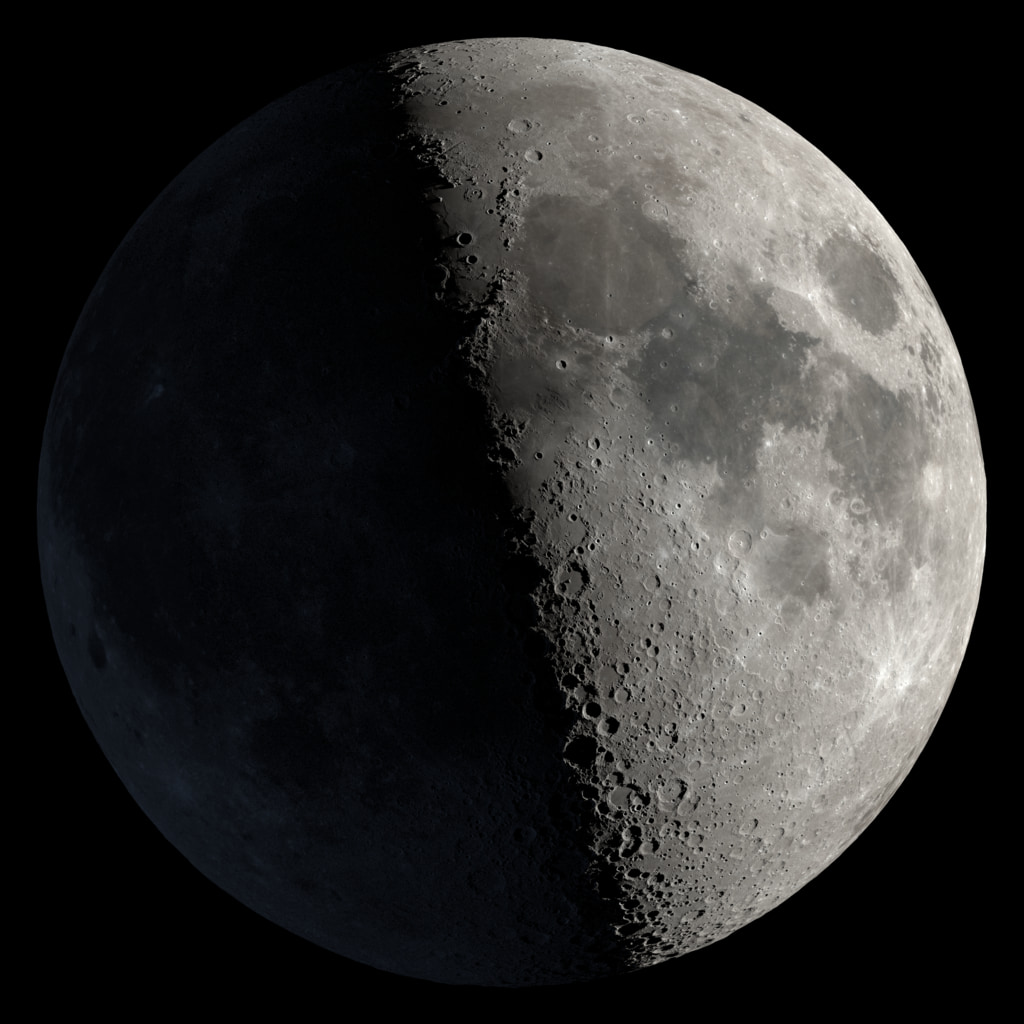
The Moon's cratered face imaged by NASA's Lunar Reconnaissance Orbiter — the Hunter's Moon rises on October 26, 2026

Named Full Moon Series · October 2026

Hunter's Moon 2026: When to See It and What Makes It Special

The Hunter's Moon of 2026 is the full Moon of October 26 — the first full Moon after September's Harvest Moon, and the second act of autumn's famous near-sunset moonrises. For a couple of evenings around the 26th it climbs over the eastern horizon soon after the Sun goes down, orange-gold and enormous-looking — the same shallow-ecliptic geometry that once lit the harvest now lighting the hunt. Here is the date, the folklore, the physics, and a telescope plan for the brightest nights of October — including the odd coincidence of Uranus reaching opposition the very same night.

Full MoonOctober 26, 2026
FollowsHarvest Moon of Sept 26
Same nightUranus at opposition
Best viewsMoonrise, 2–3 evenings running
By Telescope Advisor Editorial Team Published: Updated: Editorial Standards

Quick Answer: When Is the Hunter's Moon in 2026?

The Hunter's Moon in 2026 falls on Monday, October 26, 2026. The Hunter's Moon is defined by sequence, not by calendar month: it is always the first full Moon after the Harvest Moon (the full Moon closest to the autumnal equinox). In 2026 the Harvest Moon fell on September 26, four days after the September 22 equinox — making the next full Moon, October 26, the Hunter's Moon.

Like its September predecessor, the Hunter's Moon puts on a multi-night show: because the ecliptic still meets the autumn evening horizon at a shallow angle, the Moon's rise time slips by far less than usual from night to night — a milder version of the Harvest Moon's famous 20–30-minutes-per-night lag. The result is a big, orange, low-hanging Moon in the east around sunset for two or three evenings running near October 26. Exact moonrise times depend on your location, so check a local moonrise table and watch the eastern horizon at sunset from about October 25 to 28.

The date

Full Moon: October 26, 2026 — the first full Moon after the September 26 Harvest Moon, which is what earns it the Hunter's name.

The coincidence

Uranus reaches opposition the same night — and at magnitude 5.6 it is one of the few opposition targets bright enough for binoculars to find under a full Moon.

The best view

Watch it rise. Low on the horizon the Hunter's Moon glows deep orange and looks huge — binoculars or a telescope at low power make it unforgettable.


🔭

Not sure which telescope actually fits your goals?

Answer 5 quick questions about your budget, observing targets, and experience level — our Telescope Finder Tool recommends a specific model in under 2 minutes.

Find My Telescope →

The 2026 Date — and the October Sky Around It

The Hunter's Moon closes out the most event-packed observing month of the autumn. Here is how the key October 2026 dates line up around it:

Date Event Why It Matters
October 4 Saturn at opposition The year's best Saturn night — and Saturn stays superb right through Hunter's Moon week (guide)
October 11 New Moon Darkest skies of October — the deep-sky window before the moonlight builds
October 21–22 Orionid meteor shower peak The waxing Moon (about 80% lit) is already bright — pre-dawn hours are the workaround (guide)
October 26 Full Moon — the Hunter's Moon Rises near sunset for 2–3 evenings running; orange-gold and dramatic while low
October 26 Uranus at opposition (same night) Magnitude 5.6 near the Pleiades — bright enough for binoculars even in full moonlight
October 31 Halloween Five nights later: a waning gibbous Moon rises late, leaving dark early-evening skies (Halloween sky guide)

Unlike the Harvest Moon — which floats between September and October depending on the equinox — the Hunter's Moon simply follows it, whichever month that lands in. In 2026 the sequence is clean: Harvest Moon September 26, Hunter's Moon October 26. For the full month's observing plan around this event, see What to See With a Telescope in October 2026 and the calendar-style Night Sky in October 2026.

Why Is It Called the Hunter's Moon?

The name completes a two-act agricultural story. The Harvest Moon lit the fields while the crops came in; the Hunter's Moon, a month later, lit the next task of the pre-industrial autumn: laying in meat for winter. By late October the harvest was done, the fields were stubble, and the game animals that had spent weeks fattening on fallen grain and gleanings were both abundant and easy to spot against the cleared, often frost-brightened ground. A full Moon rising near sunset — the same convenient timing the Harvest Moon had offered — gave hunters usable light through the early evening hours.

The name is old and remarkably widespread. European farming and hunting calendars used it; North American almanacs carried it on; and several Native American naming traditions marked the same Moon with hunting or game-related names — a testament to how universally this particular full Moon meant the same thing: the larder-filling Moon before the cold arrived. In some traditions it is also called the Blood Moon or Sanguine Moon — a reference to the hunt (and perhaps to the Moon's ruddy color when low), not to be confused with the "blood Moon" of a total lunar eclipse.

And the deep orange color of a rising Hunter's Moon? Same physics as every low Moon: its light crosses a thick slab of atmosphere that scatters away the blue wavelengths, exactly as a sunset does. The Hunter's Moon simply spends more early-evening time parked low in the east — in October's often crisp, clear air — so more people catch it at its most colorful.

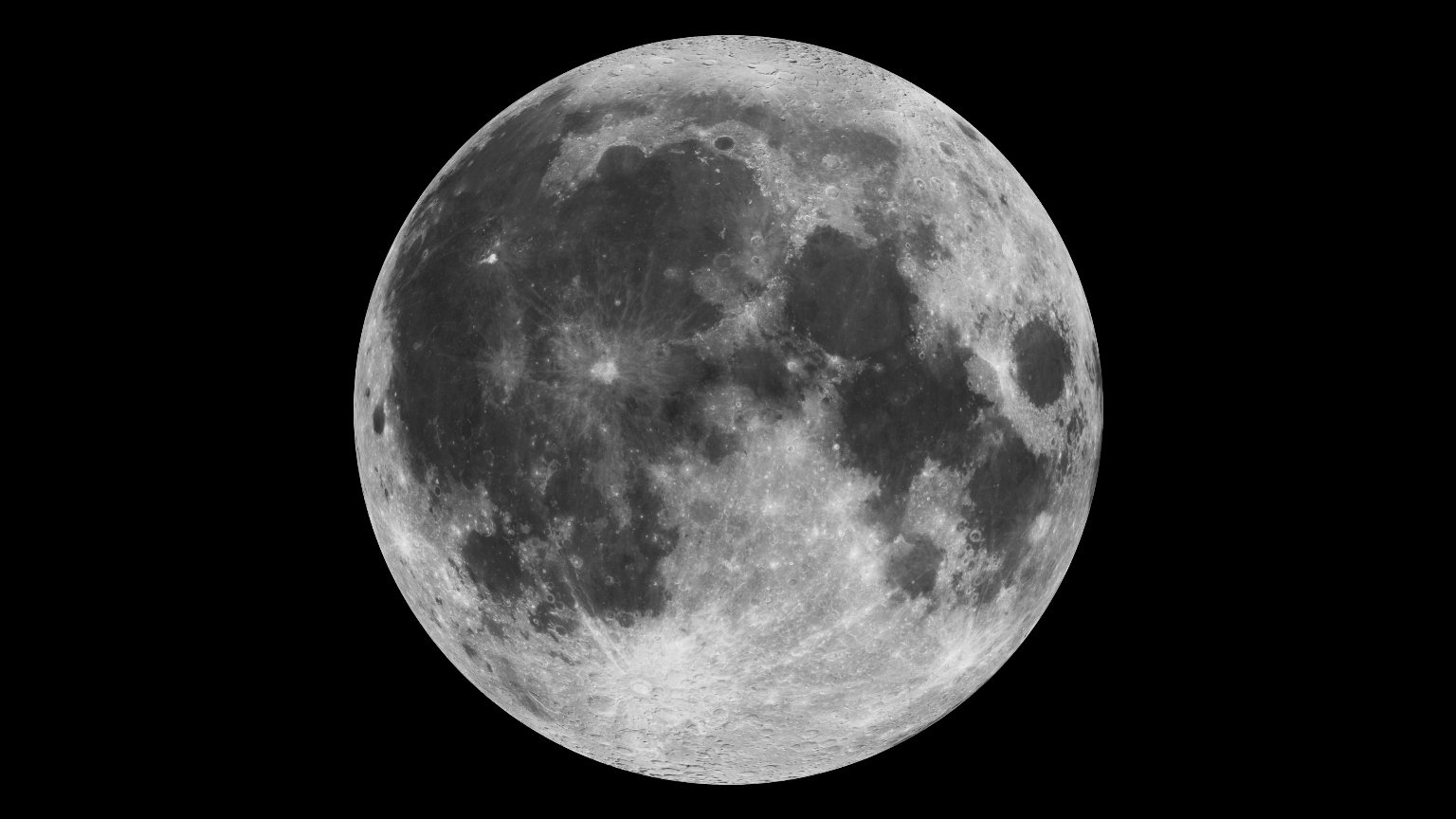
The full Moon photographed by NASA's Clementine mission — the Hunter's Moon is the first full Moon after the Harvest Moon

The Full Moon's Face

At full phase the Sun shines straight down on the lunar surface — shadows vanish, but the bright ray systems of Tycho, Copernicus, and Kepler reach maximum contrast. Credit: NASA / Clementine.

The Moonrise Effect: The Harvest Moon's Encore Performance

The Hunter's Moon inherits the Harvest Moon's signature trick — consecutive near-sunset moonrises — in a slightly gentler form. The mechanism is identical, and worth understanding because it explains both Moons at once.

The mechanics

The Moon moves eastward along the ecliptic about 13° per day, and that daily step is what delays each night's moonrise. How much delay depends on the angle the ecliptic makes with your eastern horizon at moonrise. In September and October evenings, that angle is at its shallowest of the year for Northern Hemisphere observers — the Moon's daily step runs nearly alongside the horizon rather than down beneath it, so moonrise slips by far less than the usual 50–80 minutes per night. The effect peaks at the Harvest Moon and remains strong a month later: the Hunter's Moon still rises close to sunset for two or three evenings in a row.

What you'll actually see

Step outside around sunset on October 25, 26, and 27, face east, and there it is: a swollen, orange-gold Moon just clearing the rooftops, each evening only modestly later than the last. The farther north you live, the stronger the effect — at higher latitudes the nightly lag shrinks further still. By Halloween, five nights past full, the pattern has relaxed and the waning gibbous Moon rises noticeably later in the evening — which is exactly why Halloween night gets dark early-evening skies.

For the full physics — with the spring-time counterexample that makes it click — see the moonrise-lag section of our Harvest Moon 2026 guide, and the cycle beneath it all in Moon Phases Explained.

Is the Hunter's Moon 2026 a Supermoon?

The two labels measure completely different things. A supermoon is a full Moon that happens to coincide with lunar perigee — the Moon's closest point to Earth in its orbit — making it appear about 14% larger and 30% brighter than a full Moon at apogee. The Hunter's Moon is defined purely by sequence: first full Moon after the Harvest Moon, wherever the Moon happens to sit in its orbit that month. Any overlap between the titles in a given year is coincidence.

We make no supermoon claim for the October 26, 2026 full Moon — and the Hunter's Moon has never needed one. The "enormous Moon" that people photograph over rooftops and treelines each October owes almost everything to the Moon illusion: the well-documented perceptual effect that makes any Moon near the horizon look far bigger than the same Moon overhead, even though its measured size is essentially unchanged. Because the Hunter's Moon spends several consecutive evenings rising in prime early-evening viewing hours — precisely where the illusion operates — it collects an outsized share of the year's "giant Moon" impressions. Enjoy the trick; it costs nothing and never disappoints.

How to Observe the Hunter's Moon With a Telescope

Full Moon is the phase serious lunar observers usually sit out — no terminator, no shadows, flat-looking craters. But the Hunter's Moon rewards a strategy built around what full phase does best, and October adds a planetary supporting cast no other full Moon of 2026 can match.

1. Make moonrise the main event

The first half hour after the Moon clears the horizon is the show: a rippling, orange disk swimming through horizon haze at 30–50×, visibly shedding its color as it climbs. Any telescope or binocular works, and no filter is needed this low — the atmosphere is doing the dimming. You get two or three consecutive evenings to catch it.

2. Filter up once it climbs

High in a dark sky, a full Moon is dazzling in the eyepiece — harmless, but bright enough to wreck your night vision and flatten contrast. A neutral-density Moon filter fixes it; a variable polarizing filter lets you dial brightness smoothly as the Moon gains altitude. Our picks: best Moon filters · variable filters.

3. Tour the ray systems

Full phase is ray season: with the Sun overhead on the lunar surface, Tycho's brilliant rays streak a third of the way across the disk, with Copernicus and Kepler adding their own bright sprays across the maria. Trace where the systems cross and you are reading impact history. Technique and targets: How to Observe the Moon.

4. Patrol the limb

The disk's extreme edge keeps its relief even at full phase — foreshortened crater rims and mountain profiles in silhouette. Libration tips slightly different limb terrain into view each month, so at 100–150× with a filter, the edge is never the same twice.

5. Photograph the rise

The Hunter's Moon is one of the two most photogenic moonrises of the year (its September sibling being the other): low altitude, strong color, and a multi-evening window. A phone at the eyepiece captures a creditable disk; a camera at prime focus does far better. Keep exposures short — the full Moon overexposes instantly. Walkthrough: How to Photograph the Moon.

Bonus: Saturn is still superb

Hunter's Moon week lands barely three weeks after Saturn's October 4 opposition — the ringed planet shrugs off moonlight completely and shares the evening sky with the rising Moon. A Moon-then-Saturn double bill is the easiest crowd-pleasing session of the month, and it works from the most light-polluted driveway in town.

The Same-Night Bonus: Uranus at Opposition

By an agreeable coincidence, Uranus reaches opposition on October 26, 2026 — the very night of the Hunter's Moon. Normally a full Moon and an opposition are a cruel pairing, but Uranus is the rare opposition target that survives it: at magnitude 5.6 it is comfortably within reach of ordinary 10×50 binoculars even under a moonlit sky.

The hunt is straightforward: find the Pleiades cluster in Taurus — unmistakable even in moonlight — and sweep about 8° (roughly two fist-widths at arm's length) to its north. Uranus reveals itself as a steady, faintly blue-green point that refuses to twinkle the way true stars do. Through a 150mm telescope at 150× it grows into a tiny but definite 3.8-arcsecond disk, its color the signature of methane in its atmosphere. Bagging the seventh planet during a full Moon — on its opposition night, no less — is a satisfying flex for any observing log. Full finder walkthrough: How to See Uranus With a Telescope →

The Honest Downside: Full Moon Week vs the Deep Sky

Here is what most Hunter's Moon articles leave out: for everything except the Moon and the bright planets, the week around October 26 is the worst observing stretch of the month. A full Moon raises the entire sky background by several magnitudes. October's showpiece deep-sky targets — the Andromeda Galaxy near its annual best, the Sculptor Galaxy on the southern horizon, Stephan's Quintet in Pegasus — fade from spectacular to marginal or invisible.

Skip during Hunter's Moon week (∼Oct 23–29)

  • Galaxies (M31, NGC 253, Stephan's Quintet) — washed out badly
  • Faint nebulae — invisible even with filters
  • Meteor counts — the Orionids' tail end loses its faint majority to moonlight
  • Milky Way sweeping — the star clouds vanish

Great during Hunter's Moon week

  • The Moon itself — moonrise color, rays, the limb
  • Saturn — three weeks past opposition and moonproof
  • Uranus — opposition night, findable in binoculars
  • Double stars and bright clusters like the Pleiades

The smart October plan: spend the dark window around the October 11 New Moon on galaxies and faint targets, give Hunter's Moon week to the Moon, Saturn, and Uranus, and resume deep-sky work as the Moon wanes into early November. Not sure what tonight's conditions allow? Our What Can You See With a Telescope Tonight? guide sorts targets by Moon phase.

After the Hunter's Moon: The Named Moons That Close 2026

The Hunter's Moon is the middle chapter of autumn's named-Moon trilogy — preceded by September's Harvest Moon and followed by two winter Moons with characters all their own:

Harvest Moon — September 26 (behind us)

The full Moon closest to the equinox, and the origin of the whole near-sunset moonrise phenomenon the Hunter's Moon reprises. The definition, folklore, and physics: Harvest Moon 2026 guide.

Beaver Moon — November 2026

November's full Moon, named for the season when beavers finish their winter lodges. It rides higher across the sky than October's, on long, cold, often steady nights — excellent for high-power lunar observing. Full guide: Beaver Moon 2026.

Cold Moon — December 2026

The year's final full Moon rides highest of all, mirroring the low December Sun — the best full Moon of the year for crisp, high-magnification views and moonlit winter landscapes. Full guide: Cold Moon 2026.

Planning a telescope gift before those winter Moons arrive? The season's buying guides are live: Best Telescope Christmas Gifts 2026.


Hunter's Moon 2026 FAQ

When is the Hunter's Moon in 2026?

The Hunter's Moon in 2026 is the full Moon of October 26, 2026. It earns the name by being the first full Moon after the Harvest Moon, which fell on September 26 (the full Moon closest to the September 22 autumnal equinox). Exact moonrise times vary by location — check a local moonrise table — and the near-sunset rising show repeats for two or three evenings around the 26th.

Why is it called the Hunter's Moon?

Because it lit the autumn hunt the way the previous Moon lit the harvest. By late October, fields were cleared and game animals had fattened on fallen grain, standing out against the stubble — and this full Moon's near-sunset rises gave pre-industrial hunters usable light through the early evening as they stocked winter provisions. The name appears across European calendars, North American almanacs, and several Native American naming traditions; some traditions also call it the Blood Moon or Sanguine Moon.

What is the difference between the Harvest Moon and the Hunter's Moon?

The Harvest Moon is the full Moon closest to the autumnal equinox — September 26 in 2026 — and the Hunter's Moon is simply the next full Moon after it: October 26, 2026. Both share the shallow-ecliptic geometry that makes them rise close to sunset several evenings running, with the effect at its strongest for the Harvest Moon and only slightly relaxed a month later. The Harvest Moon can fall in September or October depending on the year; the Hunter's Moon always follows it one lunar cycle later.

Is the Hunter's Moon 2026 a supermoon?

The labels are unrelated: a supermoon is a full Moon coinciding with lunar perigee (appearing about 14% larger and 30% brighter than an apogee full Moon), while the Hunter's Moon is defined purely by its place in the sequence after the Harvest Moon. We make no supermoon claim for October 26, 2026. The famously huge look of a rising Hunter's Moon comes overwhelmingly from the Moon illusion — the perceptual effect that inflates any Moon seen near the horizon.

Why does the Hunter's Moon look orange?

Any Moon near the horizon looks orange or gold because its light passes through a much thicker slice of Earth's atmosphere than when overhead, and the atmosphere scatters away blue wavelengths — sunset physics applied to moonlight. The Hunter's Moon is not intrinsically redder than other full Moons; it simply spends several consecutive evenings rising during prime early-evening hours in crisp October air, so far more people see it in its low, colorful stage.

Can I observe anything else during the Hunter's Moon?

Yes — October 26, 2026 is unusually generous for a full-Moon night. Uranus reaches opposition that very night at magnitude 5.6, findable in binoculars about 8 degrees north of the Pleiades even in moonlight. Saturn, barely three weeks past its October 4 opposition, is superb all evening and completely indifferent to moonlight. Double stars and bright clusters like the Pleiades hold up well too. Save galaxies and faint nebulae for the darker skies around the October 11 New Moon.

Do I need a filter to look at the Hunter's Moon through a telescope?

Not for safety — moonlight cannot harm your eyes — but comfort is another matter. A high full Moon is bright enough in the eyepiece to dazzle you and erase your dark adaptation for many minutes. A neutral-density Moon filter, or better a variable polarizing filter you can dial to taste, transforms the session. While the Moon is still low and orange at moonrise, no filter is needed — the atmosphere is doing that job. See our Moon filter guide.

Is the Hunter's Moon always in October?

Usually, but not always. The Hunter's Moon is chained to the Harvest Moon, which floats with the equinox: in years when the Harvest Moon falls in early October (roughly one year in three), the Hunter's Moon that follows lands in early November. In 2026 the sequence is the classic one — Harvest Moon September 26, Hunter's Moon October 26 — followed by the Beaver Moon in November and the Cold Moon in December.