
What Can You See With a 100mm Telescope? Real 4-Inch Views
Telescope Advisor Logo Telescope Advisor
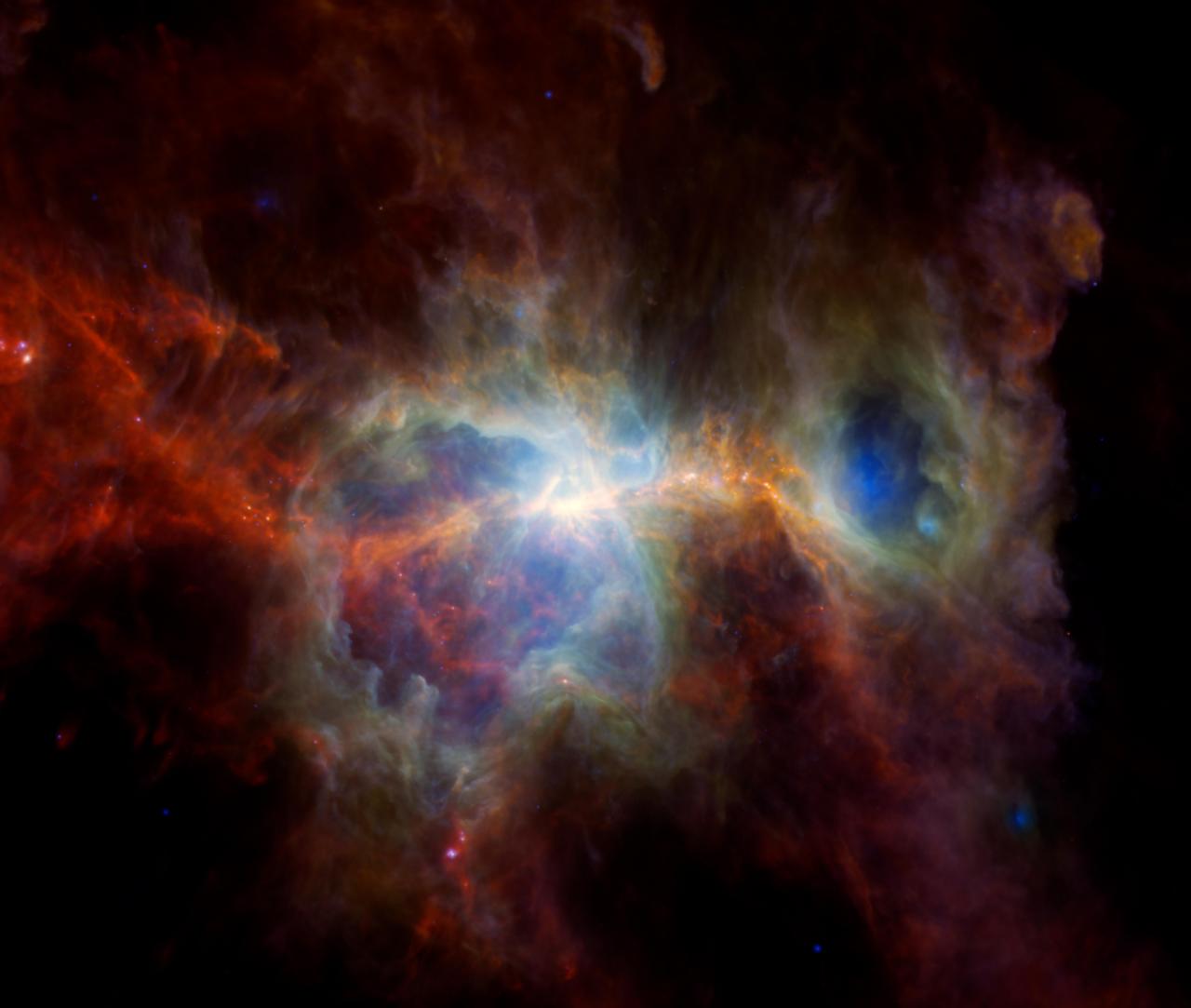
Orion Nebula, a classic deep-sky target for a 100mm telescope

Aperture Guide · 4-Inch Telescope

What Can You See With a 100mm Telescope?

100mm — the classic 4-inch class — is where a telescope stops being a novelty and becomes an instrument. You get sharp lunar detail, real planetary structure, clean double stars, bright clusters and nebulae, and the first practical galaxy targets under darker skies. This guide gives honest, object-by-object expectations so your early sessions feel like wins.

100mm

4-inch aperture

2x

More light than 70mm

40x-180x

Most useful range

~200x

Practical power ceiling

By Telescope Advisor Editorial Team Published: Updated: Editorial Standards

Quick Answer

With a 100mm telescope you can reliably observe detailed lunar craters and mountain shadows along the terminator, Venus phases, Jupiter's two main cloud belts plus its four Galilean moons, Saturn's rings clearly separated from the planet with Titan alongside, Mars as a small disk with polar-cap hints near opposition, showpiece double stars like Albireo, bright open clusters like the Pleiades and the Double Cluster, the Orion Nebula with its Trapezium stars, globular clusters like M13 as bright grainy glows, and the Ring Nebula as a small smoke ring at medium-high power.

Under suburban-to-dark skies, brighter galaxies join the list: Andromeda shows an obvious elongated glow with a bright core, and pairs like M81/M82 become patient-technique targets. From bright city skies, lunar, planetary, and double-star performance stays excellent while galaxy contrast drops sharply. A 100mm sits just below the 102mm class — the two are visually interchangeable — and a clear step above 90mm on faint targets, while the jump up to 114mm and 127mm mainly buys deeper deep-sky reach.

Why 100mm Is the Classic 4-Inch Threshold

A 100mm telescope gathers roughly twice the light of a 70mm starter scope and resolves noticeably finer detail — about 1.2 arcseconds in steady air. Those two numbers translate into practical wins: Saturn's rings stop being a hint and become an obvious structure, globular clusters start showing texture instead of uniform haze, and double stars that blur together in smaller scopes split into clean pairs. Astronomers have treated "a good 4-inch" as the entry point to serious observing for over a century, and the reasons have not changed.

The 100mm class is most often sold as a refractor — long-tube achromats and short-tube grab-and-go models — though 100mm tabletop reflectors and small catadioptrics exist too. Refractor versions have a particular character: no central obstruction, snappy star images, and excellent contrast on planets and doubles for the aperture. The trade-off is that budget achromats show a violet fringe on the brightest targets like Venus and the lunar limb. It is cosmetic, not disabling, and it disappears entirely in the (much pricier) ED and apochromatic versions.

Where does 100mm sit in the series? Functionally identical to the 102mm class — the 2mm difference is marketing, not optics — and a solid step above 90mm on faint objects. Moving up, a 114mm gathers about 30 percent more light and a 127mm about 60 percent more — differences you notice mostly on globulars, nebulae, and galaxies rather than on the Moon and planets.

Just as important: 100mm scopes are light, quick to set up, and forgiving. A telescope you can carry outside in one trip gets used three times as often as one that needs a production. Session frequency, not theoretical capability, is what actually builds a skilled observer.

Moon Detail You Can Expect With 100mm

The Moon is spectacular in a 100mm telescope, full stop. At low power the whole disk fits with room to spare, showing maria, ray systems, and the big crater fields in one view. At 100x-150x, the terminator becomes a canyon tour: crater wall terracing, central peaks catching first light, mountain ranges like the Apennines throwing long shadows, and the great walled plains — Plato, Clavius, Ptolemaeus — showing floor detail that changes hour by hour.

The best sessions happen between first quarter and waxing gibbous, when the terminator crosses the most dramatic terrain at convenient evening hours. Full Moon looks bright but flat — shadows vanish under vertical sunlight — so treat it as the worst lunar night of the month rather than the best. On steady nights you can push a good 100mm to 180x-200x on the Moon and keep a sharp image, which is enough to spot craterlets and rille segments that surprise most first-time owners.

One habit upgrade: observe the Moon on a schedule, not at random. Following the same region across three consecutive nights teaches you more about lunar topography than a dozen scattered glances, and it builds the framing-then-inspecting workflow that carries over directly to planetary observing.

Planet-by-Planet Expectations in a 100mm Telescope

Planet What You Can See Best Practical Mag
JupiterTwo main belts consistently, all four Galilean moons nightly, Great Red Spot detectable on steady nights during transits.80x-150x
SaturnRings clearly separated from the globe, Titan easy; Cassini Division only hinted in moments of excellent seeing.100x-180x
MarsSmall orange disk most of the year; polar cap and broad dark markings possible near opposition.120x-180x
VenusBold phases from crescent to gibbous; no surface detail through the clouds. Watch for false color in budget achromats.60x-130x
MercuryTiny phase during favorable elongations, low in twilight; a catch-it-once trophy rather than a study target.80x-130x
Uranus/NeptuneIdentifiable as tiny non-stellar disks under good transparency; color is the reward, not detail.130x-180x

Atmospheric seeing decides your planetary ceiling more than the telescope does. On turbulent nights, hold at 100x-120x and enjoy a small, crisp image; on the handful of genuinely steady nights each season, walk it up toward 180x and let the detail come to you. The refractor versions of this class snap to focus so decisively that they make this calibration easy to learn.

Double Stars and Star Clusters: Where 100mm Overdelivers

Double stars are the 100mm refractor's signature act. Clean, unobstructed star images make pairs like Albireo (gold and sapphire), Almach, Mizar, and the Double Double in Lyra genuinely beautiful, and a good 4-inch splits pairs down to about 1.2 arcseconds when the air cooperates. Because doubles ignore light pollution almost completely, they are the category that keeps city-bound 100mm owners busy all year.

Open clusters are the other guaranteed win. The Pleiades fill a low-power field with blue-white diamonds, the Double Cluster in Perseus gives two rich groups in one view, and targets like M35, M44 (the Beehive), and M11 (the Wild Duck) each show dozens of resolved stars from suburban skies. Keep magnification low — clusters are about framing, not power.

Globular clusters are the honest step down from bigger apertures: M13, M5, and M22 appear as bright, condensed glows with a grainy, on-the-edge-of-resolution texture at 120x-150x on transparent nights. Full star-by-star resolution across the core needs more aperture — that is precisely the upgrade the 127mm-150mm class buys — but detecting the graininess in a 100mm is a satisfying skill checkpoint of its own.

Nebulae and Galaxies: Realistic 100mm Limits

Bright nebulae are firmly on the menu. M42 in Orion is the showpiece: obvious wings of nebulosity, a dark bay, and the four Trapezium stars split cleanly at medium power — rewarding from suburbs, breathtaking from dark sites. The Ring Nebula (M57) shows its smoke-ring shape at 100x-150x, the Dumbbell (M27) shows its two-lobed outline from Bortle 5 or better, and the Lagoon (M8) works well on summer nights away from city glow.

Galaxies demand expectation management. Under dark skies, Andromeda (M31) is large and unmistakable with a bright core and elongated halo, and M81/M82 make a classic same-field pair — one soft oval, one edge-on sliver. Several more Messier galaxies are detectable with averted vision and patience. Under suburban skies, most galaxies shrink to their cores; under bright city skies, they mostly disappear. This is a contrast problem caused by the sky, not a defect in the telescope — the same 100mm driven to a dark site transforms overnight.

Use the tier system that works across our whole aperture series. Tier 1: clusters, doubles, and M42-class nebulae — any decent night. Tier 2: globulars and planetary nebulae — moonless nights. Tier 3: galaxies — moonless, transparent nights, ideally from darker locations. A 100mm owner who plans in tiers succeeds nearly every session; one who chases faint galaxies from a bright backyard concludes the telescope is broken.

City vs Suburban vs Dark Sky: How Much Changes?

SkyHigh-Confidence TargetsChallenging Targets
Bortle 8-9Moon, planets, double stars, brightest open clustersNearly all galaxies, most nebulae
Bortle 5-6All of the above plus M42, brighter globulars, M57, M27Galaxy halos, faint nebulae
Bortle 3-4Broad Messier sampling, Andromeda at its best, Milky Way sweepsFaint NGC objects

The mental model that serves 100mm owners best: aperture sets potential, sky quality unlocks it. A 4-inch under a rural sky will beat a much larger scope trapped under city glow on every low-contrast target. If you observe from a bright location, build your routine around the light-pollution-proof categories and schedule a few dark-sky trips a year for the rest — our light pollution guide has the full strategy.

Magnification Plan for a 100mm Telescope

The practical ceiling for 100mm is about 200x — the traditional 2x-per-millimeter rule — but the ceiling is not the point. Most successful sessions live between 40x and 180x, arranged in three bands you can cover with three eyepieces:

  • Low power (30x-50x): finding targets, open clusters, Pleiades and Double Cluster framing, Andromeda.
  • Medium power (80x-130x): Jupiter, Saturn, most doubles, globulars, planetary nebulae, general lunar work.
  • High power (140x-200x): lunar close-ups, Mars at opposition, tight double splits — steady nights only.

The most common beginner mistake at this aperture is living at maximum power. A dim, wobbly 200x image contains less information than a bright, sharp 120x one. Train the discipline of climbing until detail stops improving and then stepping back down one eyepiece — that single habit outperforms any accessory purchase. For the underlying optics, see what magnification is too much.

A Simple Three-Eyepiece Plan for 100mm

You do not need a drawer full of eyepieces to cover everything a 100mm telescope can do — three focal lengths chosen around your scope's focal ratio handle the whole target list. For a typical 600mm-1000mm focal length 4-inch, that means one long eyepiece in the 25mm-32mm range for finding and framing, one mid eyepiece around 10mm-15mm for planets, globulars, and general lunar work, and one short eyepiece in the 5mm-7mm range (or the mid eyepiece plus a quality 2x Barlow) for steady-night detail pushes.

Spend your attention, not just your money, on the long eyepiece first. It is the one you use at the start of every observation, the one that makes star hopping pleasant, and the one that frames the Pleiades, the Double Cluster, and Andromeda properly. A comfortable wide-field low-power view is also what makes sharing the telescope with family and guests actually work — nobody enjoys hunting for a planet through a soda-straw field.

Two upgrades earn their keep quickly at this aperture: a red-dot or RACI finder that matches how you like to aim, and a Moon filter or simply higher magnification to tame lunar glare on gibbous nights. Filters for nebulae are a maybe — a narrowband filter helps M42 and M27 from suburban skies, but at 100mm it dims as much as it reveals on fainter targets, so treat it as a later refinement rather than a starter purchase. Full details and current picks live in our eyepiece guide.

Just Unwrapped This Telescope? Your First-Night Quick Start

The 100mm class is one of the most popular telescope gifts every December, and the first clear night matters more than the spec sheet. Keep it simple. Assemble everything indoors, in daylight, with the instructions open — mounts go together far more easily on a living-room floor than on a frozen lawn in the dark. Align the finder before sunset by centering a distant rooftop or treetop in the main eyepiece and adjusting the finder to match; this one step prevents most "I can't find anything" first nights.

After dark, start with the Moon if it is up — it is unmissable and instantly rewarding — then the brightest planet in the sky. Use only the lowest-power eyepiece (the largest number in millimeters) until pointing and focusing feel natural. Expect an upside-down or mirrored view: that is normal for astronomical telescopes. And skip the flimsy 4mm eyepiece or 3x Barlow that ships in some kits; they promise big numbers and deliver mush at this aperture.

When something goes wrong — and something always does in week one — these two guides fix nearly all of it: how to set up a telescope for beginners and why can't I see anything through my telescope. If the scope is for a child, our best telescopes for kids guide covers eyepiece heights, sturdy mounts, and shared-viewing tips, and the telescope Christmas gift guide helps with accessories and next steps.

Season-by-Season Target List for 100mm Owners

Winter: the best beginner season. Orion Nebula as the anchor deep-sky target, the Pleiades and Hyades at low power, M35 and the Auriga clusters, and crisp high-contrast lunar nights. Cold, stable air often delivers the year's best planetary seeing.

Spring: double-star season while galaxy country rises. Split Castor and Algieba, sweep the Beehive at low power, and attempt M81/M82 on moonless nights. Under a dark spring sky, a 100mm can sample several Leo and Virgo galaxy cores — a skill-building exercise more than a visual feast.

Summer: the Milky Way months. M13 overhead, Albireo and the Double Double in Lyra, M57's ring, M27's dumbbell, and — from darker sites — the Lagoon and Swan nebulae plus rich star-cloud sweeping at lowest power. Short nights, huge target density.

Autumn: Andromeda's season, riding high for northern observers, with the Double Cluster nearby and Almach as the closing double. Autumn evenings are the natural time to compare suburban and dark-site views of the same galaxy — the most instructive experiment a 100mm owner can run.

Whatever the season, a simple three-outcome log — detected, confirmed with detail, repeatable — turns these lists into visible progress. Most owners find their repeatable list doubles within three months without buying anything.

When to Upgrade Beyond 100mm — and When Not To

Upgrade when your bottleneck is provably light grasp, not process: you find targets quickly, your magnification discipline is solid, you have seen what a dark site adds, and faint objects still stall at the same contrast wall. The natural next steps are the 114mm, 127mm, and 130mm classes for a moderate lift, or a jump to 150mm or an 8-inch for a transformation on deep sky. Our aperture size guide compares the whole ladder in one place.

But know what you would give up. A good 100mm refractor is often the telescope people keep forever: zero-maintenance, thirty-second setup, lovely star images, superb on doubles and planets for its size. Many experienced observers run a two-scope system — a big reflector for dark-sky nights and the 4-inch for every other night — and the 4-inch ends up with more hours on it. If your sessions are still improving month over month, the most valuable upgrade is the next clear night, not the next aperture.

Frequently Asked Questions

Is a 100mm telescope good for beginners?

Yes — it is one of the best beginner apertures. It is light enough to set up in one trip, forgiving to use, and powerful enough for real lunar, planetary, double-star, cluster, and bright deep-sky observing. Frequent, easy sessions matter more for progress than raw size.

Can you see Saturn's rings with a 100mm telescope?

Yes, clearly. At 100x or more the rings are obviously separated from the planet's globe and Titan is visible nearby. The Cassini Division is only hinted at in moments of excellent seeing at this aperture — that gap becomes routine from about 114mm upward.

Can you see galaxies with a 100mm telescope?

Yes, the brighter ones. Andromeda is easy from suburban or darker skies, and pairs like M81 and M82 are realistic with patience under dark skies. Expect soft glows with brighter cores rather than photographic spiral arms, and expect city light pollution to remove most galaxies entirely.

What magnification can a 100mm telescope handle?

The practical ceiling is about 200x, but most observing is best between 40x and 180x. Use low power for finding and clusters, medium power for planets and most deep-sky objects, and high power only on steady nights for the Moon, Mars, and tight double stars.

Is 100mm the same as a 102mm telescope?

Effectively yes. The 2mm difference is a rounding of the same 4-inch class and produces no visible difference at the eyepiece. Everything in a 102mm guide applies to a 100mm scope and vice versa; choose between specific models on mount quality and focal length instead.

Can you see the Orion Nebula with a 100mm telescope?

Yes — it is the best deep-sky showpiece for this aperture. Even from suburbs you will see glowing nebulosity with structure and the four Trapezium stars at its heart. From dark skies the wings extend dramatically and the dark bay becomes obvious.

Is a 100mm telescope good for viewing in the city?

Yes, for the right targets. The Moon, planets, double stars, and bright open clusters all perform well from city skies and can fill hundreds of sessions. Galaxies and faint nebulae are the categories city glow takes away; plan occasional darker-site trips for those.