Mars and Jupiter Conjunction November 2026: When to Look
Telescope Advisor Logo Telescope Advisor
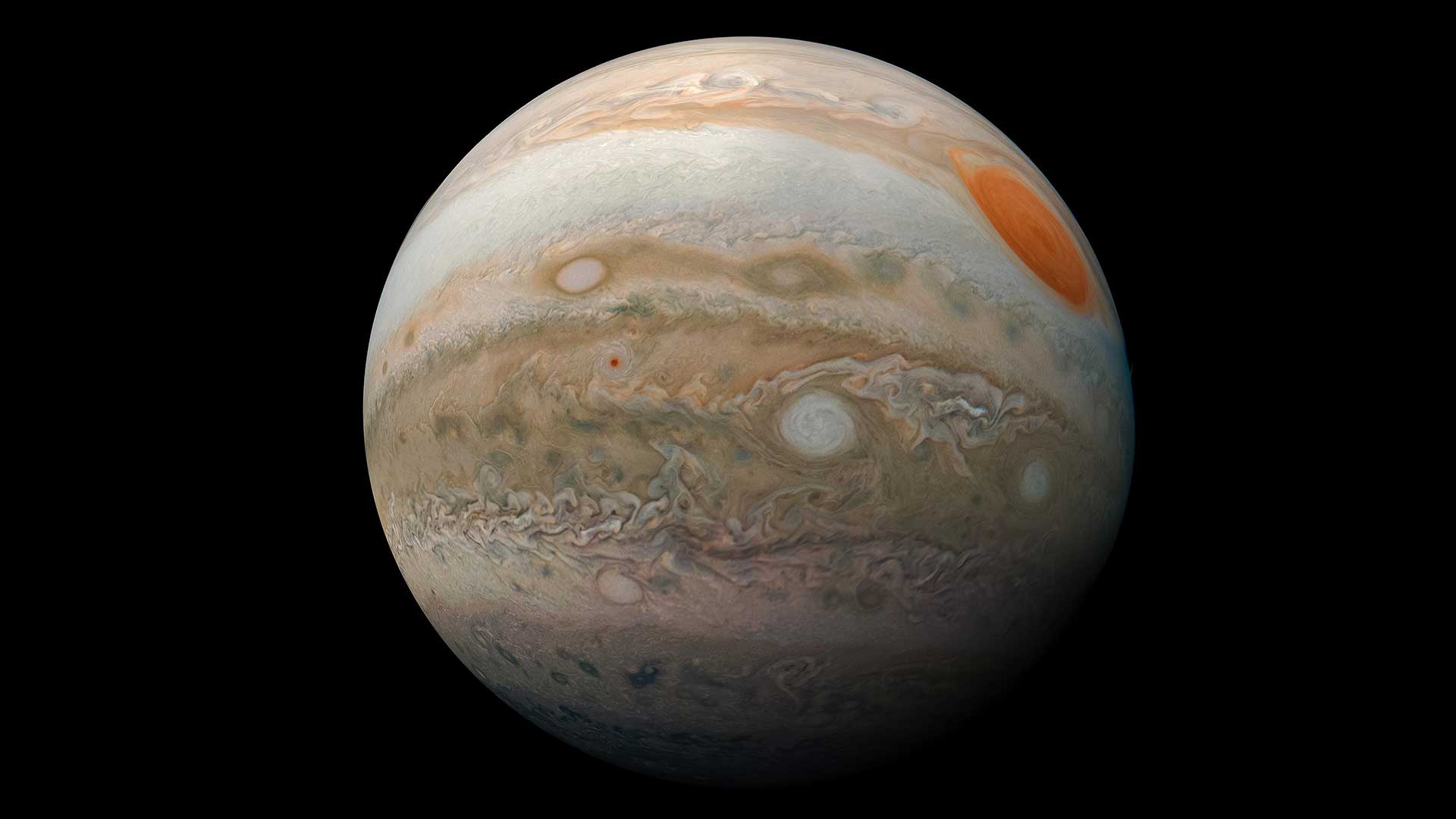
Jupiter with its cloud belts and Great Red Spot, imaged by NASA's Juno spacecraft. In mid-November 2026 Jupiter and Mars appear just 1.2 degrees apart before dawn

Planet Pairing · Pre-Dawn Sky · November 13–18, 2026

Mars and Jupiter Conjunction November 2026: When to Look

For a few mornings in mid-November, the two brightest planets of the late-night sky huddle together in Leo. Step outside before dawn on Sunday, November 15 or Monday, November 16 and look high in the south: the brilliant cream-white point is Jupiter, and the dimmer orange point just above and to its left is Mars. They are only about 1.2° apart, close enough to share one low-power telescope view.

Nov 15–16Best mornings (US)
1.2°Closest gap
−2.1 / +0.7Jupiter / Mars magnitude
~60°Height in the south before dawn
By Telescope Advisor Editorial Team | Published: | Updated: | Reviewed & approved by Juhi Sahni, Senior Editor | Editorial Standards
Elena Reyes — Senior Science Editor

Elena Reyes

Senior Science Editor

Covers NASA missions, space science discoveries, and astronomical events for Telescope Advisor. Translates complex astrophysical research into practical insights for backyard observers. Based in the San Francisco Bay Area.

Content reviewed by our editorial team. Research and drafting assisted by AI to ensure unbiased, data-driven analysis. Learn more about our editorial process.

Quick Answer: When and Where to See Mars and Jupiter Together

  • • Best mornings: Sunday, November 15 and Monday, November 16, 2026, between about 4:00 and 5:30 a.m. local standard time. The gap is roughly 1.2° on both mornings, and only a little wider from November 13 to 18.
  • • Where to look: High in the south-southeast to south, around 60° up an hour before sunrise. Both planets rise together a little after 11 p.m. and are well placed from about 2 a.m. onward.
  • • Which is which: Jupiter (magnitude −2.1) is the dazzling one, about 13 times brighter than Mars. Mars (+0.7) is the fainter, peach-orange point sitting to Jupiter’s upper left. The blue-white star about 4–5° to Jupiter’s lower left is Regulus.
  • • Exact moment: The planets are closest, 1.19° apart, at 02:04 UTC on November 16, which is 9:04 p.m. EST on November 15. Both are still below the horizon then, so the mornings on either side give the real views.
  • • Moonlight: None. The waxing crescent Moon sets in the evening every night of the week, leaving a dark sky before dawn.
  • • Equipment: Your eyes are enough. Binoculars frame both planets easily, and a small telescope at about 25–30× fits Jupiter, its four big moons and Mars into one field.

Separations, magnitudes, disk sizes, rise times and altitudes were computed by Telescope Advisor from the JPL DE421 planetary ephemeris using the Skyfield library, for New York, Chicago, Denver and Los Angeles. We cross-checked the timing against Forecast Bar, BBC Sky at Night Magazine and Star Walk. Daylight saving time ends on November 1, so all times here are local standard time.
Morning by Morning: How Mars Slips Past Jupiter

Both planets are moving east against the stars of Leo, but Mars travels about five times faster than Jupiter. This week Mars overtakes the giant planet, passing a little over a degree north of it. Seen from the US before dawn, facing south, that means Mars starts the week perched almost directly above Jupiter. Each morning it swings a little further toward Jupiter’s left, until by November 18 it sits mostly to the left and only slightly higher. The gap shrinks from about 1.5° to 1.2° and then opens again.

Friday, Nov 13

~1.5° apart

Mars stands almost straight above Jupiter, tipped just a hair to the left. This is a good first look to fix the pattern in your mind: one blazing point, one fainter orange point, about three Moon-widths apart.

Saturday, Nov 14

~1.3° apart

Mars is above Jupiter and slightly to the left. The two now fit comfortably in a typical 2° low-power telescope field. Compare tonight’s gap with yesterday’s; the change is easy to notice with the naked eye.

Sunday, Nov 15 · Peak morning

~1.2° apart

Mars sits to Jupiter’s upper left, more above than beside it. A few hours earlier, at about 9:40 p.m. EST on November 14, the planets shared the same right ascension, which is why some calendars list the conjunction on this date.

Monday, Nov 16 · Peak morning

~1.2° apart

The closest approach (1.19°) came the previous evening while the pair was below the horizon, so this morning is essentially tied with Sunday. Mars is now on a clean diagonal to the upper left of Jupiter.

Tuesday, Nov 17

~1.3° apart

Mars has moved to Jupiter’s left and a bit higher, and the gap is starting to widen. The first quarter Moon sets just before midnight, so the pre-dawn hours stay dark.

Wednesday, Nov 18 · Leonid morning

~1.5° apart

Mars is now to the left of Jupiter and only slightly above it, edging toward Regulus. This is also the morning after the Leonid peak night, so keep watching the whole sky while you are out.

Separations are for about 4–5 a.m. local time. Directions describe the view facing south from the continental US; from the West Coast, Mars appears a touch further left on each morning than from the East Coast. The geometry is the same in the UK and Europe, where the pair is also high in the south before dawn (see our UK night sky tonight page).

Sky Chart: Mars, Jupiter and Regulus in Leo

This chart shows the view facing south-southeast at about 5 a.m. local standard time from mid-northern US latitudes. Jupiter is fixed at the center because it barely moves during the week. Each numbered orange dot is Mars on that November morning. One grid square is 1°, about two full-Moon widths, or roughly the width of your little finger held at arm’s length.

Mars passing Jupiter in Leo, November 13 to 18, 2026 Facing south-southeast at about 5 a.m. Jupiter is at the center. Mars starts about 1.5 degrees almost directly above Jupiter on November 13 and moves down and to the left each morning, reaching about 1.5 degrees to Jupiter's left and slightly higher on November 18. The closest mornings are November 15 and 16 at about 1.2 degrees. Regulus lies about 4.4 degrees to the lower left of Jupiter, and the fainter star Eta Leonis is about 5 degrees to the left. 13 14 15 16 17 18 Mars (Nov 13–18) Jupiter Eta Leonis Regulus 1° ← east (left) west (right) → Facing SSE, ~5 a.m. · horizon is below
Telescope Advisor chart computed from the JPL DE421 ephemeris for Chicago (41.9°N) at 5 a.m. CST. Mars positions are plotted relative to Jupiter on each morning; Regulus and Eta Leonis are shown for November 15. Dot sizes are not to scale. The larger, ringed dots mark the two closest mornings.

Rise Times and Viewing Heights for US Cities

Mars and Jupiter come up over the eastern horizon within a few minutes of each other, shortly after 11 p.m. They climb all night and stand highest in the south as morning twilight begins. You do not need to stay up late: setting an alarm for 4:30 or 5 a.m. catches them at their best, in a dark sky. The table uses the night of November 15–16 in local standard time.

CityMars rises (Nov 15)Jupiter rises (Nov 15)Dark sky ends (Nov 16)Sunrise (Nov 16)Jupiter 1 h before sunrise
New York (EST)11:14 p.m.11:17 p.m.5:09 a.m.6:44 a.m.62° up, south (az 168°)
Chicago (CST)11:06 p.m.11:09 p.m.5:04 a.m.6:41 a.m.61° up, south (az 170°)
Denver (MST)11:20 p.m.11:22 p.m.5:12 a.m.6:45 a.m.63° up, south (az 166°)
Los Angeles (PST)11:23 p.m.11:24 p.m.5:00 a.m.6:26 a.m.68° up, south-southeast (az 155°)

“Dark sky ends” is the start of astronomical twilight. Rise times on November 13 and 14 are a few minutes later than shown. Mars stays within about a degree of Jupiter’s altitude throughout, so the Jupiter column works for both planets. Times assume a flat horizon; other cities in the same time zone are usually within about 15 minutes of the nearest listed city.

What a Telescope Shows of Mars and Jupiter Side by Side

The fun of this conjunction at the eyepiece is the contrast. Jupiter’s disk measures about 37 arcseconds across, while Mars spans only about 7 arcseconds, so the giant looks five times wider even though it is roughly four times farther away (about 790 million km, or 490 million miles, versus about 196 million km, or 122 million miles, for Mars).

  • Both in one field (25–30×): A 25mm eyepiece in a 130mm reflector with a 650mm focal length gives 26× and a field roughly 2° wide. That holds Jupiter, its four Galilean moons in a line, and the small orange dot of Mars together. In a longer-focal-length scope such as a 6-inch Schmidt-Cassegrain, a 25mm eyepiece shows under a degree, so you will need to nudge from one planet to the other.
  • Jupiter at 100–150×: The two dark equatorial belts are obvious, with the Great Red Spot visible when it faces Earth. Io, Europa, Ganymede and Callisto change places from one morning to the next.
  • Mars at 150× and up: Expect a small, slightly gibbous salmon disk (about 89% lit). On a steady morning, a 150mm or larger scope may hint at darker surface markings or a bright polar cap, but at 7″ most observers will see little more than colour and shape.

Tip: Both planets are about 60° high before dawn, well above the turbulent air near the horizon. Let your telescope cool outside for 30 minutes first, and look at Jupiter around 4:30–5:30 a.m., when it is close to its highest point of the night.

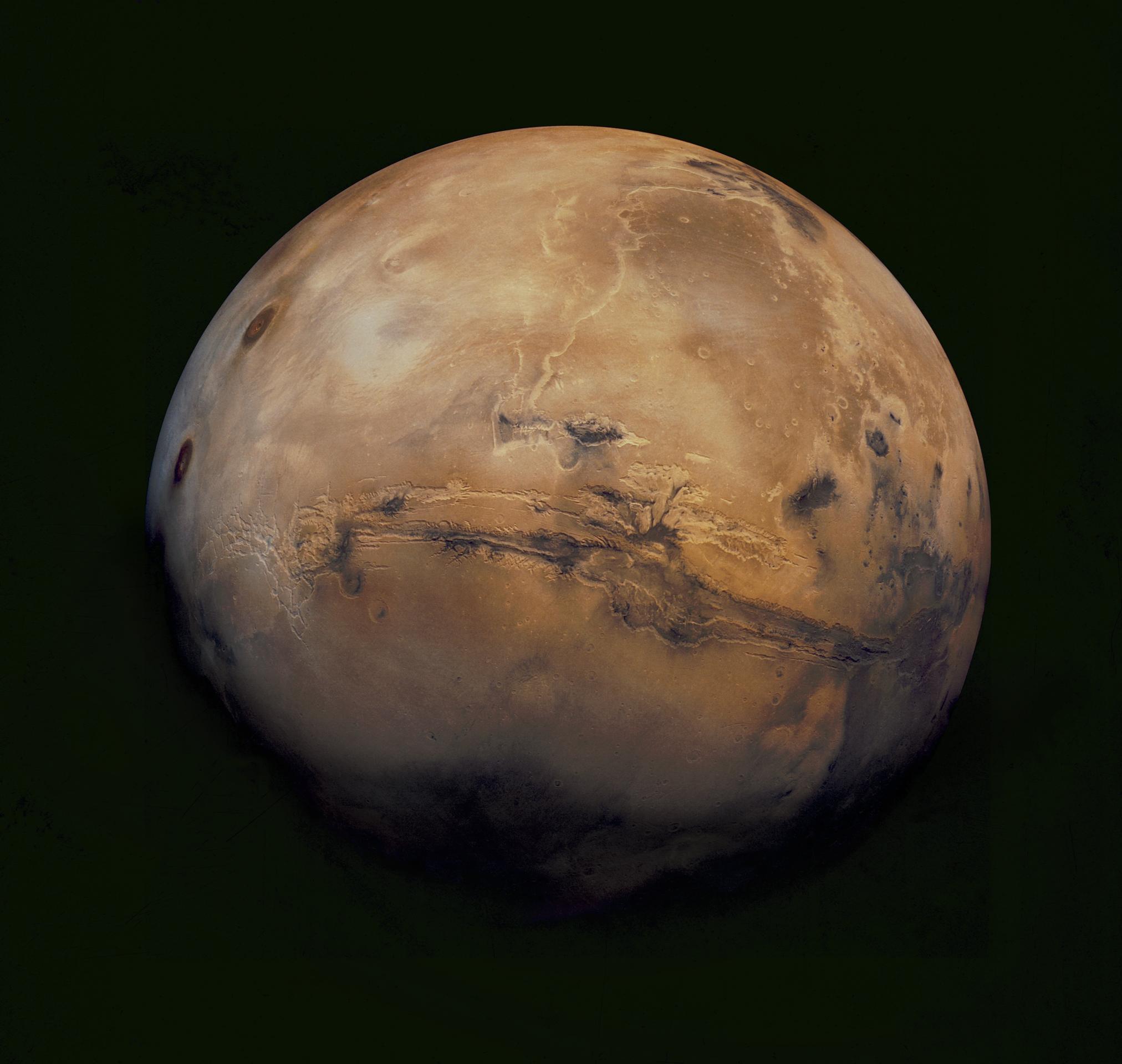
Mars full globe mosaic from NASA's Viking orbiter, centered on the Valles Marineris canyon system. In November 2026 a telescope shows Mars as a small 7 arcsecond disk next to much larger Jupiter

A spacecraft view of Mars. Through a backyard telescope this month, the planet is a tiny disk only a fifth of Jupiter’s width, but it will nearly double in size by February. Credit: NASA/JPL-Caltech/USGS (Viking).

The pair on November 15–16, 2026

  • • Constellation: Leo, about 4.4° from Regulus
  • • Jupiter: magnitude −2.1, disk 37.4″
  • • Mars: magnitude +0.7, disk 7.1″, 89% lit
  • • Separation: 1.2° (closest 1.19° at 02:04 UTC Nov 16)
  • • Distance from the Sun in the sky: about 87–88° west

Want to know what to expect before you look? Read what Jupiter looks like through a telescope, our guide to Jupiter’s four bright moons, and the Mars observing guide for 2026.

Bonus Targets Nearby: Regulus and the Leo Triplet

Regulus. The bright star a few degrees to the lower left of Jupiter is Regulus, the heart of Leo. It shines at magnitude 1.4, which makes it noticeably fainter than either planet, and it twinkles where the planets shine steadily. Mars is heading toward it: the gap between Mars and Regulus shrinks from about 5.8° on November 13 to about 3.7° on November 18, and the three draw into a tighter triangle over the following week. A small telescope at low power also picks up Regulus’s faint companion, an 8th-magnitude star about 3 arcminutes away, which makes a nice test of contrast against the bright primary.

The Leo Triplet. While your telescope is out under a moonless sky, swing east to Leo’s hindquarters, about halfway between the stars Chertan (Theta Leonis) and Iota Leonis. There you will find M65, M66 and NGC 3628, three spiral galaxies that fit together in a low-power field of a 130mm or larger scope. They are faint smudges rather than showpieces, so give your eyes 20 minutes to adapt and use averted vision.

Star-hopping help: our Leo constellation guide and how to see the Leo Triplet through a telescope.

Leonid Meteors in the Same Pre-Dawn Sky

The Leonid meteor shower peaks on the night of November 17–18, and its radiant lies in the Sickle of Leo, about 10° above and to the left of Jupiter. That means the best hours for meteors, after the radiant climbs high in the early morning, line up exactly with the best hours for the planets. The first quarter Moon sets around midnight, leaving the rest of the night dark. Expect a modest 10 to 15 meteors per hour from a dark site, many of them fast and bright. Set up a reclining chair facing south, enjoy the planets with the naked eye, and count meteors between telescope views.

Full shower details: Leonid meteor shower 2026 viewing guide.

A Rehearsal for the February 2027 Oppositions

This conjunction is more than a pretty pairing. Both planets are on their way to opposition, the point where Earth passes between them and the Sun and they are biggest, brightest and up all night. Jupiter reaches opposition on February 10–11, 2027, and Mars follows on February 19, 2027. Between now and then, Jupiter grows from 37″ to about 44–45″, while Mars almost doubles, from about 7″ to nearly 14″.

  1. Test your setup now. Find out which eyepieces give the sharpest Jupiter in your telescope, how long it takes to cool, and whether your finder is aligned. In February you will be glad the bugs are fixed.
  2. Make a baseline sketch or photo. Record Mars at 7″ this month, then again at opposition. The growth in size, and the surface detail that comes with it, is striking.
  3. Learn the neighbourhood. Both oppositions happen near this part of the sky in Leo, so knowing Regulus and the Sickle now makes the planets easy to find in winter.

Plan ahead with our Jupiter opposition 2027 telescope guide and our Mars opposition 2027 telescope guide.

Best Telescopes for Seeing Mars and Jupiter Together

For a conjunction like this one, a wide low-power field matters as much as magnification. Short-tube reflectors around 130mm are ideal: they frame both planets at once and still reach 100× and more for Jupiter’s belts. These are the scopes we would set up on these mornings:

Sky-Watcher Heritage 130P

Sky-Watcher Heritage 130P

A 130mm tabletop Dobsonian with a 650mm focal length, so its 25mm eyepiece shows Mars, Jupiter and the Galilean moons in one view. Quick to carry out on a cold pre-dawn morning.

Celestron StarSense Explorer DX 130AZ

Celestron StarSense Explorer DX 130AZ

A phone app guides you to each target, which helps beginners hop from the planets to Regulus and the faint Leo Triplet without a star chart.

Celestron NexStar 6SE

Celestron NexStar 6SE

A 150mm GoTo Schmidt-Cassegrain that tracks the planets for you. Its narrower field means one planet at a time here, but it pays off with sharper detail on Mars ahead of the 2027 opposition.

Accessories for This Pairing

You do not need much extra. A good pair of binoculars, a Barlow for more power on Jupiter, and a way to capture the view cover it:

Celestron SkyMaster 15x70 Binoculars

Celestron SkyMaster 15x70 Binoculars

Shows both planets side by side with room to spare, plus Jupiter's brightest moons as pinpoints when the binoculars are on a tripod.

Celestron Omni 2x Barlow Lens

Celestron Omni 2x Barlow Lens

Doubles the power of each eyepiece, so you can switch from the wide two-planet view to a close look at Jupiter's belts without buying another eyepiece.

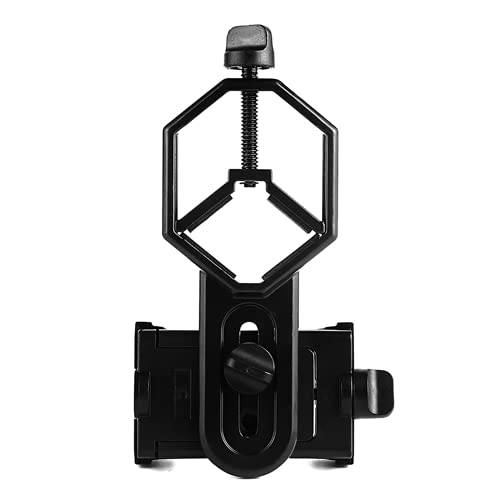
SVBONY Universal Phone Adapter

SVBONY Universal Phone Adapter

Holds your phone steady at the eyepiece for a record shot of Mars and Jupiter together, and a baseline image to compare with February.

Comparing more options? See our guide to the best telescopes for viewing planets and our best telescopes for Jupiter in 2026.

What Comes Next for Mars and Jupiter

  • • Night of November 29–30, 2026: A waning gibbous Moon passes about 1.3° from Jupiter as seen from the US, with Mars around 5° away and Regulus close by. It is a four-object grouping in Leo that rises around 10:15–10:35 p.m. local time.
  • • December 26–27, 2026: The Moon returns to the pair, forming another close trio with Mars and Jupiter around midnight.
  • • February 2027: Jupiter’s opposition (Feb 10–11) and Mars’s opposition (Feb 19) a little over a week apart.
  • • March 31, 2027: Mars and Jupiter meet again in the evening sky, though this time about 4.3° apart, much wider than in November.

All values computed from the JPL DE421 ephemeris. For every remaining 2026 event, see the astronomy events calendar and the November 2026 night sky guide.

Frequently Asked Questions

When is the Mars and Jupiter conjunction in November 2026?

The two planets are closest at 02:04 UTC on November 16, 2026, which is 9:04 p.m. EST on November 15, when they are 1.19 degrees apart. That moment falls before they rise in the US, so the best views are before dawn on Sunday, November 15 and Monday, November 16, when the gap is about 1.2 degrees.

What time should I look for Mars and Jupiter?

Look between about 4:00 and 5:30 a.m. local standard time. The planets rise together a little after 11 p.m. and are about 60 degrees high in the south by an hour before sunrise, which is around 5:40 a.m. in New York and Chicago.

Which one is Mars and which one is Jupiter?

Jupiter is the brilliant cream-white point, at magnitude minus 2.1. Mars is the fainter orange point, at magnitude plus 0.7, sitting above and to the left of Jupiter when you face south before dawn. Jupiter is about 13 times brighter.

Can I see Mars and Jupiter in the same telescope view?

Yes, with a low-power eyepiece. A 25mm eyepiece in a 130mm reflector with a 650mm focal length gives a field about 2 degrees wide, which holds both planets and Jupiter's four bright moons. Binoculars show them together easily too.

What is the bright star near Jupiter and Mars?

It is Regulus, the brightest star in Leo, at magnitude 1.4. In mid-November 2026 it lies about 4 to 5 degrees to the lower left of Jupiter, and Mars moves closer to it each morning.

Why do some calendars say November 15 and others November 16?

There are two definitions of conjunction. The planets share the same right ascension at about 02:40 UTC on November 15, while their smallest separation comes at 02:04 UTC on November 16. Time zones shift both dates too. For US observers it makes little difference, because the gap is about 1.2 degrees on both mornings.

When will Mars and Jupiter meet again?

Mars and Jupiter pass each other again on March 31, 2027, in the evening sky, but about 4.3 degrees apart. Before that, the Moon joins the pair on the night of November 29 to 30, 2026, and both planets reach opposition in February 2027.

Related Guides

Sources, Method & Image Credits

Some links in this article are affiliate links. If you buy through them, we may earn a small commission at no extra cost to you. It never changes which products we recommend. See our affiliate disclosure.