
What to See With a Telescope in November 2026
Telescope Advisor Logo Telescope Advisor
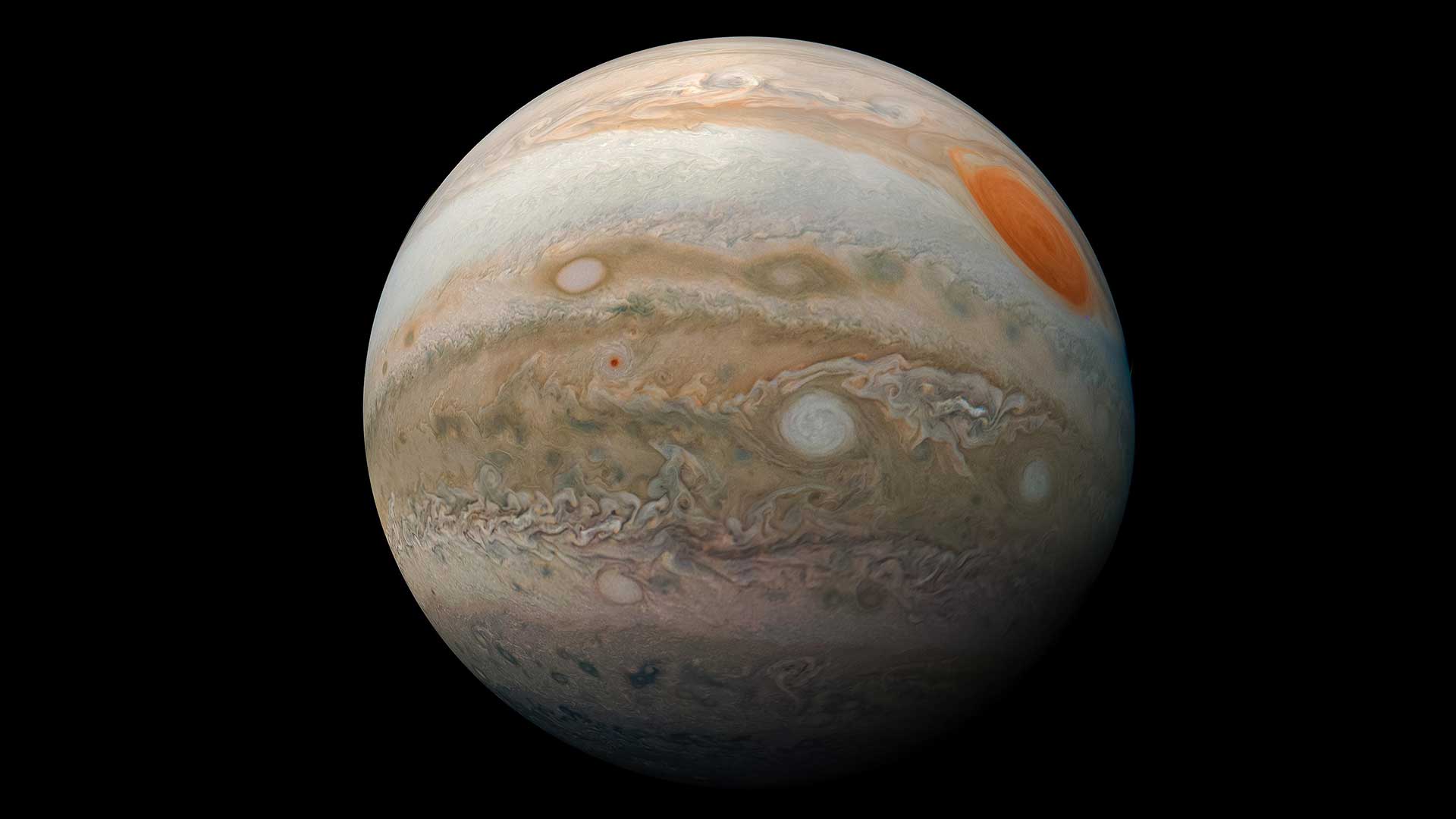
Jupiter with its Great Red Spot photographed by NASA — the headline telescope target of November 2026 as it builds toward its January 2027 opposition

Monthly Sky Guide · November 2026

What to See With a Telescope in November 2026

November 2026 is the hinge between autumn and winter observing — and it is loaded. Jupiter dominates the night at magnitude −2.5 to −2.7, its disk swelling past 45 arcseconds as it builds toward a January 2027 opposition. The Leonid meteor shower peaks on November 17–18, the Beaver Moon rises on November 25, the Andromeda Galaxy transits nearly overhead in the early evening, and Orion — with the great M42 nebula — returns to the east by mid-evening. This guide turns all of it into a practical, night-by-night telescope plan.

JupiterAll night — disk over 45″
Leonids PeakNovember 17–18, 2026
New MoonNovember 10, 2026
Beaver MoonNovember 25, 2026
By Telescope Advisor Editorial Team Published: Updated: Editorial Standards

Quick Answer: What Are the Best Telescope Targets in November 2026?

The number one telescope target in November 2026 is Jupiter. Riding high in Gemini at magnitude −2.5 to −2.7, the giant planet rises before sunset by mid-month and is beautifully placed in the south by 10 PM. Its disk already exceeds 45 arcseconds — near its annual maximum ahead of the January 2027 opposition — so any telescope from 60mm up shows the equatorial cloud belts and the nightly dance of the four Galilean moons, and a 130mm+ instrument adds the Great Red Spot and moon shadow transits.

Around Jupiter, November stacks a full calendar: the New Moon on November 10 opens the best sustained dark-sky window of the autumn, the Leonid meteor shower peaks on the night of November 17–18 with its famously fast meteors, and the Beaver Moon — November's full Moon — rises on November 25, just two nights before Black Friday. Meanwhile Saturn is still worth an early-evening look before it sinks away, the Andromeda Galaxy transits nearly overhead at 7–8 PM — its highest, cleanest position of the year — and Orion rises in the east by mid-evening, formally opening the winter deep-sky season.

Telescope highlight: Jupiter all month

Magnitude −2.5 to −2.7 in Gemini, disk over 45 arcseconds. Belts and moons in any scope; Great Red Spot and shadow transits at 130mm+. How to see Jupiter →

Dated event: Leonids, Nov 17–18

The fastest meteors of any major shower (71 km/s) — a naked-eye event, best after midnight when Leo climbs the eastern sky. Leonid 2026 guide →

Naked-eye stunner: the Beaver Moon

November's full Moon rises on November 25 and rides high through the long night — a superb high-altitude lunar session. Beaver Moon 2026 guide →

Looking for the general calendar of everything happening this month, telescope or not? See our companion page Night Sky in November 2026. This page is the telescope-first version: what to point at, when, and with how much magnification.


🔭

Not sure which telescope actually fits your goals?

Answer 5 quick questions about your budget, observing targets, and experience level — our Telescope Finder Tool recommends a specific model in under 2 minutes.

Find My Telescope →

November 2026 Telescope Calendar & Timeline

Here is every key date in November 2026 and what it means for your telescope sessions. The month splits into a dark-sky first half built around the November 10 New Moon, the Leonid peak mid-month, and a Moon-and-planets second half crowned by the Beaver Moon on the 25th.

Date Event What to Do With Your Telescope
Nov 1–9 Dark-sky window building toward New Moon Andromeda near the zenith in the early evening; Double Cluster overhead; Saturn early, Jupiter late
Nov 10 New Moon Darkest skies of the month — prime window for M31, M33, the Double Cluster, M15, and the rising Orion Nebula
Nov 17–18 Leonid meteor shower peak A naked-eye night — park the telescope on Jupiter between meteors. Best rates after midnight when Leo is up.
Nov 25 Full Moon — the Beaver Moon Deep sky is washed out for the week; switch to the Moon itself (rays, limb), Jupiter, and double stars
Nov 27–30 Black Friday (Nov 27) through Cyber Monday (Nov 30) The year's best telescope-buying window — see Black Friday deals and Cyber Monday deals
All month Jupiter excellent; Orion rising; Saturn declining Jupiter is the anchor of every session; M42 is well placed by 10 PM from mid-month
Dec 13–14 (preview) Geminid meteor shower peak The year's best shower is four weeks out — Geminids 2026 guide →

November 2026 Moon summary

New Moon: November 10. Full Moon (the Beaver Moon): November 25. Plan faint deep-sky targets for the first half of the month around the November 10 New Moon, and hand the nights around the 25th to the Moon, Jupiter, and double stars. For why November's full Moon carries the Beaver name and why it rides so much higher than the Harvest Moon did, see our dedicated Beaver Moon 2026 guide.

Section 1: Jupiter — The Planet of the Month, Every Clear Night

Jupiter is the showpiece planet of November 2026, building toward its January 2027 opposition. By mid-November it rises before sunset and stands well placed in the south by 10 PM, blazing at magnitude −2.5 to −2.7 — far brighter than any star in the sky. The disk already exceeds 45 arcseconds, near its annual maximum, which means the practical difference between a November view and an opposition-night view is small. Treat November the way smart observers treated September's Saturn: as opposition-quality practice, every clear night.

Jupiter's November numbers

Magnitude−2.5 to −2.7
ConstellationGemini
Disk sizeOver 45 arcseconds
OppositionJanuary 2027
Rise time (mid-month)Before sunset
Best window10 PM onward, high in the south

What you can see scales beautifully with aperture. Any pair of binoculars resolves the four Galilean moons — Io, Europa, Ganymede, and Callisto — strung out in an ever-changing line that rearranges itself night to night, sometimes hour to hour. A 60–80mm telescope at 40–80× adds the two dark equatorial belts. A 130mm+ instrument at 100–180× brings in the Great Red Spot when it is transiting, festoons along the belt edges on steady nights, and the ink-black dots of moon shadow transits crossing the cloud tops.

How to observe Jupiter well in November

  • Wait for altitude. Jupiter in Gemini climbs high — far higher than Saturn ever got this year. Views sharpen dramatically after 10 PM as it clears the turbulent air near the horizon.
  • Cool the telescope thoroughly. November air is cold; a warm mirror boils the image. Give the scope 30–45 minutes outside before judging what it can do.
  • Time the Great Red Spot. The Spot is visible for roughly two hours each time it transits the disk's center. Any planetarium app lists transit times — plan sessions around them.
  • Watch a shadow transit. When a Galilean moon passes in front of Jupiter, its shadow trails across the clouds as a crisp black dot — one of the most striking events a mid-size telescope can show, and November's long nights offer plenty of them.
  • Sketch the moons each night. Their positions change completely in 24 hours; Io reshuffles in a single evening. It is the fastest-moving spectacle in the solar system.

Full observing walkthrough: How to See Jupiter Through a Telescope →

Section 2: Saturn, Mars, and Uranus — The Supporting Cast

Saturn — catch it early, the season is closing

Saturn passed its opposition on October 4 and is now setting earlier every evening — by around 9 PM local time late in November. It is still a rewarding early-evening target: the rings remain tilted at 8°, cleanly separated in any 60mm+ telescope, and the Cassini Division is accessible in an 80mm+ instrument on steady air. Make Saturn the first object of every session, before it drops into the horizon murk. December will be the last comfortable month before its 2027 apparition. Eyepiece advice: best eyepiece for Saturn's rings.

Mars — the pre-dawn prize grows

Mars is rising earlier each night — by month-end around 1 AM local time — and brightening at magnitude 0.2–0.4 in the Leo/Virgo region. Its disk has swollen to 13–15 arcseconds, the largest it has been in years as it approaches its own January 2027 opposition. A 150mm+ telescope at 150–250× on steady November air begins to show the polar cap and the major dark albedo markings. If you are willing to observe after midnight, November is the month serious Mars work begins.

Uranus — still in its opposition window

Uranus reached opposition in late October and remains excellent all November — up all night in Taurus, conveniently near the Pleiades. In binoculars it is a steady blue-green "star"; a telescope at 150× or more resolves the tiny 3.7-arcsecond disk with its unmistakable methane tint. It is the easiest ice giant to bag, and November is prime time. Finder guide: how to see Uranus with a telescope.

One-night planet marathon: Saturn at 7 PM in the southwest, Uranus at 9 PM near the Pleiades, Jupiter from 10 PM high in Gemini, Mars after 1 AM in the east. Four planets, one telescope, one clear November night.

Section 3: The Leonid Meteor Shower — November 17–18

The Leonid meteor shower peaks on the night of November 17–18, 2026. In a non-storm year like this one the Leonids are a modest shower — expect roughly 10–20 meteors per hour from a dark site — but they carry a signature no other shower matches: at 71 km/s they are the fastest meteors of any major annual shower, producing brief, intensely bright streaks and glowing persistent trains. The radiant lies in Leo, which does not rise until after midnight, making the Leonids strictly a late-night event; the 2–4 AM window, when Leo stands highest, is the productive one.

The Leonids are also the shower with the wildest history: the storms of 1833 and 1966 delivered tens of thousands of meteors per hour and effectively founded meteor astronomy as a science. No outburst is predicted for 2026 — parent comet 55P/Tempel-Tuttle does not return to perihelion until 2031 — so treat this as a quality-over-quantity night.

The telescope's role: none, for the meteors themselves — your naked eyes, a reclining chair, and a dark sky win. But the smart Leonid session keeps a telescope set up on Jupiter, which conveniently shines in neighboring Gemini all night: watch the Galilean moons between meteors and you waste none of the cold hours. Hour-by-hour timing, Moon strategy, and the full storm history are in our dedicated Leonid Meteor Shower 2026 guide.

Leonid 2026 fast facts

  • Peak: Night of November 17–18, 2026
  • Active period: November 6–30
  • Rate: 10–20 per hour from a dark site
  • Best window: After midnight; 2–4 AM is prime, once Leo is high and any moonlight sits low in the west
  • Radiant: Leo, near Algieba (Gamma Leonis)
  • Speed: 71 km/s — fastest major shower
  • Parent comet: 55P/Tempel-Tuttle
  • Storm outlook: None predicted for 2026; next window ~2032–2034
  • Equipment: Naked eye; dress for deep cold

Want a bigger show? The Geminids follow on December 13–14 with up to 120 per hour — plan for them now.

Section 4: The Beaver Moon — November 25

November's full Moon — the Beaver Moon — rises on November 25, 2026. The name comes from the old North American seasonal calendars: this was the Moon of beavers finishing their winter lodges and of trappers setting their last lines before the freeze. For observers, the Beaver Moon marks a real transition. Unlike September's Harvest Moon, which hugged the horizon at dusk, November's full Moon climbs high across the sky through a long winter night — a full Moon rides opposite the Sun, so as the Sun's daily arc sinks toward its winter low, the full Moon's arc rises toward a summer-Sun height. That makes the Beaver Moon the first genuinely high-altitude full Moon of the season and a superb subject for crisp, filtered, high-power lunar viewing.

What to do with a telescope at full Moon

Full phase kills crater shadows but maximizes the ray systems — Tycho's brilliant splash rays, Copernicus, Kepler — and the high November altitude means you view the Moon through the least possible atmosphere. Use a Moon filter or variable polarizer: a high full Moon is dazzling in the eyepiece. Full observing plan, folklore, and photography tips: Beaver Moon 2026: Complete Guide →

Plan around the moonlight

The week surrounding November 25 is a write-off for galaxies and faint nebulae — M31, M33, and the winter nebulae all fade badly. Schedule deep-sky work for the dark first half of the month, and spend Beaver Moon week on the Moon itself, Jupiter, Uranus, and moonproof double stars. The gift-shopping upside: the Beaver Moon rises two nights before Black Friday (November 27) — if a bright Moon in the eyepiece convinces someone in your house they want a telescope, the year's best prices land that same week.

Section 5: November Deep-Sky — Two Seasons in One Night

November offers the widest deep-sky variety of any month: the autumn showpieces (Andromeda, the Double Cluster, M15) stand at their highest in the early evening while the winter legends (the Orion Nebula, the Pleiades, the Auriga clusters) rise in the east. Work these targets in the dark window around the November 10 New Moon, before Beaver Moon light takes over the final week.

The Andromeda Galaxy M31 — transiting nearly overhead on November 2026 evenings, its highest and cleanest position of the year

Andromeda Galaxy M31 — November's Flagship Deep-Sky Target

M31 transits nearly overhead (75–85° altitude from mid-latitudes) around 7–8 PM on November evenings — the cleanest view of the year through the least atmosphere. Credit: NASA.

M31 — Andromeda Galaxy (at its very best)

Type: Spiral galaxy | Constellation: Andromeda | Magnitude: +3.4
Our nearest large galactic neighbor, 2.5 million light-years away, transits nearly overhead at 7–8 PM — its highest, least atmospherically disturbed position of the year. Naked-eye from dark skies; 15×70 binoculars show the great oval halo with companions M32 and M110; a 130mm+ telescope at 40–60× begins to reveal the inner dust lanes under good transparency. Star-hop route: How to find Andromeda →

NGC 884/869 — Double Cluster in Perseus

Type: Open cluster pair | Constellation: Perseus | Magnitude: +4.3
Riding overhead on November evenings — two rich clusters of blue-white stars sharing a single low-power field. Breathtaking in big binoculars, best in a telescope at 20–50× with your widest eyepiece. Arguably the finest binocular object in the northern sky, at its finest position.

M15 — Pegasus globular (last call)

Type: Globular cluster | Constellation: Pegasus | Magnitude: +6.2
One of the most densely packed globulars known, with an intense core that shows in any telescope. November is its last well-placed month before the autumn constellations sink west — observe it early in the evening. A 130mm+ scope at 100–150× begins resolving its outer stars.

M33 & M74 — the dark-sky challenge pair

Type: Face-on spiral galaxies | Magnitudes: +5.7 / +9.4
The Triangulum Galaxy M33, near Andromeda and near the zenith, is easy in binoculars from a truly dark site and invisible from bright suburbs — a live test of your sky. M74 in Pisces is one of the toughest Messier objects: low surface brightness, best in 100mm+ aperture under dark, transparent November air.

M42 — Orion Nebula (the season opens)

Type: Emission nebula | Constellation: Orion | Magnitude: +4.0
Orion clears the eastern horizon by 7–8 PM late in the month, and M42 is well placed by 9–10 PM from mid-November. Even a 60mm telescope shows the glowing fan of gas around the Trapezium stars; each week it rises earlier and climbs higher, building toward its December prime. The first M42 of the season is an annual ritual — do not miss it.

M45 — Pleiades, with Uranus nearby

Type: Open cluster | Constellation: Taurus | Magnitude: +1.6
High overhead by late evening in its best season. Six-plus stars naked-eye, dozens in binoculars, hundreds in a rich-field telescope at low power — keep magnification at 20–40× or the cluster spills out of the field. Uranus sits in the same constellation this month: sweep over after the Pleiades for a two-for-one.

Hyades — the Bull's face

Type: Open cluster | Constellation: Taurus | Magnitude: +0.5
The V-shaped cluster forming the face of Taurus, anchored by orange Aldebaran (a foreground star). Too large for most telescopes — this is a naked-eye and binocular object, and a glorious one, fully risen by 8–9 PM.

M35 and the Auriga clusters — Jupiter's neighbors

Type: Open clusters | Constellations: Gemini / Auriga
While you are on Jupiter in Gemini, hop to M35 at the Twins' northern foot — a rich cluster that fills a medium-power field. Overhead, Auriga offers M36, M37, and M38, three showpiece clusters sweepable in a single binocular arc near brilliant Capella.

The Pleiades star cluster M45 — high overhead on November 2026 evenings at the start of its best season

The Pleiades (M45) — keep the magnification low

The blue reflection nebulosity around the Pleiades requires dark skies and photography to show well — but the diamond-dust cluster itself is stunning in any instrument at 20–40×. Credit: NASA/ESA/Hubble.

Section 6: Best November Targets by Telescope Aperture

Every aperture class gets a satisfying November. Here is what to prioritize with the telescope you actually own:

Aperture Your November Priorities Realistic Expectations
60–70mm refractor Jupiter's moons and belts, Saturn's rings early, Moon, M31 core, Pleiades, Double Cluster Both equatorial belts at 60–80×; all four Galilean moons; Saturn's rings cleanly split at 50×. Full 70mm guide →
130mm (5-inch) reflector All of the above plus the Great Red Spot, shadow transits, M31 dust-lane hints, M15 core, first M42 of the season GRS obvious at 100–180× when transiting; 4+ belts on steady nights; Uranus a resolvable blue-green disk. Full 130mm guide →
8-inch (200mm) Dobsonian/SCT Everything above plus belt festoons, M33's spiral patches, M74 attempt, Mars albedo work after 1 AM Jupiter detail limited only by seeing; M31 dust lanes clear from dark sites; Mars polar cap at 200×+ pre-dawn. Full 8-inch guide →
Binoculars (10×50 / 15×70) M31 with companions, Double Cluster, Pleiades, Hyades, Auriga clusters, Galilean moons, Leonid night sweeping November is arguably the best binocular month of the year — five showpiece clusters and a galaxy, all near the zenith. Binocular guide →

Gear Notes for November 2026 — and the Black Friday Window

November observing is cold-weather observing, and it is also the one month of the year when timing a purchase actually matters. Three notes:

Cold-weather kit beats new optics

A dew shield or dew heater strip, chemical hand warmers, and a red flashlight extend a November session from 30 shivering minutes to two productive hours. Let the telescope cool 30–45 minutes, and store eyepieces in an inside pocket so they do not fog the moment you use them.

A planetary eyepiece for Jupiter season

Jupiter rewards 100–180× all winter. If your kit stops at two stock eyepieces, a quality 6–9mm eyepiece or a 2× Barlow is the single highest-impact upgrade before the January opposition — and accessories see some of the deepest holiday discounts. See our eyepiece guide.

Buying? This is the month.

Black Friday falls on November 27 and Cyber Monday on November 30 — historically the deepest telescope and accessory discounts of the year. Start with the Black Friday telescope deals guide, the Cyber Monday deals guide (accessories and cameras discount hardest there), and the Christmas gift guide.

Buying a first telescope for the Geminids or for Christmas morning? November purchases arrive in time for both — start with our beginner telescope guide and the seasonal best time to buy a telescope calendar.


November 2026 Telescope FAQ

What is the best thing to see with a telescope in November 2026?

Jupiter is the best telescope target of November 2026. It shines at magnitude −2.5 to −2.7 in Gemini, rises before sunset by mid-month, and its disk exceeds 45 arcseconds as it builds toward its January 2027 opposition. Any telescope shows the four Galilean moons and the two main cloud belts; a 130mm+ instrument adds the Great Red Spot and moon shadow transits. The strongest supporting cast: the Leonid meteor shower on November 17–18, the Andromeda Galaxy nearly overhead in the early evening, the Beaver Moon on November 25, and the Orion Nebula returning to the evening sky.

When is the Leonid meteor shower in 2026 and do I need a telescope?

The Leonids peak on the night of November 17–18, 2026, with the shower active from November 6–30. No telescope is needed or wanted for the meteors — naked eyes see the whole sky, which is what counts. Expect 10–20 meteors per hour from a dark site, best after midnight when the radiant in Leo has risen; the 2–4 AM window is prime. Leonids are the fastest meteors of any major shower at 71 km/s. Keep a telescope trained on Jupiter in neighboring Gemini between meteors. Full timing tables: our Leonid 2026 guide.

When is the full Moon in November 2026?

November 2026's full Moon — the Beaver Moon — falls on November 25, 2026, with the New Moon on November 10. The Beaver Moon rides much higher across the sky than September's Harvest Moon did, making it an excellent high-altitude target for filtered lunar observing, but it washes out galaxies and faint nebulae for about a week. Plan deep-sky sessions for the first half of the month and lunar or planetary sessions around the 25th. See our dedicated Beaver Moon 2026 guide for the folklore and the observing plan.

Is Saturn still worth observing in November 2026?

Yes — but observe it early in the evening. Saturn passed opposition on October 4 and now sets around 9 PM local time by late November, sinking lower in the southwest each week. The rings remain tilted at 8 degrees and cleanly visible in any 60mm+ telescope, with the Cassini Division reachable in an 80mm+ instrument on steady air. Make Saturn the first stop of every session; December is its last comfortable month before the 2027 season.

Can I see the Andromeda Galaxy with a telescope in November?

November is the single best month for it. M31 transits nearly overhead (75–85 degrees altitude from mid-northern latitudes) around 7–8 PM, so you view it through the least possible atmosphere. From dark skies it is a naked-eye smudge; binoculars show the great oval glow with companions M32 and M110; a 130mm+ telescope at low power reveals the bright core and, under transparent skies, the first dust lanes. Use the dark window around the November 10 New Moon — moonlight hurts it badly.

When can I see the Orion Nebula in November 2026?

Orion rises in the east around 7–8 PM by late November, and the Orion Nebula (M42) is well placed for telescopes by 9–10 PM from mid-month onward. Even a small telescope shows the glowing fan of nebulosity and the tight Trapezium star cluster at its heart. Each week it climbs higher and earlier; it reaches its prime position in December, when it transits at its highest around midnight. November is the traditional season opener.

Is Mars visible in November 2026?

Yes, as a late-night and pre-dawn object. Mars rises around 1 AM local time by the end of November, shining at magnitude 0.2–0.4 with a distinctly orange tint. Its disk has grown to 13–15 arcseconds — the largest in years — as it approaches its January 2027 opposition. A 150mm or larger telescope on steady air begins to show the polar cap and dark surface markings. For evening-only observers, Jupiter, Saturn, and Uranus carry the month.

What comes after November? What should I get ready for in December?

December 2026 delivers the year's best meteor shower — the Geminids, peaking December 13–14 with up to 120 meteors per hour under moonlight-free peak conditions — plus the Winter Solstice on December 21, the Ursids on December 22, the Cold Moon on December 27, and the Orion Nebula at its annual prime. Get ahead with our Geminids 2026 guide, the What to See With a Telescope in December 2026 guide, and the Night Sky in December 2026 calendar.