Harvest Moon 2026: Date, Meaning, and How to Observe It
Telescope Advisor Logo Telescope Advisor
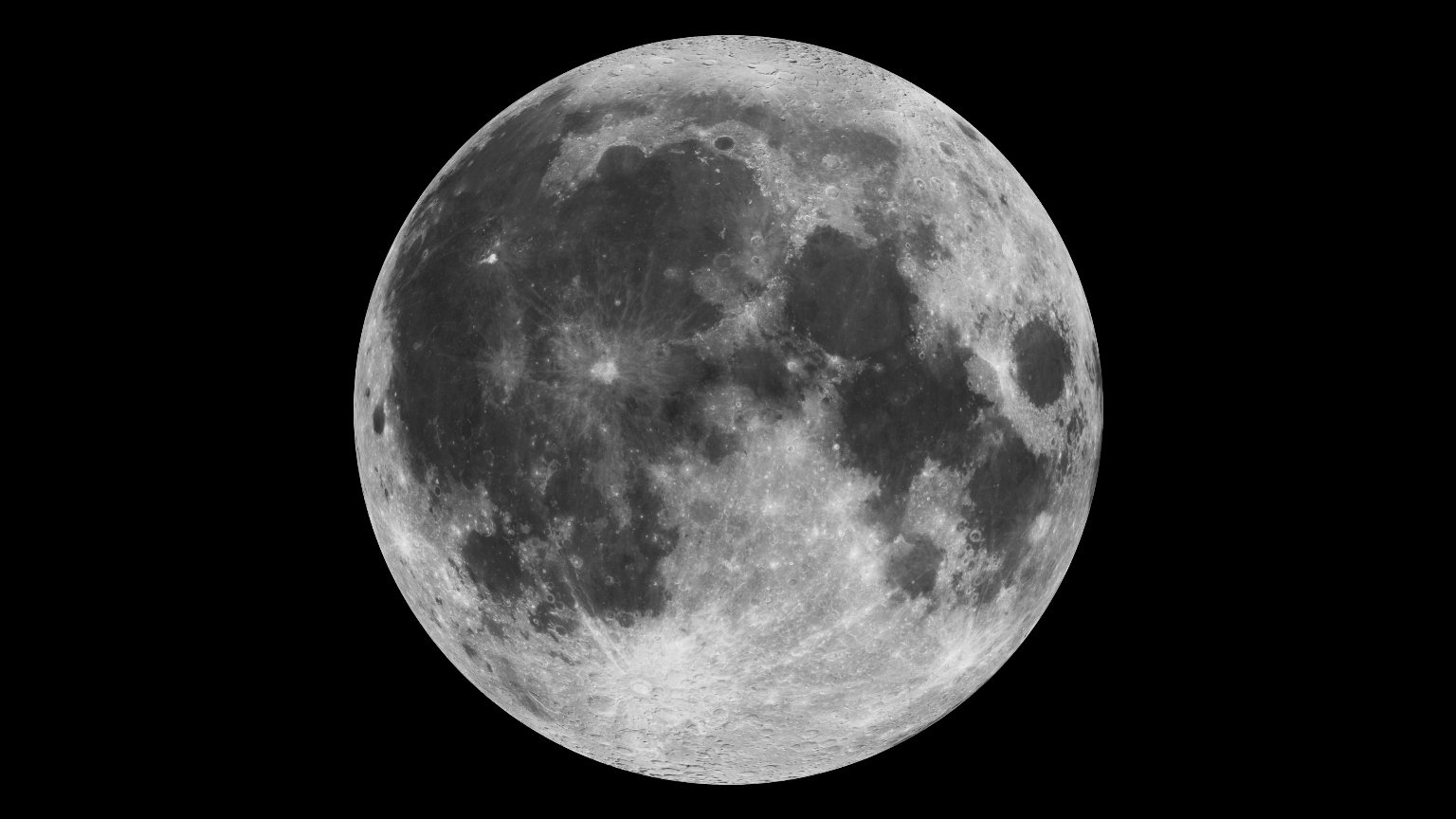
The full Moon photographed by NASA's Clementine mission — the Harvest Moon rises on September 26, 2026

Named Full Moon Series · September 2026

Harvest Moon 2026: When to See It and Why It Is Special

The Harvest Moon of 2026 is the full Moon of September 26 — the full Moon closest to the autumnal equinox on September 22. For several evenings in a row it rises within minutes of sunset, hanging low and orange-gold over the eastern horizon, thanks to a quirk of geometry that once let farmers keep working their fields after dark. Here is exactly when to look, why the effect happens, and how to get the most out of it with a telescope — plus an honest note on what a full Moon does to the rest of your observing list.

Full MoonSeptember 26, 2026
Autumnal EquinoxSeptember 22, 2026
Moonrise lagOnly 20–30 min/night
Best viewsMoonrise, for 3–4 nights
By Telescope Advisor Editorial Team Published: Updated: Editorial Standards

Quick Answer: When Is the Harvest Moon in 2026?

The Harvest Moon in 2026 falls on Saturday, September 26, 2026. The Harvest Moon is not a fixed calendar date — it is defined as the full Moon closest to the autumnal equinox, and in 2026 the equinox lands on September 22, with the full Moon following just four days later. That makes the September 26 full Moon a true, unambiguous Harvest Moon.

The practical beauty of the Harvest Moon is not a single night but a run of them: for roughly three to four consecutive evenings around September 26, the Moon rises only 20–30 minutes later each night instead of the usual 50–80 minutes. The result is a bright full or nearly full Moon climbing over the eastern horizon just after sunset, night after night — large-looking, orange-tinted while low, and impossible to miss. Exact moonrise times depend on your location, so check a local moonrise table and plan to be watching the eastern horizon at sunset each evening from about September 24 to 28.

The date

Full Moon: September 26, 2026, four days after the September 22 autumnal equinox — the closest full Moon to the equinox, hence the Harvest name.

The phenomenon

A shallow ecliptic angle near the equinox shrinks the nightly moonrise delay to 20–30 minutes — so moonrise stays glued to sunset for several evenings running.

The best view

Watch the Moon actually rise. Low on the horizon it glows orange-gold and looks huge. Binoculars or a telescope at low power make it unforgettable.


🔭

Not sure which telescope actually fits your goals?

Answer 5 quick questions about your budget, observing targets, and experience level — our Telescope Finder Tool recommends a specific model in under 2 minutes.

Find My Telescope →

The 2026 Date — and the September Sky Around It

The Harvest Moon anchors a remarkably busy week of astronomy. Here is how the key September 2026 dates line up:

Date Event Why It Matters
September 11 New Moon Darkest skies of the month — the deep-sky window before Harvest Moon light arrives
September 22 Autumnal Equinox Astronomical autumn begins; the reference point that defines which full Moon gets the Harvest name
September 26 Full Moon — the Harvest Moon Rises near sunset for 3–4 evenings in a row; orange-gold and dramatic while low on the horizon
September 26 Neptune at opposition (same night) A curious coincidence — but moonlight makes faint Neptune harder; hunt it mid-month instead (guide)
October 10 Next New Moon Deep-sky conditions return in earnest — just in time for post-opposition Saturn evenings

Note that the Harvest Moon does not always fall in September. Because it is tied to the equinox rather than the calendar, roughly one year in three the closest full Moon to the equinox lands in early October, and that year's Harvest Moon is an October Moon. In 2026 the four-day gap between equinox (September 22) and full Moon (September 26) makes it a clean September case. For the full month's observing plan around this event, see What to See With a Telescope in September 2026 and the calendar-style Night Sky in September 2026.

Why Is It Called the Harvest Moon?

The Harvest Moon is the only widely used full Moon name defined by astronomy rather than by the calendar month: it is the full Moon that falls closest to the autumnal equinox. The name is centuries old and entirely practical. Before electric lighting, the weeks around the equinox were the critical harvest window in the Northern Hemisphere — and this particular full Moon delivered something no other full Moon of the year could.

On an ordinary night, the Moon rises roughly 50–80 minutes later than it did the evening before, so the nights after a full Moon quickly lose their early-evening moonlight. Around the equinox, that nightly delay collapses to just 20–30 minutes. For farmers, this meant several consecutive evenings when bright moonlight arrived almost as soon as the Sun went down — effectively extending the working day at exactly the moment crops had to come in. The Moon that saved the harvest earned its name.

The orange-gold color the rising Harvest Moon is famous for is not unique to it, though this Moon shows it off more than most. Any Moon near the horizon looks reddened because its light passes through a thick slice of atmosphere that scatters away blue wavelengths — the same physics as a sunset. The Harvest Moon simply spends more consecutive evenings rising in prime early-evening viewing hours, so far more people see it doing it.

The Moon's cratered surface imaged by NASA's Lunar Reconnaissance Orbiter — at full Moon the Tycho ray system dominates the southern highlands

The Full Moon's Face

At full phase the Sun shines straight down on the lunar surface — craters lose their shadows, but bright ray systems like Tycho's reach maximum contrast. Credit: NASA / Lunar Reconnaissance Orbiter.

The Moonrise-Lag Phenomenon: Why This Full Moon Behaves Differently

The Harvest Moon's signature trick — rising near sunset several nights in a row — comes down to the angle the Moon's path makes with your horizon.

The mechanics

The Moon travels eastward along a path close to the ecliptic, moving about 13° per day. Each day's eastward step is what delays moonrise from one night to the next. How much it delays moonrise depends on the angle at which the ecliptic meets the eastern horizon at moonrise time. In September evenings, that angle is at its shallowest for Northern Hemisphere observers: the Moon's daily 13° step runs nearly along the horizon rather than down below it. A step sideways costs little rising time — so moonrise slips by only 20–30 minutes per night instead of the usual 50–80.

What it looks like in practice

Suppose the full Moon rises right at sunset on September 26. The next evening it rises only about half an hour later — still in bright twilight. The evening after, another half hour — still early. For three or four consecutive nights, anyone stepping outside around dinnertime sees a big, bright, low Moon in the east. In spring the same geometry flips: the ecliptic meets the evening horizon steeply, moonrise delays stretch to their maximum, and the full Moon "disappears" from the early evening within a night or two. The Harvest Moon effect is the autumn extreme of a cycle that runs all year.

The same shallow-angle geometry strengthens the further north you live — at higher latitudes the nightly lag shrinks even more, and in far northern regions the Harvest Moon can rise at nearly the same time for close to a week. To understand the underlying phase cycle this sits on top of, see our Moon Phases Explained guide.

Is the Harvest Moon 2026 a Supermoon?

"Supermoon" and "Harvest Moon" describe two completely independent things, and it is worth untangling them. A supermoon is a full Moon that coincides with the Moon's closest approach to Earth (perigee); such a Moon appears about 14% larger and 30% brighter than a full Moon at apogee, its farthest point. A Harvest Moon is defined purely by timing — whichever full Moon lands closest to the autumnal equinox gets the title, regardless of how near or far the Moon happens to be in its orbit that month.

So a Harvest Moon can be a supermoon in some years and an ordinary-distance full Moon in others — the two labels only overlap by coincidence. We make no supermoon claim for the September 26, 2026 full Moon; the honest answer is that the Harvest Moon's appeal does not depend on perigee at all. The dramatic "huge Moon" impression people report near Harvest Moon evenings comes overwhelmingly from the Moon illusion — a trick of perception that makes any Moon near the horizon look enormous compared with the same Moon overhead — amplified by the fact that the Harvest Moon spends several consecutive evenings parked exactly where that illusion is strongest. Photograph the low Moon and measure it against a later overhead shot and the disk is the same size (or within the few percent that orbital distance explains). Your eyes are being fooled, gloriously.

How to Observe the Harvest Moon With a Telescope

Full Moon is often dismissed as the "worst" phase for lunar telescope work — and for shadow-relief crater views that is true. But the Harvest Moon rewards a different observing strategy, and done right it is one of the most enjoyable telescope evenings of the autumn.

1. Catch it rising, at low power

The best Harvest Moon view of all is the first half hour after moonrise. At 30–50×, the orange, atmosphere-rippled disk climbing through horizon haze is spectacular — you can often watch the color drain from gold to white as it gains altitude. Any telescope works; so do binoculars. No filter needed this low — the atmosphere is doing the dimming for you.

2. Add a Moon filter once it climbs

A high full Moon is intensely bright in the eyepiece — not dangerous, but dazzling enough to kill your night vision and wash out detail. A simple neutral-density Moon filter restores comfort and contrast; a variable polarizing filter lets you dial the brightness smoothly as the Moon rises. Our picks: best Moon filters · best variable Moon filters.

3. Hunt rays, not shadows

With the Sun shining straight down on the lunar surface, crater walls cast no shadows — but ray systems reach maximum glory. Tycho's rays splash a third of the way across the disk; Copernicus and Kepler add their own bright sprays. Trace where rays overlap and you are reading the Moon's impact history. Full-phase targets and technique: How to Observe the Moon.

4. Explore the limb and the libration zones

Even at full phase, the extreme edge of the disk shows foreshortened crater rims and rugged limb terrain in profile. Libration — the Moon's slow apparent wobble — tips slightly different edge regions into view each month, so the limb is never quite the same twice. At 100–150× with a filter, patrol the edge slowly; it is the one part of a full Moon that still shows relief.

5. Photograph it

The Harvest Moon is the most photogenic Moon of the year: low altitude, warm color, and a multi-night window to get the shot. A smartphone held to the eyepiece captures a satisfying disk; a DSLR at prime focus does far better. Keep exposures short — the full Moon is a sunlit rock and overexposes instantly. Full walkthrough: How to Photograph the Moon With a Telescope.

Bonus: it is a perfect outreach night

A rising Harvest Moon needs zero explanation to impress neighbors, kids, or dinner guests — and because it happens at a civilized hour for several nights running, it is the easiest "first telescope experience" of the year to schedule. Pair it with Saturn, which is also up all evening in late September at near-opposition quality.

The Honest Downside: Full Moon Is the Worst Night for Deep Sky

Here is the part many Harvest Moon articles skip: for every target that is not the Moon or a bright planet, the full Moon is the worst night of the month. A full Moon floods the entire sky with scattered light, raising the sky background by several magnitudes. Faint galaxies vanish completely. Nebulae lose their delicate outer structure and then their cores. Even bright showpieces like the Andromeda Galaxy — near its best altitude of the year in late September — shrink from a sprawling glow to a dim, truncated smudge.

Skip during Harvest Moon week (∼Sep 23–29)

  • Galaxies (M31, M33) — washed out badly
  • Faint nebulae (Veil, North America) — invisible even with filters
  • Neptune at opposition — ironically peaking September 26; observe it mid-month instead
  • Milky Way sweeping — the star clouds simply disappear

Great during Harvest Moon week

  • The Moon itself — rays, limb, moonrise color
  • Saturn — magnitude 0.3, utterly indifferent to moonlight
  • Venus — a brilliant crescent in the west at dusk
  • Double stars like Albireo — moonproof and beautiful

The smart September plan: do your faint deep-sky work in the dark window around the September 11 New Moon, hand the week of the 26th to the Moon and planets, and resume galaxy hunting as the Moon wanes toward the October 10 New Moon. Not sure what tonight's Moon phase leaves on the menu? Our What Can You See With a Telescope Tonight? guide sorts targets by current conditions.

Harvest Moon Folklore and the Tradition of Full Moon Names

Naming full Moons for the season's work or wildlife is a tradition found across many cultures — European farming calendars, Native American seasonal names popularized by North American almanacs, and older lunar calendars besides. Most names attach to a calendar month; the Harvest Moon is the notable exception, floating with the equinox instead. A few threads of its folklore worth knowing:

The working Moon

In pre-industrial Europe and North America, the Harvest Moon's near-sunset rises were genuinely economically important — wheat, corn, and root crops came in by moonlight when the days grew too short. Songs, festivals, and harvest-home suppers across northern Europe were timed to this Moon.

The Corn Moon alternative

In years when the equinox-closest full Moon falls in October, the September full Moon reverts to its month-name: the Corn Moon. In 2026 there is no such split — September 26 is both the September full Moon and the Harvest Moon, four days after the equinox.

A global stage

The same Moon anchors autumn festivals across East Asia — the Mid-Autumn Festival's mooncakes and lanterns celebrate the full Moon nearest the autumn equinox, a striking parallel tradition built on the same astronomical event.

Other well-known names in the annual cycle include April's Pink Moon (named for spring ground phlox, not color), June's Strawberry Moon, and the calendar oddity of the Blue Moon — the second full Moon within a single calendar month, occurring roughly every 2.5 years. The full naming tradition, and the science of the phase cycle beneath it, is covered in our Moon Phases Explained guide.

After the Harvest Moon: The Named Moons Coming Next

The Harvest Moon opens autumn's run of storied full Moons. Here is what follows it through the end of 2026 — we will publish dedicated guides for each as they approach:

Hunter's Moon — October 2026

The full Moon after the Harvest Moon always carries the Hunter's name — traditionally the moonlit evenings for hunting game fattened on fallen grain. It inherits a milder version of the same shallow-ecliptic moonrise effect, rising close to sunset for a couple of evenings.

Beaver Moon — November 2026

November's full Moon, named for the season when beavers finish their winter lodges and trappers once set their lines. By November the full Moon rides higher and the nights are long — excellent for high-altitude lunar observing on cold, steady air.

Cold Moon — December 2026

The year's final full Moon rides highest of all — near the top of the sky at midnight, mirroring the low December Sun. The Cold Moon is the best full Moon of the year for crisp, high-magnification lunar views, moonlight-tolerant double stars, and frosty moonlit landscapes.


Harvest Moon 2026 FAQ

When is the Harvest Moon in 2026?

The Harvest Moon in 2026 is the full Moon of September 26, 2026. It earns the name by being the full Moon closest to the autumnal equinox, which falls on September 22, 2026 — just four days earlier. Exact moonrise time varies by location, so check a local moonrise table; the show repeats for three to four evenings around the 26th, with the Moon rising only 20–30 minutes later each night.

Why is it called the Harvest Moon?

Because it once extended the harvest. Near the autumnal equinox, the Moon's path makes a shallow angle with the evening horizon, so the Moon rises only 20–30 minutes later each night instead of the usual 50–80. Around the full Moon closest to the equinox, that produces several consecutive evenings of bright moonlight beginning at sunset — light that let farmers keep bringing in crops after dark in the era before electric lighting. The name attached to the Moon that made it possible.

Is the Harvest Moon 2026 a supermoon?

The two labels are unrelated: a supermoon is a full Moon coinciding with lunar perigee (appearing about 14% larger and 30% brighter than an apogee full Moon), while the Harvest Moon is defined purely by its timing relative to the equinox. We make no supermoon claim for September 26, 2026 — and the Harvest Moon does not need one. Its famous "huge Moon" look comes mostly from the Moon illusion, the perceptual effect that makes any Moon near the horizon appear enormous.

Why does the Harvest Moon look orange?

Any Moon near the horizon looks orange or gold because its light travels through a much thicker slice of Earth's atmosphere than when it is overhead, and the atmosphere scatters away the blue wavelengths — exactly the physics of an orange sunset. The Harvest Moon is not intrinsically more orange than other Moons; it simply rises during prime early-evening hours for several nights in a row, so far more people catch it in its low, colorful stage.

Do I need a filter to look at the Harvest Moon through a telescope?

You do not need one for safety — moonlight cannot harm your eyes — but a Moon filter makes full-Moon observing far more comfortable once the Moon climbs above the horizon haze. The full disk is bright enough in a telescope to dazzle you and wipe out your dark adaptation for many minutes. A neutral-density Moon filter or, better, a variable polarizing filter that lets you dial brightness to taste, transforms the session. See our Moon filter guide and variable filter picks.

What can I see on the Moon at full phase?

Not crater shadows — the Sun shines straight down on the surface, flattening the relief that makes quarter phases dramatic. Instead, full phase is ray-system season: Tycho's brilliant rays span a third of the disk, joined by Copernicus and Kepler. The contrast between dark maria and bright highlands is at maximum, the limb still shows foreshortened terrain in profile, and the rising Moon adds its orange atmospheric show. Technique and targets: How to Observe the Moon.

Is the Harvest Moon always in September?

No. Because the Harvest Moon is tied to the equinox rather than the calendar, roughly one year in three the closest full Moon to the equinox falls in early October, making that year's Harvest Moon an October Moon (and the September full Moon takes the name Corn Moon instead). In 2026 the full Moon of September 26 falls just four days after the September 22 equinox, so it is a clear-cut September Harvest Moon.

Is the full Moon a good night for stargazing?

For the Moon itself, planets, and double stars — yes. For everything faint — honestly, no. The full Moon brightens the entire sky and washes out galaxies, nebulae, and the Milky Way; even the Andromeda Galaxy fades to a dim smudge. Around the 2026 Harvest Moon, do faint deep-sky work in the dark window near the September 11 New Moon, spend Harvest Moon week on the Moon, Saturn, and Venus, and resume galaxy hunting as the Moon wanes toward October 10. Our What Can You See Tonight? guide matches targets to Moon conditions.