
What to See With a Telescope in September 2026
Telescope Advisor Logo Telescope Advisor
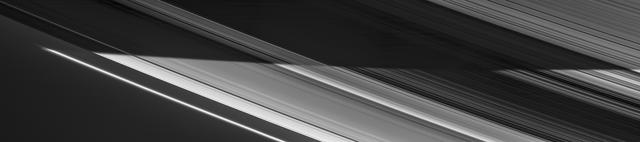
Saturn photographed by the NASA Cassini spacecraft — the headline telescope target of September 2026 as it approaches its October 4 opposition

Monthly Sky Guide · September 2026

What to See With a Telescope in September 2026

September 2026 hands telescope owners an unusually rich target list. Saturn shines at magnitude 0.3, rising near sunset as it approaches its October 4 opposition. Neptune reaches opposition on September 26, Venus blazes at greatest brilliance on September 22 as a huge telescopic crescent, the Moon occults Venus on September 14 for daytime observers in Europe and Asia, the Harvest Moon rises on September 26, and the Andromeda Galaxy climbs to its best altitude of the year. This guide organizes it all into a practical observing plan.

SaturnAll night — rings at 7.5° tilt
Neptune OppositionSeptember 26, 2026
Venus BrillianceSeptember 22 — mag −4.8
Harvest MoonSeptember 26, 2026
By Telescope Advisor Editorial Team Published: Updated: Editorial Standards

Quick Answer: What Are the Best Telescope Targets in September 2026?

The number one telescope target in September 2026 is Saturn. The ringed planet rises at or before sunset all month at magnitude 0.3 — brighter than any star in the autumn sky — with its rings tilted at 7.5° and clearly visible in any telescope 60mm or larger at 50×. Saturn reaches opposition on October 4, so every September night delivers near-opposition quality without the wait.

Around Saturn, September stacks four dated events: the Moon occults Venus on September 14 (a daylight event for Europe, Africa, the Middle East, and southern Asia — not visible from the Americas), Venus reaches greatest brilliance on September 22 at magnitude −4.8 (the same day as the autumnal equinox), Neptune reaches opposition on September 26, and the Harvest Moon rises the same night, September 26. For deep-sky work, use the dark window around the September 11 New Moon: the Andromeda Galaxy is climbing toward its best altitude of the year, the Double Cluster is rising, M13 is still high in the west, and the Dumbbell Nebula (M27) sits nearly overhead.

Telescope highlight: Saturn all month

Magnitude 0.3 in Aquarius, disk 19.2 arcseconds, rings at 7.5°. Best window 11 PM–2 AM when it transits the south. How to see Saturn →

Challenge target: Neptune at opposition

Opposition September 26. Magnitude 7.8 — binoculars find it, a 150mm+ scope at 150× resolves the tiny blue-grey disk. Neptune opposition guide →

Naked-eye stunner: Venus & the Harvest Moon

Venus hits magnitude −4.8 on September 22 — a 42-arcsecond crescent in any telescope. The Harvest Moon follows on September 26. Harvest Moon 2026 guide →

Looking for a general calendar of everything happening this month, telescope or not? See our companion page Night Sky in September 2026. This page is the telescope-first version: what to point at, when, and with how much magnification.


🔭

Not sure which telescope actually fits your goals?

Answer 5 quick questions about your budget, observing targets, and experience level — our Telescope Finder Tool recommends a specific model in under 2 minutes.

Find My Telescope →

September 2026 Telescope Calendar & Timeline

Here is every key date in September 2026 and what it means for your telescope sessions. The month splits neatly into a dark-sky first half (built around the September 11 New Moon) and an event-packed second half (Venus occultation, greatest brilliance, equinox, Neptune opposition, and the Harvest Moon).

Date Event What to Do With Your Telescope
Sep 1–10 Waning Moon; Saturn rising near sunset Saturn early evening; deep-sky work improves each night as the Moon thins
Sep 11 New Moon Darkest skies of the month — prime window for Andromeda, the Double Cluster, M27, M13, and the Veil Nebula
Sep 14 Moon occults Venus (daytime, 09:26–13:42 UTC) Visible from Europe, Africa, the Middle East, western Russia, and southern Asia in daylight — telescope or binoculars essential. Not visible from the Americas (evening Moon–Venus pairing instead).
Sep 22 Venus at greatest brilliance + Autumnal Equinox Venus at magnitude −4.8 in the west after sunset — a 42-arcsecond crescent, unmistakable at 40×. Astronomical autumn begins.
Sep 26 Neptune at opposition + Full Harvest Moon Neptune rises at sunset (best window Sep 10–Oct 10) — but the Harvest Moon brightens the sky the same night. Hunt Neptune earlier in the month; enjoy the Moon rise on the 26th.
Late Sep Andromeda Galaxy near its highest of the year M31 at 60–70° altitude from mid-northern latitudes — the best galaxy views of 2026 begin
Oct 4 (preview) Saturn opposition Every September session is a rehearsal — Saturn opposition guide →

September 2026 Moon summary

New Moon: September 11. Full Moon (the Harvest Moon): September 26. The next New Moon follows on October 10. Plan faint deep-sky targets for September 1–16 and switch to the Moon, Saturn, Venus, and double stars as the Harvest Moon brightens the second half of the month. For why the September 26 full Moon carries the Harvest name and rises near sunset several nights running, see our dedicated Harvest Moon 2026 guide.

Section 1: Saturn — Opposition Prep, Every Clear Night

Saturn reaches opposition on October 4, 2026 — its closest, largest, and brightest moment of the year — but the practical difference between mid-September and opposition night is tiny: roughly 2% in apparent size and a tenth of a magnitude in brightness. What that means for you: every clear September night is effectively an opposition-quality Saturn night. Treat the month as your training camp. Learn where Saturn transits from your observing site, find the magnification your local seeing supports, and by October 4 you will know exactly how to get your best view of the year.

Saturn's September numbers

Magnitude0.3 — brighter than any autumn star
ConstellationAquarius
Ring tilt7.5° — clearly separated from the disk
Disk size19.2 arcseconds
Rise time (mid-month)~6:30 PM local time
Best window11 PM – 2 AM (transit south)

The ring tilt is the story of 2026. After the rings passed edge-on in 2025 and nearly vanished, they have reopened to 7.5° — enough that a 60mm refractor at 50× shows them as a clean oval clearly detached from the globe, and an 80mm+ scope at 80–100× starts to reveal the Cassini Division. At 150× in a 6-inch telescope the division splits cleanly and four to five moons line up like faint beads: Titan, Rhea, Dione, Tethys.

How to observe Saturn well in September

  • Wait for altitude. Saturn sits in Aquarius, which stays fairly low in the south from mid-northern latitudes. Hold your high-magnification views until the planet is at least 25–30° above the horizon — typically after 9 PM mid-month. Below that, atmospheric turbulence smears the rings.
  • Cool your telescope first. September nights are noticeably cooler than August's. Give the scope 20–45 minutes outside before judging the view; a warm mirror or lens produces shimmering thermal currents.
  • Start at 100× and climb. Push magnification up only while the image stays sharp. On a steady night, a 6–8 inch scope handles 150–200× on Saturn; on a turbulent night, 100× will beat 200× every time.
  • Track Titan night to night. Saturn's largest moon orbits in about 16 days — sketch its position each session and you will watch it swing from one side of the rings to the other across the month.

Full observing walkthrough: How to See Saturn With a Telescope → · Opposition-night specifics: Saturn Opposition October 2026 →

Section 2: Neptune at Opposition — September 26, 2026

Neptune reaches opposition on September 26, 2026 (September 25 local time in the Americas), rising around sunset and staying up all night. This is the best annual window to bag the most distant major planet — and it is a genuinely different kind of observing challenge from Saturn. Neptune shines at magnitude 7.8: invisible to the naked eye, easy in 10×50 binoculars if you have a finder chart, and unambiguous only when magnification reveals it as a disk instead of a point.

Set expectations honestly: Neptune's disk spans just 2.4 arcseconds. Through a 150mm or larger telescope at 150×+, it resolves into a tiny, steady, blue-grey ball — obviously not a star, but with no visible cloud detail or rings. The reward is intellectual rather than visual: you are looking at sunlight that took over four hours to bounce back to your eye. Its large moon Triton, at magnitude 13.5, is a legitimate trophy for 8-inch and larger scopes under dark skies.

Timing tip: The practical observing window runs from about September 10 through October 10 — and because the Harvest Moon floods the sky on opposition night itself (September 26), your best Neptune hunts are actually mid-month, in the dark window after the September 11 New Moon. Finder charts, star-hop routes, and magnification advice are in our dedicated Neptune Opposition September 2026 guide.

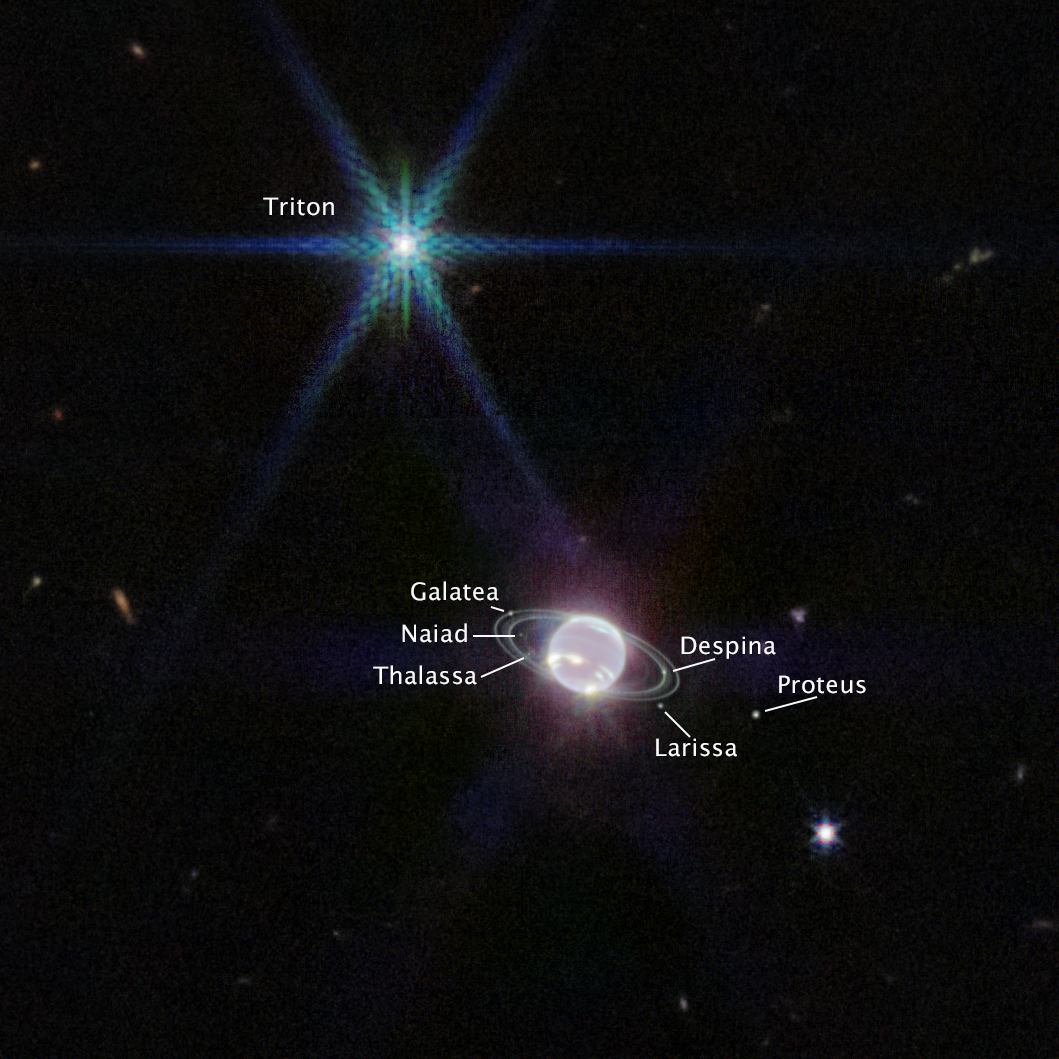
Neptune and its moons imaged by the NASA James Webb Space Telescope — Neptune reaches opposition on September 26, 2026

Neptune by the James Webb Space Telescope

Through a backyard telescope, Neptune appears as a tiny blue-grey disk at 150× — no rings or clouds, but unmistakably a world. Credit: NASA/ESA/CSA Webb.

Section 3: Venus — A Daytime Occultation and Greatest Brilliance

Venus owns the western evening sky in September 2026, and it delivers two dated events in a single month — one for the eyepiece, one for the calendar of a lifetime if you live in the right hemisphere.

September 14: The Moon Occults Venus

On September 14, the waxing crescent Moon (about 14–15% illuminated) slides directly in front of Venus. The event runs between 09:26 and 13:42 UTC and is visible from Europe, Africa, the Middle East, western Russia, and southern Asia — in broad daylight, which makes a telescope or binoculars essential. Because Venus is a resolvable disk rather than a point, the lunar limb takes roughly 70–90 seconds to swallow it: through the eyepiece you watch the crescent get bitten away sliver by sliver.

Not visible from North or South America — the whole event happens while the Moon and Venus are below the horizon there. US and Canadian observers instead get a handsome consolation pairing: the Moon and Venus about 5–6° apart, low in the west after sunset on the 14th. Regional timing tables: Venus Occultation September 14 guide →

September 22: Venus at Greatest Brilliance

On September 22 — equinox day — Venus reaches magnitude −4.8, its brightest of 2026: bright enough to cast faint shadows from a dark site and to be found in full daylight if you know where to look. Here is the part that surprises first-time observers: at peak brightness, Venus is a thin crescent, not a full disk. Only about 22% of the planet is illuminated, but the crescent spans roughly 42 arcseconds — comparable to Jupiter — so even 40× shows it plainly, and steady 12× binoculars hint at it.

This is the single best "wow" object to show guests through a telescope this month: a brilliant point to the eye, a huge silver crescent in the eyepiece. The physics of the brightness-plus-crescent paradox: Venus at Greatest Brilliance guide →

Observing tip: Catch Venus early — it sits low in the west and sets within a couple of hours of the Sun. Start observing in bright twilight, when the sky background reduces Venus's glare and the crescent shows cleaner contrast than it does against full darkness.

Section 4: The Harvest Moon and the Autumnal Equinox

The autumnal equinox falls on September 22, 2026, marking the start of astronomical autumn in the Northern Hemisphere — and the full Moon that follows four days later, on September 26, is therefore the Harvest Moon, the full Moon closest to the equinox. Because the ecliptic makes a shallow angle with the horizon at this time of year, the Moon rises only 20–30 minutes later each evening (instead of the usual 50–80), so a bright, nearly full Moon hangs low over the eastern horizon just after sunset for three or four nights in a row.

What to do with a telescope at full Moon

A full Moon offers no terminator shadows, so craters look flat — but the Tycho ray system is at its most dramatic, splashing bright streaks a third of the way across the disk, and the rising Harvest Moon's orange tint (atmospheric filtering near the horizon) is beautiful at low power. The full Moon is intensely bright in the eyepiece: a Moon filter makes extended viewing far more comfortable. Full observing plan, filter advice, folklore, and photography tips: Harvest Moon 2026: Complete Guide →

What the equinox means for your sessions

The equinox is the seasonal switch-point for your target list: nights now grow longer than days, darkness arrives earlier every evening, and the autumn constellations — Pegasus, Andromeda, Perseus — take over the prime evening hours from the Summer Triangle. It is the natural moment to reset your observing plan for autumn targets. See our Equinox 2026 Stargazing Guide →

Plan around the moonlight

The week surrounding September 26 is a write-off for faint galaxies and nebulae — the Harvest Moon washes them out. Schedule deep-sky sessions for September 1–16, and spend the bright nights on the Moon itself, Saturn, Venus, and double stars like Albireo, which shrug off moonlight completely.

Section 5: Early-Autumn Deep-Sky Targets

September is the hinge month for deep-sky observers: the summer showpieces are still high in the west while the autumn classics rise in the east, so a single session can sweep both seasons. Work these targets in the dark window around the September 11 New Moon, before Harvest Moon light takes over the second half of the month.

The Andromeda Galaxy M31 — climbing toward its highest altitude of the year in late September 2026

Andromeda Galaxy M31 — September's Flagship Deep-Sky Target

M31 reaches its highest altitude of the year in late September, climbing to 60–70° from mid-northern latitudes. Under dark skies it spans more sky than the full Moon. Credit: NASA.

M31 — Andromeda Galaxy (rising to its best)

Type: Spiral galaxy | Constellation: Andromeda | Magnitude: +3.4
The nearest large galaxy, ~2.5 million light-years away, reaches its highest altitude of the year in late September — 60–70° up from mid-northern latitudes, well clear of horizon haze. Naked-eye visible from dark skies as an elongated smudge; 15×70 binoculars show the nucleus, halo, and both companions M32 and M110; a telescope at low power (15–30×) frames the bright core and inner disk. Star-hop route: How to find Andromeda →

NGC 884/869 — Double Cluster in Perseus

Type: Open cluster pair | Constellation: Perseus | Magnitude: +4.3
Rising in the northeast as autumn takes hold: two rich open clusters side by side in a single low-power field, each a swarm of blue-white stars. Naked-eye from dark sites, breathtaking in binoculars, and best in a telescope at 20–50× with the widest eyepiece you own. A perfect early-autumn crowd-pleaser.

M13 — Hercules Globular (catch it before it sets)

Type: Globular cluster | Constellation: Hercules | Magnitude: +5.8
The northern sky's finest globular is now past its prime placement, sliding down the western sky each evening. September is your last comfortable month to catch it at a decent altitude before it sinks into the evening twilight for the year. A 100mm+ scope at 80–150× resolves individual stars across its face. Observe it early in the session, before it drops below ~30°.

M27 — Dumbbell Nebula in Vulpecula

Type: Planetary nebula | Constellation: Vulpecula | Magnitude: +7.4
The biggest, easiest planetary nebula in the sky rides nearly overhead on September evenings — the ideal position, looking through the least atmosphere. A 60mm scope picks it up as a soft glow; an 80mm+ shows the classic two-lobed "apple core" shape at 50–100×. A UHC filter darkens the background and makes the lobes pop from suburban skies.

M15 & M2 — Autumn globulars

Type: Globular clusters | Magnitudes: +6.2 / +6.5
As M13 exits, two worthy successors rise with the autumn constellations: M15 in Pegasus — one of the most densely packed globulars known, with an intense core visible in any scope — and M2 in Aquarius, sharing a constellation with Saturn (swing over after your planet session). A 130mm+ scope begins resolving the outer stars of both.

Veil Nebula & Albireo — Cygnus overhead

Cygnus is still at the zenith in the early evening. The Veil Nebula (supernova remnant, mag ~7.0) rewards a 100mm+ scope with an OIII or UHC filter under dark skies — ghostly braided filaments. And Albireo, the gold-and-blue double star at the Swan's head, splits at 40× in any telescope and looks superb even under full moonlight — keep it on the list for Harvest Moon week.

Section 6: Best September Targets by Telescope Aperture

Every aperture class gets a satisfying September. Here is what to prioritize with the telescope you actually own:

Aperture Your September Priorities Realistic Expectations
60–70mm refractor Saturn, Venus crescent, Moon, Albireo, M31 core, Double Cluster Saturn's rings clearly separated at 50×; Venus's 42″ crescent easy at 40×; Titan visible. Full 70mm guide →
130mm (5-inch) reflector All of the above plus Cassini Division, M27's dumbbell shape, M15/M2 cores, Neptune found Cassini Division splits at 120–180× in steady seeing; 4–5 Saturnian moons; Neptune identifiable as non-stellar. Full 130mm guide →
8-inch (200mm) Dobsonian/SCT Everything above plus Neptune's disk resolved, Triton attempt, Veil filaments, M31 dust-lane hints Neptune a clean blue-grey disk at 150–200×; Triton (mag 13.5) possible from dark skies; 5–7 Saturn moons. Full 8-inch guide →
Binoculars (10×50 / 15×70) M31 with companions, Double Cluster, Milky Way sweeps, Moon–Venus pairing Sep 14 Saturn visibly non-circular in 15×70; Neptune findable with a chart as a faint "star"; Andromeda magnificent.

Gear Notes for September 2026

September needs no exotic equipment — but three inexpensive accessories earn their keep this month more than almost any other:

A Moon filter for Harvest Moon week

The full Moon on September 26 is dazzling in the eyepiece — a neutral-density Moon filter cuts the glare and lets you study the Tycho ray system in comfort. A variable polarizing filter goes further, letting you dial brightness to taste as the Moon rises. Our picks: best Moon filters and variable Moon filters.

A medium-power planetary eyepiece

Saturn and Venus both reward 100–150× this month. If your telescope came with only two eyepieces, a quality 6–9mm eyepiece (or a Barlow for the ones you own) is the single best upgrade before the October 4 Saturn opposition. See our eyepiece guide.

A UHC or OIII filter for the Veil

The Veil Nebula and North America Nebula in Cygnus are near the zenith in early September — both transform from invisible to striking with a narrowband filter on a 100mm+ scope under dark skies. Worthwhile before Cygnus sinks away for the year.

Buying a first telescope ahead of the Saturn opposition? September purchases arrive in time for October 4 — start with our beginner telescope guide or the best planetary telescopes roundup.


September 2026 Telescope FAQ

What is the best thing to see with a telescope in September 2026?

Saturn is the best telescope target of September 2026. It rises at or before sunset all month at magnitude 0.3 with its rings tilted at 7.5°, and it reaches opposition on October 4 — so every clear September night delivers near-opposition quality. Any telescope 60mm or larger at 50× shows the rings. The strongest supporting cast: Venus at greatest brilliance on September 22 (a huge 42-arcsecond crescent), Neptune at opposition on September 26, and the Andromeda Galaxy near its highest altitude of the year.

When is Neptune at opposition in 2026, and can I actually see it?

Neptune reaches opposition on September 26, 2026 (September 25 local time in the Americas), with a practical observing window from about September 10 to October 10. At magnitude 7.8 it is too faint for the naked eye but easy in binoculars with a finder chart. To see it as a disk rather than a star-like point, you need roughly a 150mm telescope at 150× or more — it appears as a tiny, steady blue-grey ball 2.4 arcseconds across. Hunt it mid-month: the Harvest Moon brightens the sky on opposition night itself.

Can I see the Venus occultation on September 14, 2026 from the United States?

No. The occultation runs between 09:26 and 13:42 UTC, when the Moon and Venus are below the horizon across North and South America. It is visible — in daylight, through binoculars or a telescope — from Europe, Africa, the Middle East, western Russia, and southern Asia. US and Canadian observers still get a close Moon–Venus pairing (about 5–6° apart) low in the west after sunset on September 14, which is lovely in binoculars.

Why does Venus look like a crescent at its brightest?

Greatest brilliance (September 22, 2026, magnitude −4.8) happens about five weeks before Venus passes between Earth and the Sun. At that geometry Venus is close to Earth — so its disk is huge, about 42 arcseconds — but only about 22% of its sunlit side faces us, producing a thin crescent. The growing disk area outweighs the shrinking phase, so Venus is brightest while looking like a slender crescent. It is one of the most counterintuitive and rewarding telescope views of the year, obvious at just 40×.

When is the Harvest Moon in 2026?

The Harvest Moon — the full Moon closest to the autumnal equinox — falls on September 26, 2026, four days after the equinox on September 22. Thanks to the shallow angle of the ecliptic at this season, it rises only 20–30 minutes later each evening, so a bright Moon hangs over the eastern horizon just after sunset for several nights running. It is a beautiful naked-eye and low-power telescope sight, but it washes out faint deep-sky objects for about a week. Full details in our Harvest Moon 2026 guide.

What deep-sky objects are best in September 2026?

Use the dark window around the September 11 New Moon for: the Andromeda Galaxy (M31, climbing to its best altitude of the year, with companions M32 and M110), the Double Cluster in Perseus rising in the northeast, the Dumbbell Nebula M27 nearly overhead, the autumn globulars M15 (Pegasus) and M2 (Aquarius), the Veil Nebula in Cygnus (100mm+ scope with OIII/UHC filter), and M13 in Hercules — catch that one early in the evening, because September is its last well-placed month before it sets for the season.

Is Jupiter or Mars visible in September 2026?

Both are morning objects. Jupiter rises a couple of hours before the Sun at a brilliant magnitude −2.1 — the 4–6 AM window shows all four Galilean moons and its main cloud belts in any telescope at 40×, previewing its January 2027 opposition. Mars, past its 2026 opposition, is a fading orange point (magnitude ~0.8–1.0) in the pre-dawn east; a 4-inch or larger scope at 100×+ still shows a small ~9-arcsecond disk. For evening sessions, Saturn, Venus, and Neptune are the planets to plan around.

What comes after September? What should I get ready for in October?

October 2026 opens with the headline event of the autumn: Saturn's opposition on October 4 — the planet at its closest, largest, and brightest of the year. Later in the month the Orionid meteor shower peaks, born from Halley's Comet debris. Get ahead with our Saturn Opposition October 2026 guide, the Orionid Meteor Shower 2026 guide, and the full Night Sky in October 2026 calendar.