Moon and Jupiter Nov 29-30, 2026: Mars and Regulus Join In
Telescope Advisor Logo Telescope Advisor
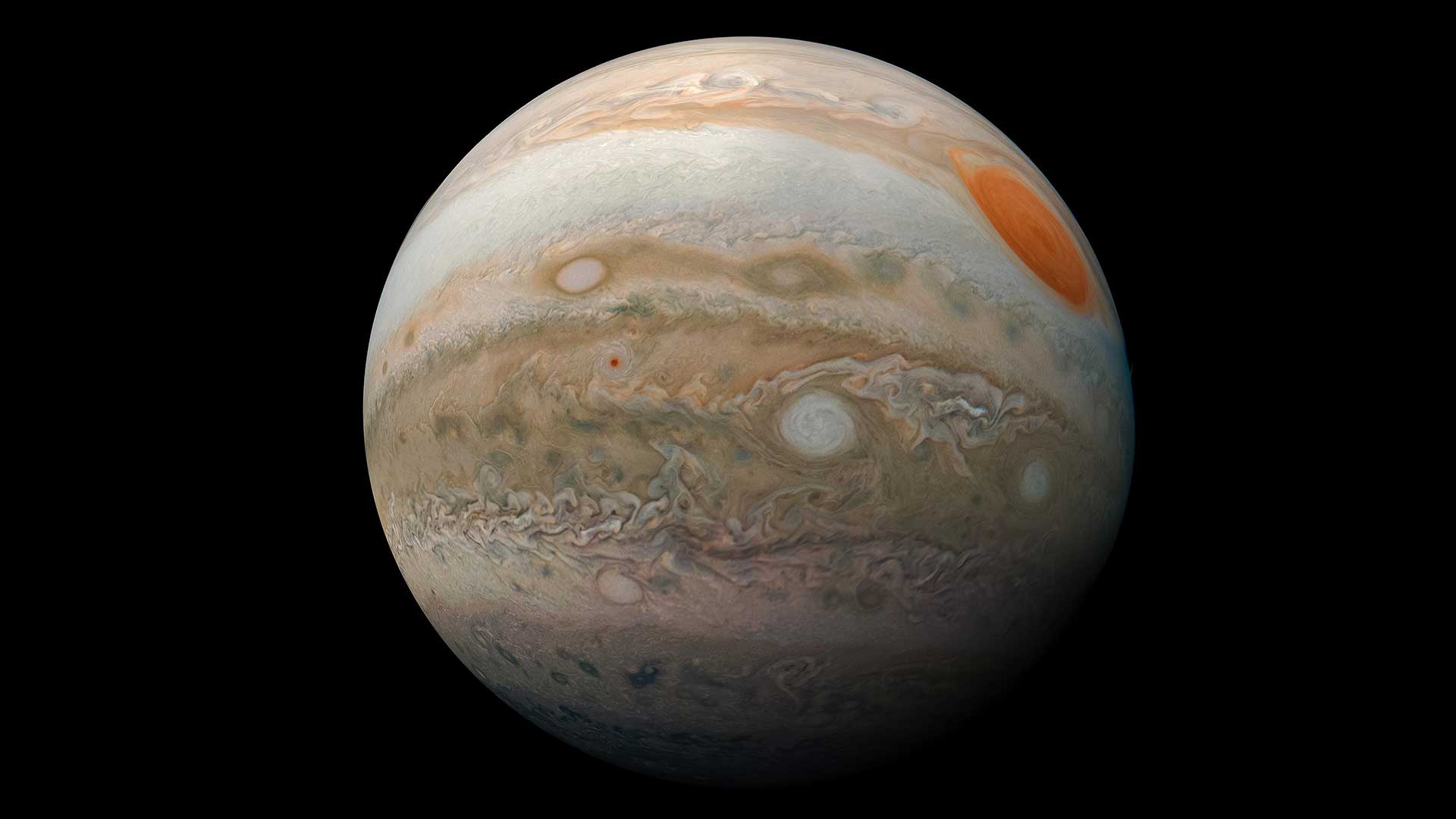
Jupiter with its cloud belts and Great Red Spot, imaged by NASA's Juno spacecraft. Jupiter sits beside the waning gibbous Moon on the night of November 29 to 30, 2026

Moon & Planet Gathering · Night of November 29–30, 2026

Moon and Jupiter Nov 29–30, 2026: Mars and Regulus Join In

On the Sunday night after Thanksgiving, November 29, 2026, the waning gibbous Moon rises in the east together with Jupiter, the brightest “star” next to it. Through the night the Moon slides to within about 1.3° of Jupiter as seen from the US. By dawn on Monday, November 30, the Moon, Jupiter, reddish Mars and the star Regulus sit high in the south in a group about 5° across. If you unwrapped or bought binoculars or a telescope over the holiday weekend, this is the easiest first target night of the season.

Nov 29–30Late evening to dawn (US)
~1.3°Closest Moon–Jupiter gap (US)
5.2°Moon, Jupiter, Mars, Regulus circle
60%Moon illuminated
By Telescope Advisor Editorial Team Published: Updated: Reviewed & approved by Juhi Sahni, Senior Editor Editorial Standards
Elena Reyes — Senior Science Editor

Elena Reyes

Senior Science Editor

Covers NASA missions, space science discoveries, and astronomical events for Telescope Advisor. Translates complex astrophysical research into practical insights for backyard observers. Based in the San Francisco Bay Area.

Content reviewed by our editorial team. Research and drafting assisted by AI to ensure unbiased, data-driven analysis. Learn more about our editorial process.

Quick Answer: When and Where to See the Moon and Jupiter

  • • Main night: Sunday, November 29, 2026, from about 10:30 p.m. local time, through dawn on Monday, November 30.
  • • Where to look: Low in the east-northeast to east when the pair rises around 10:10–10:35 p.m. By 5 a.m. on November 30 the group is about 60° up in the south, more than halfway up the sky.
  • • Which dot is Jupiter: The brilliant, steady, cream-white point right beside the Moon. At magnitude −2.2 it outshines every star in the sky.
  • • Closest approach: 1.05° at 08:25 UTC on November 30 (3:25 a.m. EST) as seen from Earth’s center. From US cities the Moon gets to about 1.2–1.3° from Jupiter between roughly 11 p.m. and 2 a.m. local time.
  • • The four-object group: Before dawn the Moon, Jupiter, Mars (+0.5, orange) and Regulus (+1.4, blue-white) fit inside a circle about 5.2° across from the US, roughly the width of three fingers at arm’s length.
  • • Will the Moon cover Jupiter? Not from North America or Europe. The occultation is visible only from parts of southern Chile and Argentina, the Falkland Islands and Antarctica.

Positions, separations, rise times and illumination were computed by Telescope Advisor from the JPL DE421 planetary ephemeris using the Skyfield library, for New York, Chicago, Denver, Los Angeles and London. We cross-checked them against Star Walk’s November 30, 2026 event guide and Jeffrey Hunt’s When the Curves Line Up planner. Times are local standard time.
Night-by-Night: How the Moon Sweeps Past Jupiter

The Moon moves about 13° east against the stars every day, roughly its own width each hour. Jupiter, Mars and Regulus barely move over the same three days, so the whole show is the Moon walking through Leo. The three cards below show the view at 5 a.m. local time from the US, when everything is high in the south.

Sunday morning, Nov 29 · Approaching

~12–13° apart

The 70%-lit Moon sits well to the right (west) of Jupiter, slightly higher, about a fist-width and a bit at arm’s length. Jupiter, Regulus and Mars form a lopsided triangle to the Moon’s left. A good preview if you are up early on the Sunday of the holiday weekend.

Sunday night to Monday dawn, Nov 29–30 · The main event

~1.3° to 3°

The Moon and Jupiter clear the eastern horizon together around 10:10–10:35 p.m. on Nov 29, with the Moon just to Jupiter’s right. They are closest, about 1.2–1.3°, between late evening and 2 a.m. depending on your time zone. By 5 a.m. on Nov 30 the 60%-lit Moon hangs about 2–3° below Jupiter, with Regulus to the Moon’s left and Mars a little farther left.

Tuesday morning, Dec 1 · Moving on

~15–17° apart

The 48%-lit Moon, now close to last quarter, has dropped to Jupiter’s lower left, below Leo’s hindquarters. Jupiter, Mars and Regulus are still a fine trio on their own for the rest of the week.

This page covers the Moon’s visit. For the planets themselves, see our guide to the Mars–Jupiter conjunction of November 15–16, 2026, when the two planets passed 1.2° apart, and the November 2026 planet parade for the full pre-dawn line-up with Venus and Mercury.

Sky Chart: The Moon, Jupiter, Mars and Regulus in Leo

The chart shows the view facing south at 5 a.m. local time on November 30 from New York (other US cities look almost identical). Jupiter is near the center. The Moon symbols show where the Moon sits at the same time on November 29, November 30 and December 1. The dotted line traces the Sickle of Leo, the backwards question mark that ends at Regulus. The scale bar is 5°, about three finger-widths at arm’s length.

The Moon, Jupiter, Mars and Regulus in Leo, 5 a.m. November 29 to December 1, 2026 Facing south at 5 a.m. On November 30 the Moon sits about 2 degrees below Jupiter, with Regulus about 2.7 degrees to the Moon's left and Mars about 5 degrees to Jupiter's left. On November 29 the Moon is about 13 degrees to Jupiter's right. On December 1 it is about 15 degrees to Jupiter's lower left. The Sickle of Leo curves up and to the left above the group. Algieba Sickle of Leo Jupiter Regulus Mars Mon Nov 30 Sun Nov 29 Tue Dec 1 5° ← toward east (left) · facing south, 5 a.m. · toward west (right) →
Telescope Advisor chart computed from the JPL DE421 ephemeris for New York at 5 a.m. EST. Moon symbols are drawn slightly larger than the real half-degree Moon. In the evening, when the group is rising in the east, the whole pattern is tipped about 90° to the left.

Moonrise, Jupiter-Rise and Closest-Approach Times for US Cities

From the US, the Moon and Jupiter rise within minutes of each other on the evening of November 29. The farther west you are, the earlier in the night (by local clock) the closest approach comes, and the smaller the four-object group looks at dawn. Times are local standard time, for the night of November 29–30, 2026.

CityMoonrise / Jupiter rise, Nov 29Closest Moon–JupiterAt 5:00 a.m. Nov 30: Moon heightAt 5:00 a.m.: Moon to Jupiter / Regulus / MarsSunrise Nov 30
New York (EST)10:16 / 10:26 p.m.1.3° at about 2:00 a.m. (Moon 39° up, ESE)61°, south1.9° / 2.7° / 5.0°6:59 a.m.
Chicago (CST)10:11 / 10:18 p.m.1.3° at about 1:00 a.m. (29° up, E)59°, south2.3° / 2.3° / 4.6°6:57 a.m.
Denver (MST)10:28 / 10:31 p.m.1.3° at about 11:55 p.m. Nov 29 (15° up, E)61°, south-southeast2.8° / 1.8° / 4.2°7:00 a.m.
Los Angeles (PST)10:32 / 10:33 p.m.1.2° at about 10:55 p.m. Nov 29 (just risen, 3° up); 1.7° by 1 a.m.66°, south-southeast3.2° / 1.5° / 3.8°6:39 a.m.
London (GMT)9:39 / 10:08 p.m.Gap shrinks all night, to about 2.3° by 5 a.m.51°, south2.3° / 5.4° / 7.3°7:42 a.m.

Separations are center to center, as seen from each city (topocentric). Rise times assume a flat, unobstructed horizon; hills, trees and buildings will delay what you see by 10–30 minutes. Other cities in the same time zone are usually within about 15 minutes of the nearest listed city. From the UK the group is wider, about 7° across at dawn.

Why You Won’t See the Moon Cover Jupiter From the US

The Moon is close enough to Earth that its position shifts depending on where you stand, by up to about a degree. On November 30, 2026, that shift is enough to put the Moon directly in front of Jupiter only for observers far to the south. The occultation is visible from parts of southern Chile and Argentina, the Falkland Islands and Antarctica. From Lebu, Chile, for example, Jupiter disappears at about 4:59 a.m. and reappears at about 5:38 a.m. local summer time (07:59–08:38 UTC). Our own calculation agrees within a minute and also puts Punta Arenas and Ushuaia inside the occultation zone around dawn.

Later on November 30 (UTC), the Moon also covers Regulus, but only for observers in New Zealand and on Norfolk Island, where it is the early morning of December 1 local time with the Moon low in the east. From North America and Europe, the Moon simply passes just south of (below) Jupiter and Regulus.

Want to know what an occultation of Jupiter looks like when you are in the right place? Read our report on the Moon occulting Jupiter on October 6, 2026, which was visible across much of the US.

What Binoculars and a New Telescope Show

This is a forgiving night for anyone with a brand-new instrument from the Thanksgiving weekend: every target is bright, high and easy to find, and none of them needs dark skies.

  • Binoculars (7x to 15x): The Moon and Jupiter together in one field all night. Hold steady, or brace against a wall, and you may pick out one or more of Jupiter’s four big moons as tiny points in a line. The color contrast between orange Mars and blue-white Regulus is lovely in binoculars.
  • Jupiter in a 70–130mm telescope at 50–100×: Jupiter’s disk is about 39 arcseconds across, so even a small scope shows a flattened globe with two dark cloud belts and up to four moons strung out in a line. Their arrangement changes from hour to hour; a free app such as Stellarium or SkySafari names them.
  • Mars at 100× or more: At about 8 arcseconds Mars is still small, a tiny orange disk. It grows steadily toward its opposition on February 19, 2027, so this is a good night to see how small it starts.
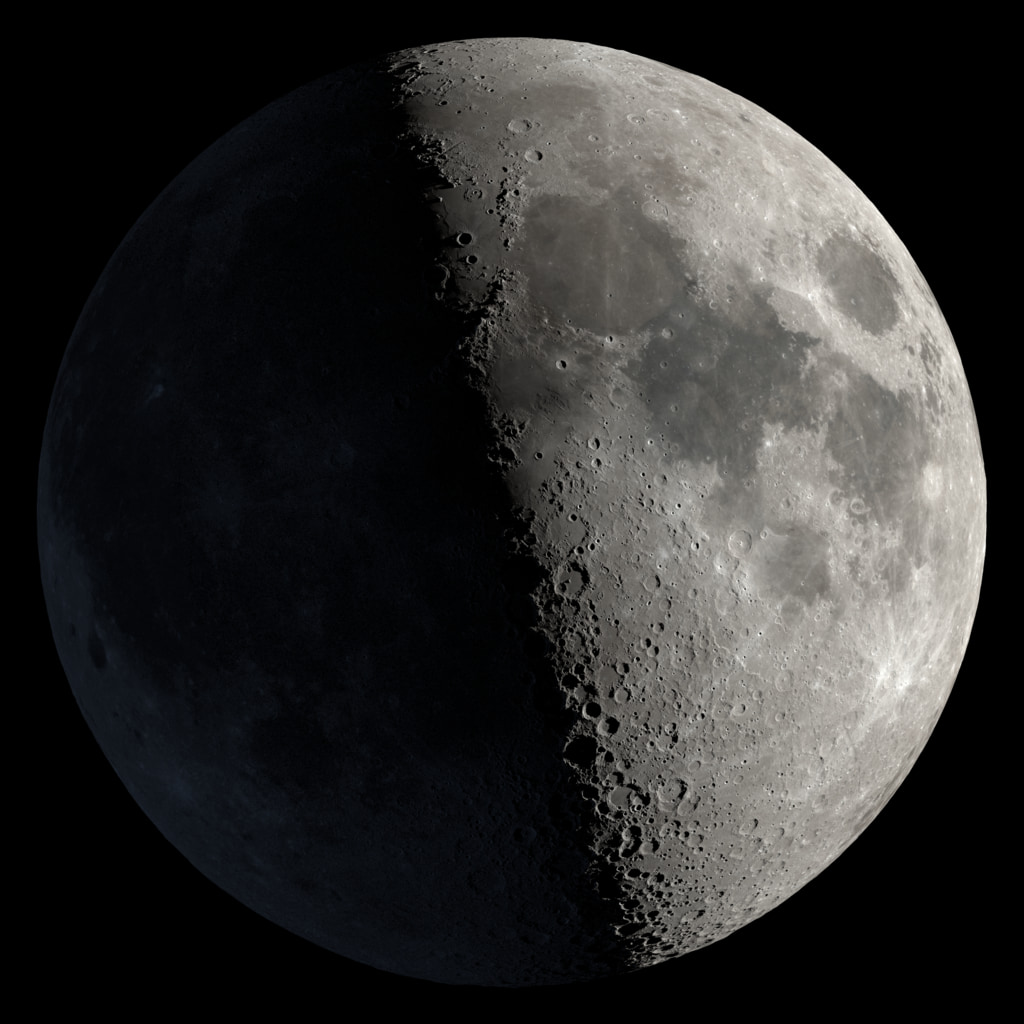
  • The Moon at low power: At 60% lit and waning, the sunset line (terminator) lies just east of the disk’s center, so Mare Crisium and the eastern edge are already dark. Craters along the terminator throw long shadows, which makes a waning gibbous far more detailed than a full Moon.

Tip for first-timers: Start at your lowest magnification (the eyepiece with the biggest number in millimeters), center the Moon, focus until its edge is crisp, then nudge over to Jupiter. A Moon filter takes the dazzle out of the Moon but should come out for Jupiter.

Crater-covered lunar surface imaged by NASA's Lunar Reconnaissance Orbiter. On November 30, 2026, craters near the terminator of the waning gibbous Moon cast long shadows

Craters near the terminator show the most relief. Credit: NASA/GSFC/Arizona State University (LRO).

The four objects on November 30, 2026

  • • Moon: waning gibbous, 60% lit, in Leo
  • • Jupiter: magnitude −2.2, disk 39″, in Leo
  • • Mars: magnitude +0.5, disk 8″, in Leo
  • • Regulus: magnitude +1.4, Leo’s brightest star
  • • Jupiter–Regulus: 3.5°; Mars–Regulus: 2.4°

More on each target: what Jupiter really looks like through a telescope, how to see and identify Jupiter’s moons, the Leo constellation guide, and, if the scope is still in its box, our first night with a new telescope checklist.

Bonus: Venus Blazing Before Dawn

Turn to the east-southeast before dawn on November 30 and you cannot miss Venus, at magnitude about −4.9 and near its greatest brilliancy for this morning appearance. It rises around 3:25–3:35 a.m. local time from the US and stands about 15stands about 15° up by 5 a.m.ndash;18stands about 15° up by 5 a.m.deg; up by 5 a.m. A small telescope shows it as a crescent. With the Moon, Jupiter, Mars and Regulus high in the south and Venus low in the southeast, the pre-dawn sky on Cyber Monday morning holds three planets, a first-magnitude star and the Moon at once. The full line-up, including Mercury earlier in the month, is in our November 2026 planet parade guide.

Jupiter and Mars are both heading toward opposition, Jupiter on February 10–11, 2027 and Mars on February 19, 2027, so the Moon will pass them in Leo every month through the winter, and both planets will keep getting bigger and brighter. Our Jupiter opposition 2027 guide and Mars opposition 2027 guide cover what to expect.

Best Gear for the Moon–Jupiter Gathering

The night of November 29–30 falls on the Thanksgiving weekend, so plenty of readers will be trying out new binoculars or a first telescope, or deciding what to buy. Everything here works on bright targets from a city backyard. Binoculars first, since they show the whole group:

Celestron SkyMaster 15x70 Binoculars

Celestron SkyMaster 15x70 Binoculars

The 4.4 degree field holds the Moon and Jupiter together all night, and adds Regulus at dawn from most of the US. Mars sits just outside the same view. Best on a tripod to see Jupiter's moons.

Celestron AstroMaster 70AZ

Celestron AstroMaster 70AZ

A simple 70mm refractor that sets up in minutes. Enough to show Jupiter's belts and moons and sharp lunar craters on a night like this one.

Sky-Watcher Heritage 130P

Sky-Watcher Heritage 130P

A 130mm tabletop Dobsonian with twice the light grasp of a 70mm. Jupiter's belts show more structure and the Moon's terminator is full of detail.

Celestron StarSense Explorer DX 130AZ

Celestron StarSense Explorer DX 130AZ

Your phone shows where to push the tube, so a beginner can hop from the Moon to Jupiter, Mars and Regulus, and on to Venus, without star-hopping skills.

Celestron NexStar 6SE

Celestron NexStar 6SE

A 150mm GoTo telescope that finds and tracks Jupiter for you. The extra aperture pays off on Jupiter's cloud belts and, later in the winter, on Mars near opposition.

Accessories for a Moon-and-Planet Night

SVBONY Variable Polarizing Moon Filter

SVBONY Variable Polarizing Moon Filter

Dial the 60%-lit Moon down to a comfortable brightness, then open it fully for Jupiter.

SVBONY Universal Phone Adapter

SVBONY Universal Phone Adapter

Holds your phone square to the eyepiece for steady shots of the Moon's terminator and short videos of Jupiter.

Saw the Moon and Jupiter and want a better view?

November 30, 2026 is Cyber Monday. Our trackers list the current telescope, binocular and smart-telescope offers with each retailer’s stated end dates: Cyber Monday telescope deals, Black Friday telescope deals, binocular deals and smart telescope deals. Prices change often, so check current pricing before you buy.

When the Moon Meets Jupiter Next

Jupiter lies close to the Moon’s path, so the Moon passes it once a lunar orbit, about every 27 days. The next two passes come with a brighter Moon:

DateClosest (UTC)SeparationMoon lit
Mon Nov 30, 202608:251.05°60%
Sun Dec 27, 202616:301.4°82%
Sat Jan 23, 202723:201.4°97%

Geocentric values computed from the JPL DE421 ephemeris. The December 27 pass happens in daylight for the Americas, so look on the nights either side. For other dates, see the astronomy events calendar 2026. The Moon’s previous stop on its way here was the full Beaver Moon of November 24.

Frequently Asked Questions

What is the bright star next to the Moon on November 29 and 30, 2026?

It is the planet Jupiter, at magnitude minus 2.2, brighter than any star. On the night of November 29 to 30, 2026, it rises with the Moon around 10:10 to 10:35 p.m. local time and stays within about 1.2 to 3 degrees of the Moon until dawn. The fainter orange point a few degrees away is Mars, and the blue-white star near them is Regulus in Leo.

What time is the Moon closest to Jupiter?

Seen from Earth's center, the Moon passes 1.05 degrees from Jupiter at 08:25 UTC on November 30, 2026 (3:25 a.m. EST). From US cities the closest view, about 1.2 to 1.3 degrees, comes at about 2 a.m. EST in New York, 1 a.m. CST in Chicago, 11:55 p.m. MST in Denver and 10:55 p.m. PST in Los Angeles.

Can I see the Moon cover Jupiter from the US?

No. The occultation of Jupiter on November 30, 2026 is visible only from parts of southern Chile and Argentina, the Falkland Islands and Antarctica. From the US and Europe the Moon passes about 1.2 to 2 degrees from Jupiter.

How can I tell Mars from Regulus?

Mars is slightly brighter (magnitude plus 0.5) and clearly orange. Regulus (magnitude plus 1.4) is blue-white and sits at the bottom of Leo's Sickle. At 5 a.m. on November 30, seen from the US facing south, Regulus is just to the left of the Moon and Mars is a little farther left, about 4 to 5 degrees from the Moon.

Can binoculars show all four objects at once?

From the US the four objects fit in a circle about 5.2 degrees across before dawn, so binoculars with a true field of about 6 degrees or more can hold them all. Popular 15x70 binoculars have a 4.4 degree field, which shows the Moon and Jupiter together, plus Regulus at dawn, but not Mars in the same view.

Is the evening or the morning better?

The closest pairing of the Moon and Jupiter comes in the late evening or after midnight, low in the east. The tightest four-object group, high in the south and clear of horizon haze, comes before dawn on November 30, around 5 a.m. local time. If you can only go out once, choose 4:30 to 5:30 a.m.

When is the next Moon and Jupiter conjunction?

The Moon passes about 1.4 degrees from Jupiter again on December 27, 2026, at about 16:30 UTC with an 82 percent lit Moon, so look on the nights of December 26 to 27 and 27 to 28. After that it returns on January 23, 2027, close to full.

Related Guides

Sources, Method & Image Credits

  • • Positions, separations, rise/set times, illumination, magnitudes, disk sizes and occultation checks: computed by Telescope Advisor with the Skyfield library and the NASA JPL DE421 planetary ephemeris.
  • • Cross-checked against Star Walk: Moon, Jupiter, Mars and Regulus, November 30, 2026 (group size, magnitudes, occultation regions and Lebu contact times) and When the Curves Line Up (Jeffrey L. Hunt) (5.2° grouping on November 30).
  • • Binocular field of view: Celestron SkyMaster 15x70 specification (4.4°).
  • • Hero image: Jupiter, NASA/JPL-Caltech/SwRI/MSSS (Juno). US Government work, public domain.
  • • Moon image: NASA/GSFC/Arizona State University (Lunar Reconnaissance Orbiter). US Government work, public domain.

Some links in this article are affiliate links. If you buy through them, we may earn a small commission at no extra cost to you. It never changes which products we recommend. See our affiliate disclosure.