Planet Parade November 2026: 4 Planets Before Sunrise
Telescope Advisor Logo Telescope Advisor
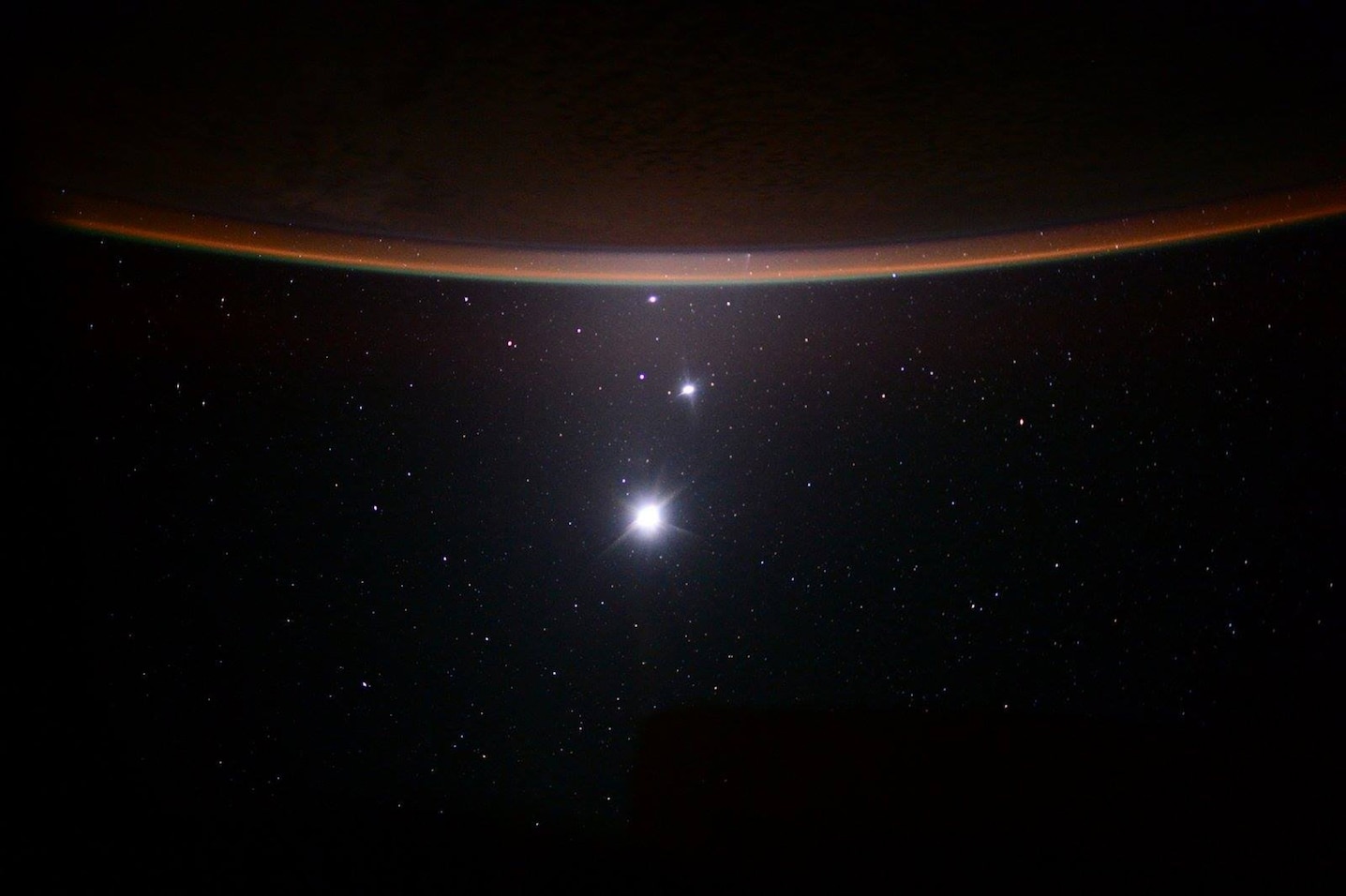
The Moon, Venus and Jupiter lined up below Earth's glowing horizon, photographed from the International Space Station. In late November 2026 four planets line up before sunrise

Planet Parade · Pre-Dawn Sky · November 14–30, 2026

Planet Parade November 2026: 4 Planets Before Sunrise

In the second half of November, four bright planets share the dawn sky. Brilliant Venus blazes low in the southeast, Mercury peeks out just below it, and Mars and Jupiter stand high in the south among the stars of Leo. Step outside about 45 minutes before sunrise and you can count all four with no equipment at all.

4Naked-eye planets at dawn
Nov 20Mercury at its highest
−4.9Venus near peak brightness
~45 minBefore sunrise: best time
By Telescope Advisor Editorial Team Published: Updated: Reviewed & approved by Juhi Sahni, Senior Editor Editorial Standards
Elena Reyes — Senior Science Editor

Elena Reyes

Senior Science Editor

Covers NASA missions, space science discoveries, and astronomical events for Telescope Advisor. Translates complex astrophysical research into practical insights for backyard observers. Based in the San Francisco Bay Area.

Content reviewed by our editorial team. Research and drafting assisted by AI to ensure unbiased, data-driven analysis. Learn more about our editorial process.

Quick Answer: How to See the November 2026 Planet Parade

  • • When: Any clear morning from about November 14 to 30, 2026. Mercury is easiest from about November 16 to 26, and highest on November 20.
  • • What time: About 45 minutes before sunrise, which is roughly 6:00–6:10 a.m. local standard time in New York, Chicago and Denver, and 5:45–5:50 a.m. in Los Angeles. Daylight saving time ends on November 1.
  • • Where to look: Mercury about 8–10° up in the east-southeast, Venus about 20–25° up in the southeast, and Mars and Jupiter about 60° up in the south.
  • • The standout: Venus, the “bright star in the east before sunrise,” is near its peak brightness of about magnitude −4.9 all week. Sources put the exact peak between November 25 and 29.
  • • Bonus: Mars passes 1.7° above the star Regulus on November 26. Venus passes about 1° from the star Spica around November 7–9.
  • • Equipment: None needed. Binoculars help find Mercury in twilight. A small telescope shows Venus as a crescent and Jupiter’s belts and moons.

Rise times, altitudes, magnitudes, phases and separations were computed by Telescope Advisor from the JPL DE421 planetary ephemeris using the Skyfield library, for New York, Chicago, Denver and Los Angeles. We cross-checked the key dates against EarthSky, Star Walk, BBC Sky at Night Magazine, When the Curves Line Up and the Dutch observing site hemel.waarnemen.com (sources at the end of this page).
What a Planet Parade Is (and Isn’t)

“Planet parade” is an informal name for several bright planets being visible in the same part of the sky at the same time. It is not an astronomical term, and it does not mean the planets are lined up in space. In late November 2026, Mercury, Venus, Mars and Jupiter are all on the morning side of the Sun, so all four are above the horizon together before dawn.

The planets also will not form a straight, tight row. They all sit close to the ecliptic, the path the Sun and planets follow across our sky, so they trace a long arc. This month the arc runs from Mercury, just above the east-southeast horizon, up through Venus to Mars and Jupiter high in the south. From Mercury to Jupiter it spans nearly 80°, more than a third of the way across the sky. You will need to turn your head to take it all in, but the pattern is easy to follow once you know that the planets climb the sky in order of their distance from the Sun in the sky: Mercury lowest, then Venus, then Mars and Jupiter.

More background: our planetary alignment 2026 guide and which planets are visible tonight.

The Best Mornings: November 7 to 30

The line-up builds through the month. Mercury climbs out of the sunrise glare in the second week, while Venus rises earlier every morning and Mars and Jupiter are already high. These are the mornings worth setting an alarm for:

Nov 7–9 · Warm-up

Venus meets Spica

Venus passes about 1° from Spica, the brightest star in Virgo, low in the east-southeast. On the morning of November 7 a thin crescent Moon joins them. Mercury is still too close to the Sun to see.

Nov 14–16 · All four appear

Mars meets Jupiter

Mercury is now about 7–8° up, so all four planets can be seen. High in the south, Mars and Jupiter are only about 1.2° apart on November 15–16. See our Mars–Jupiter conjunction guide.

Nov 17–18 · Leonids

Planets plus meteors

The Leonid meteor shower peaks on the night of November 17–18, and its radiant is in Leo, right next to Mars and Jupiter. The first quarter Moon sets around midnight, so the hours before dawn are dark. Leonid guide.

Nov 20 · Best Mercury morning

Mercury at its highest

Mercury reaches its greatest distance from the Sun, about 19.6°, on the evening of November 20 in US time zones (00:00 UTC on November 21). On the mornings either side it stands about 10° up in the east-southeast, roughly one fist at arm’s length, at magnitude −0.5.

Nov 24 · Beaver Moon

Full Moon in the west

The full Beaver Moon is low in the west at dawn, on the opposite side of the sky from the planets. From the western US it also covers some stars of the Pleiades before sunrise. See our Beaver Moon 2026 guide.

Nov 26 · Mars meets Regulus

1.7° apart

Mars passes 1.7° above Regulus, the brightest star in Leo, with Jupiter about 3.6° to their right. The orange planet and the blue-white star make a fine colour contrast in binoculars. Mercury is still about 8° up.

Nov 25–29 · Venus at its brightest

Magnitude about −4.9

Venus reaches its greatest brilliancy for this morning appearance. Published dates range from November 25 to 29 because its brightness barely changes across the week; no one could see the difference by eye. It rises more than 3 hours before the Sun and is the brightest thing in the sky after the Moon.

Nov 29–30 · Moon joins in

Moon near Jupiter

A waning gibbous Moon moves in beside Jupiter, Mars and Regulus in Leo. The group rises in the late evening and is high in the south-southwest by dawn.

Early December · Fading

Mercury bows out

Mercury slips below about 5° by early December and is lost in the glare by mid-month. Venus, Mars and Jupiter stay with us through the winter.

Altitudes are for 45 minutes before sunrise from mid-northern US latitudes. In the UK and Europe the same line-up is visible, with Mercury a little lower; see our UK night sky tonight page. From the Southern Hemisphere Mercury stays very low, but Venus, Mars and Jupiter are easy.

Sky Chart: The Dawn Line-Up on November 26

This chart shows the sky from east-southeast round to south-southwest at 6:08 a.m. CST on November 26 from Chicago, 45 minutes before sunrise. The other US cities in our table see almost the same picture at the same local time. The height scale on the left is in degrees: a fist held at arm’s length covers about 10°.

Mercury, Venus, Mars and Jupiter before sunrise on November 26, 2026 View from Chicago at 6:08 a.m. CST. Mercury is about 8 degrees above the east-southeast horizon. Venus is about 25 degrees up in the southeast, with the star Spica just to its right. Mars, the star Regulus and Jupiter are about 60 degrees up in the south, with Mars just above Regulus and Jupiter a little to the right. The star Denebola is between Venus and Mars. 10°20°30°40°50°60° ESESES Mercury Venus Spica Denebola Mars Regulus Jupiter Chicago, 6:08 a.m. CST, Nov 26
Telescope Advisor chart computed from the JPL DE421 ephemeris. Positions are plotted by compass direction and height, so shapes high in the sky are stretched sideways; Mars and Regulus look farther apart than the true 1.7° would suggest. The dashed line roughly follows the ecliptic. Dot sizes reflect brightness, not size. The Moon is in the west, behind you.

Times and Heights for US Cities

Venus is up by about 3:30–4 a.m., and Mars and Jupiter rise around 11 p.m. the evening before, so the only planet that sets the timetable is Mercury. It rises about 1¾ hours before the Sun, and you need the sky to be dark enough to spot it but Mercury high enough to clear the horizon haze. That balance is reached about 45 minutes before sunrise. The table gives that time and how high each planet stands then, in local standard time.

CityMorningVenus risesMercury risesSunriseBest timeHeight then: Mercury / Venus / Mars / Jupiter
New York (EST)Nov 203:55 a.m.5:05 a.m.6:48 a.m.6:03 a.m.10° / 22° / 63° / 63°
Nov 263:40 a.m.5:18 a.m.6:55 a.m.6:10 a.m.8° / 25° / 62° / 61°
Chicago (CST)Nov 203:51 a.m.5:02 a.m.6:46 a.m.6:01 a.m.10° / 21° / 62° / 61°
Nov 263:35 a.m.5:15 a.m.6:53 a.m.6:08 a.m.8° / 25° / 61° / 60°
Denver (MST)Nov 203:58 a.m.5:08 a.m.6:50 a.m.6:05 a.m.10° / 22° / 64° / 64°
Nov 263:42 a.m.5:20 a.m.6:56 a.m.6:11 a.m.8° / 25° / 63° / 62°
Los Angeles (PST)Nov 203:45 a.m.4:53 a.m.6:30 a.m.5:45 a.m.10° / 23° / 70° / 69°
Nov 263:30 a.m.5:04 a.m.6:36 a.m.5:51 a.m.8° / 26° / 69° / 69°

“Best time” is 45 minutes before sunrise, when the Sun is about 9° below the horizon. Start looking 10–15 minutes earlier to catch Mercury against a darker sky, and finish by about 25 minutes before sunrise. Mercury sits in the east-southeast (azimuth about 115°), Venus in the southeast (about 125–130°), and Mars and Jupiter in the south. Times assume a flat horizon; other cities in the same time zone are usually within about 15 minutes of the nearest listed city.

What a Telescope Shows of Each Planet

The planet parade is a naked-eye event, but each of the four looks different through a telescope, and seeing them one after another in the same session is a great way to compare them.

  • Venus (the standout): Only a month past passing between Earth and the Sun, Venus is still close and large. It measures about 46″ on November 20 and 40″ by November 29, larger than Jupiter, and shows a crescent about 18–27% lit. Even 30–50× in a small telescope shows the shape clearly. Look in twilight rather than full darkness to cut the glare.
  • Jupiter at 100–150×: A 37–38″ disk with two dark cloud belts and the four Galilean moons. At about 60° up it is well above the turbulent air near the horizon.
  • Mars at 150× and up: A small salmon-coloured disk of about 7–8″, 90% lit. Expect colour and shape more than detail; Mars nearly doubles in size by its February opposition.
  • Mercury: A tiny 6–7″ disk, roughly half lit on November 20, low in the haze. A telescope shows its phase on a steady morning, but for most people simply finding Mercury is the achievement.

Tip: Observe Jupiter and Mars first, before twilight begins, and save Venus and Mercury for the brightening dawn. If your telescope has a GoTo mount, align it on Jupiter and Regulus rather than on stars near the bright eastern horizon.

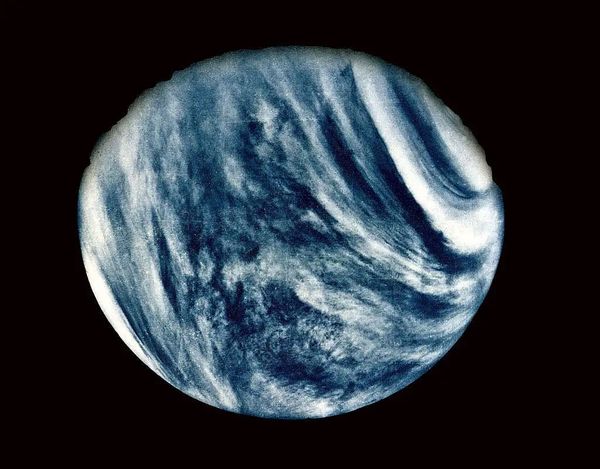
Venus's cloud tops photographed in ultraviolet light by NASA's Mariner 10 spacecraft. Through a backyard telescope in late November 2026 Venus appears as a bright, featureless crescent

Venus’s clouds in ultraviolet light, from NASA’s Mariner 10. Through a backyard telescope the clouds look plain white; what you notice is the phase, a crescent about a fifth to a quarter lit this month. Credit: NASA/JPL.

The four planets on November 20, 2026

  • • Venus: magnitude −4.9, disk 46″, 18% lit, in Virgo
  • • Jupiter: magnitude −2.1, disk 37″, in Leo
  • • Mercury: magnitude −0.5, disk 6.8″, 58% lit, in Libra
  • • Mars: magnitude +0.6, disk 7.4″, 90% lit, in Leo

Learn what to expect: how to see Venus with a telescope, can you see Mercury with a telescope? and what Jupiter looks like through a telescope.

Make It Five: Saturn in the Evening

Saturn is not part of the dawn line-up, because it sets in the small hours, around 2:50 a.m. in mid-November and 1:50 a.m. by the end of the month. But it is well placed in the evening: high in the southeast to south after dark, near the border of Pisces and Cetus, at magnitude +0.5. If you look at Saturn after dinner and the other four before breakfast, you have seen five planets in one night. Around midnight, Saturn, Mars and Jupiter are all above the horizon at once.

Two fainter planets are also well placed. Uranus reaches opposition on November 25, about 6° southeast of the Pleiades at magnitude 5.6, an easy binocular target; see can you see Uranus with binoculars? Neptune sits not far from Saturn but needs binoculars or a telescope.

Safety: Stop Before the Sun Rises

Mercury and Venus sit in the part of the sky where the Sun is about to appear. Never sweep binoculars or a telescope toward the eastern horizon once the Sun is up or about to rise, because even a moment of sunlight through optics can permanently damage your eyes. Finish looking at Mercury by about 20–25 minutes before sunrise, and switch off any GoTo mount before the Sun comes up so it cannot slew toward it.

Best Telescopes and Accessories for the Planet Parade

Any small telescope will show Venus’s crescent and Jupiter’s moons. Something easy to carry out on a cold, dark morning matters more than raw aperture. These are the scopes we would set up:

Celestron AstroMaster 70AZ

Celestron AstroMaster 70AZ

A light 70mm refractor that sets up in a minute and clearly shows Venus as a crescent, Jupiter's four moons and the colour of Mars. A good first telescope for planet mornings.

Sky-Watcher Heritage 130P

Sky-Watcher Heritage 130P

A 130mm tabletop Dobsonian with a wide low-power view for Mars, Jupiter and Regulus together, and enough aperture for Jupiter's belts at 100x and more.

Celestron StarSense Explorer DX 130AZ

Celestron StarSense Explorer DX 130AZ

A phone app points you to each planet, which helps when Mercury is low in twilight and hard to pick out by eye.

Celestron NexStar 6SE

Celestron NexStar 6SE

A 150mm GoTo Schmidt-Cassegrain that tracks each planet for you and gives sharp, high-power views of the Venus crescent and Jupiter's cloud belts.

Accessories

Binoculars are the most useful extra this month, because they help you find Mercury in the brightening sky:

Celestron SkyMaster 15x70 Binoculars

Celestron SkyMaster 15x70 Binoculars

Picks out Mercury low in twilight and frames Mars and Regulus together on November 26. Best on a tripod.

Celestron Omni 2x Barlow Lens

Celestron Omni 2x Barlow Lens

Doubles the power of each eyepiece for a closer look at the Venus crescent and Jupiter's belts without buying another eyepiece.

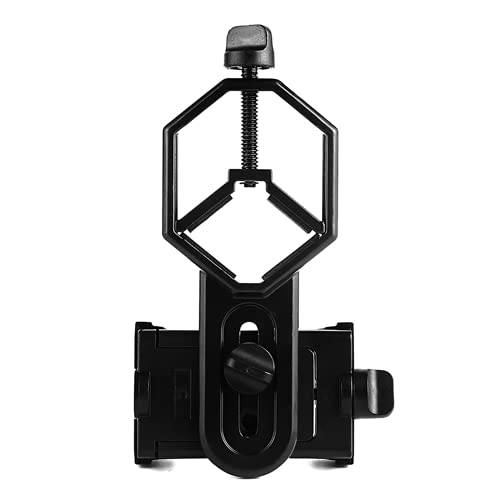
SVBONY Universal Phone Adapter

SVBONY Universal Phone Adapter

Holds your phone at the eyepiece to capture the Venus crescent. For the whole line-up, a phone on a small tripod with a 2–3 second exposure works well.

Comparing more options? See our guide to the best telescopes for viewing planets.

What Comes Next

  • • December 2026: Venus stays a brilliant morning star, rising about 3½ hours before the Sun, and its crescent fattens toward half lit.
  • • January 3, 2027: Venus reaches its greatest distance from the Sun, about 47°, in the morning sky. See our Venus greatest elongation guide.
  • • February 2027: Jupiter reaches opposition on February 10–11 and Mars on February 19, when both are biggest, brightest and up all night.
  • • Mars and Regulus again: Mars passes Regulus twice more as it loops back through Leo, about 4° away around February 21 and 1.2° away around May 15, 2027.

For every remaining 2026 event, see the astronomy events calendar and the November 2026 night sky guide.

Frequently Asked Questions

What is the planet parade in November 2026?

It is four bright planets, Mercury, Venus, Mars and Jupiter, visible together in the sky before sunrise from about November 14 to 30, 2026. Mercury and Venus are low in the east-southeast and southeast, and Mars and Jupiter are high in the south.

What is the best morning to see the planet parade?

November 20 is best for Mercury, which is then at its greatest distance from the Sun and about 10 degrees up 45 minutes before sunrise. November 26 adds Mars passing 1.7 degrees from the star Regulus. Any clear morning from November 16 to 26 shows all four planets well.

Is this a planetary alignment? Are the planets in a straight line?

Not in a strict sense. The planets are not lined up in space. They appear along a long arc that follows the ecliptic, the path of the Sun and planets across the sky, stretching nearly 80 degrees from Mercury near the horizon to Jupiter high in the south.

What is the bright star in the east before sunrise in November 2026?

It is the planet Venus. It rises more than three hours before the Sun and shines at about magnitude minus 4.9, near its peak brightness, making it the brightest object in the sky after the Moon.

When is Venus brightest in November 2026?

Venus reaches greatest brilliancy in the last week of November. Published dates range from November 25 to 29 because its brightness changes very little across that week. It is about magnitude minus 4.9 throughout.

Can I see Mercury in November 2026?

Yes. Mercury reaches greatest western elongation, about 19.6 degrees from the Sun, on the evening of November 20 in US time zones. On the surrounding mornings it is about 8 to 10 degrees above the east-southeast horizon 45 minutes before sunrise, at magnitude minus 0.5. You need a clear, low eastern horizon.

What will I see through a telescope?

Venus shows a crescent about a fifth to a quarter lit and larger than Jupiter, about 40 to 46 arcseconds across. Jupiter shows its cloud belts and four bright moons. Mars is a small orange disk, and Mercury a tiny half-lit disk low in the twilight.

Can I see Saturn too?

Yes, but in the evening rather than at dawn. Saturn is high in the south after dark and sets around 2 to 3 a.m. in November, so you can see it in the evening and the other four planets before sunrise.

Related Guides

Sources, Method & Image Credits

Some links in this article are affiliate links. If you buy through them, we may earn a small commission at no extra cost to you. It never changes which products we recommend. See our affiliate disclosure.