Wolf Moon 2027: January Supermoon Time and Viewing Guide
Telescope Advisor Logo Telescope Advisor
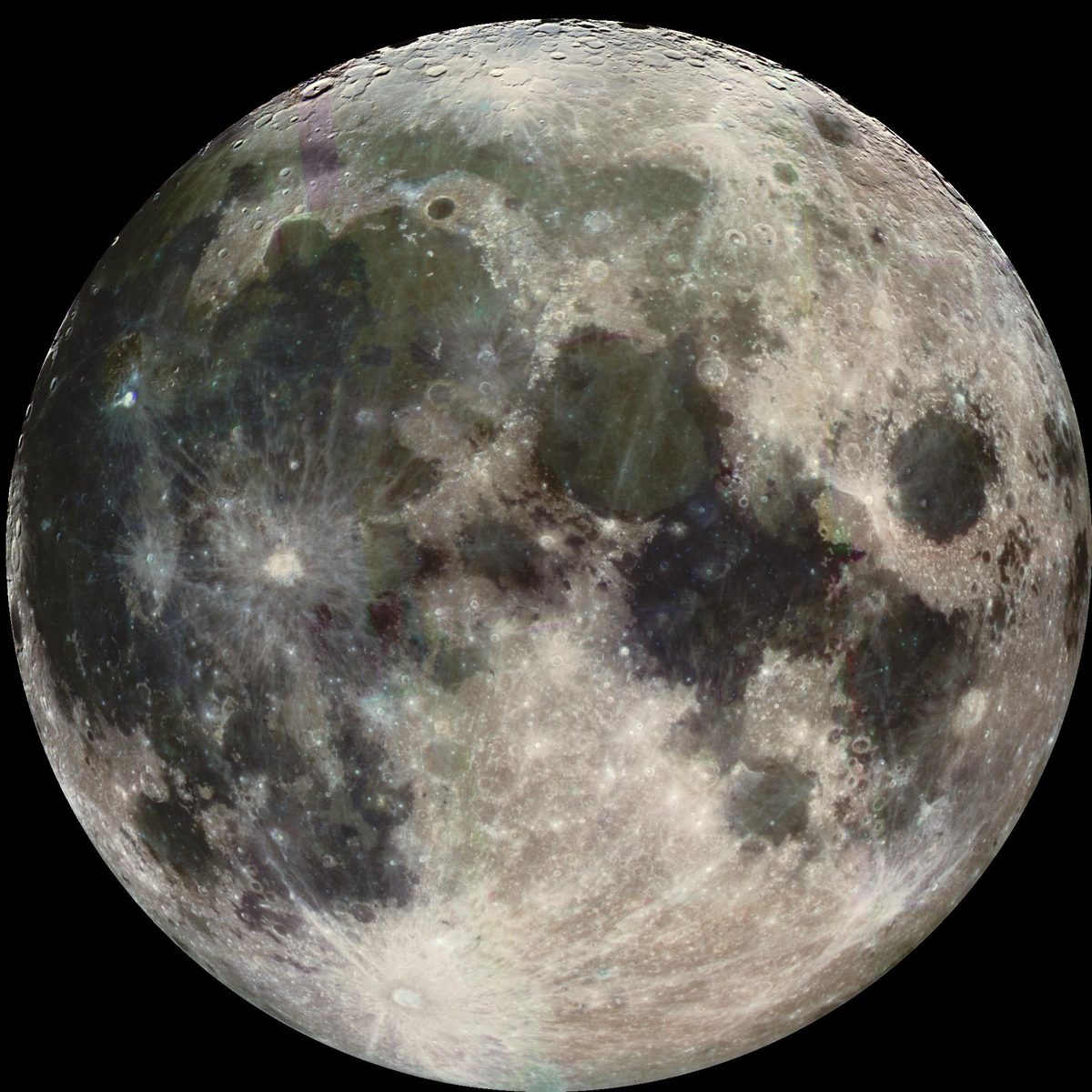
The full Moon photographed by NASA's Galileo spacecraft — the Wolf Moon of January 22, 2027 is the closest full Moon of the year

Named Full Moon Series · January 2027

Wolf Moon 2027: The January 22 Supermoon

The Wolf Moon of 2027 is full at 12:17 UTC on Friday, January 22 (7:17 AM EST). It is a supermoon, about 357,600 km from Earth, and the closest full Moon of 2027. The best evenings to look are Thursday, January 21, when it rises around sunset, and Friday, January 22. On Saturday, January 23 it passes Jupiter and the star Regulus. Here are the times for your city, what the supermoon effect really looks like, and what a telescope shows.

Full MoonJan 22, 12:17 UTC
DistanceAbout 357,644 km
Best eveningsThu Jan 21 & Fri Jan 22
BonusNear Jupiter, Jan 23
By Telescope Advisor Editorial Team Published: Updated: Reviewed & approved by Juhi Sahni, Senior Editor Editorial Standards

Quick Answer: When Is the Wolf Moon in 2027?

The Wolf Moon is full on Friday, January 22, 2027 at 12:17 UTC: 7:17 AM EST, 6:17 AM CST, 5:17 AM MST and 4:17 AM PST. In North America that moment falls in the early morning, with the Moon low in the west and about to set. So the nights to plan for are the evenings either side: Thursday, January 21, when the Moon rises in the east-northeast around sunset, and Friday, January 22, when it rises shortly after sunset. On both evenings it looks completely full.

It is a supermoon: at full phase it is about 357,644 km (222,229 miles) away, roughly 14 hours after the Moon's closest approach of the month. By our calculation, confirmed by the published 2027 full Moon table at moonblink.info, that makes it the closest full Moon of 2027. It is also the first of two supermoons this year; the second is the Snow Moon on February 20.

The moment

January 22, 2027, 12:17 UTC (7:17 AM EST / 4:17 AM PST). In the Moon's direction: the constellation Cancer, about 5° from the Beehive Cluster.

The best view

Thursday, January 21 at moonrise, low in the east-northeast in twilight, when it looks biggest against the horizon.

The bonus

Saturday, January 23: the Moon 3–5° from Jupiter and 2–4° from Regulus at 9 PM. Jupiter opposition guide →


🔭

Not sure which telescope actually fits your goals?

Answer 5 quick questions about your budget, observing targets, and experience level — our Telescope Finder Tool recommends a specific model in under 2 minutes.

Find My Telescope →

Wolf Moon 2027 Times for US Cities

Local standard times, calculated for each city centre. Places nearby will differ by a few minutes; a planetarium app or a local almanac gives your exact times.

City Thu Jan 21: moonrise / sunset Fri Jan 22: full Moon / moonset Fri Jan 22: moonrise / sunset Sat Jan 23, 9 PM: Moon to Jupiter
New York4:04 PM / 4:58 PM7:17 AM / 7:24 AM5:26 PM / 4:59 PM3.0°
Chicago3:57 PM / 4:49 PM6:17 AM / 7:24 AM5:20 PM / 4:51 PM3.5°
Denver4:18 PM / 5:05 PM5:17 AM / 7:29 AM5:39 PM / 5:06 PM4.1°
Los Angeles4:31 PM / 5:11 PM4:17 AM / 7:09 AM5:48 PM / 5:12 PM4.7°

Source: our Skyfield calculation with NASA JPL DE421 ephemeris data. Cross-check for New York against timeanddate.com: moonrise 4:02 PM on January 21 and 5:24 PM on January 22, moonset 7:26 AM on January 22 (within 2 minutes).

Which Night Should You Look: January 21 or 22?

Thursday, January 21: the rising Moon

The Moon clears the east-northeast horizon 40 to 55 minutes before sunset across the continental US and is more than 99% lit. Watch it climb out of the twilight glow, when it looks large and orange near the horizon. That look is the "Moon illusion" plus colour from the thick air near the horizon, not the supermoon effect, but it makes this the most photogenic evening. Find a spot with a clear, low eastern view.

Friday, January 22: the night after full

Full Moon happens that morning, so by evening the Moon is just past full and still looks perfectly round. It rises 25 to 40 minutes after sunset, in a darker sky, which suits people who get home late from work. Through a telescope a very thin edge on one side has started to fall into shadow.

Early risers: on Friday morning the Moon sets in the west-northwest at about 7:10–7:30 AM local time, so East Coast observers see it sinking at almost the exact moment of full Moon, around sunrise.

How Super Is This Supermoon?

"Supermoon" is a popular term, not an astronomical one, for a full Moon that happens near perigee, the closest point of the Moon's slightly oval orbit. In January 2027 perigee comes at about 21:50 UTC on January 21 (357,283 km), and full Moon follows about 14 hours later at 357,644 km.

The honest numbers: the Wolf Moon appears about 7% wider than an average full Moon and about 13% wider than the smallest full Moon of 2027, the July 18 "micromoon" at about 406,000 km. Star Walk estimates it at about 15% brighter than average. Few people can tell the difference by eye, because there is nothing beside the Moon to compare it with. A side-by-side pair of photos taken with the same camera and zoom in January and July shows it clearly.

One more perspective: the December 24, 2026 Cold Moon was a fraction closer (about 356,700 km, under 1,000 km nearer), so the two winter full Moons are near twins. See the Cold Moon 2026 guide.

2027's closest full Moons

Full Moon (UTC)Distance
Jan 22, 2027 (Wolf)357,644 km
Feb 20, 2027 (Snow)363,306 km
Dec 13, 2027368,139 km
Mar 22, 2027372,525 km
Jul 18, 2027 (farthest)405,973 km

Distances (Earth centre to Moon centre) from the moonblink.info 2027 Moon calendar, matching our Skyfield calculation to within a few kilometres.

Why Is It Called the Wolf Moon?

"Wolf Moon" is the name the popular almanacs attach to January's full Moon, usually explained by wolves being heard more often in the hungry depth of winter. Like the Harvest, Hunter's, Beaver and Cold Moons before it, the name reached us through 20th-century almanac lists that blended Native American, colonial American and European seasonal names, so it is a cultural label rather than a scientific one, and different communities have used different names for the same Moon.

What the name does capture is the season. January's full Moon rides high in the sky on long, cold nights, almost as high as December's, so it stays up from dusk to dawn and lights snowy landscapes brightly enough to read by. The rest of the series: Harvest Moon, Hunter's Moon, Beaver Moon and Cold Moon.

The Wolf Moon Through a Telescope

A full Moon is the easiest object in the sky to find and, for many people with a telescope from the holidays, the first thing they will see through it. It is also the least detailed phase: with the Sun shining straight down, craters cast almost no shadows. Instead of fighting that, look for what full Moon does best:

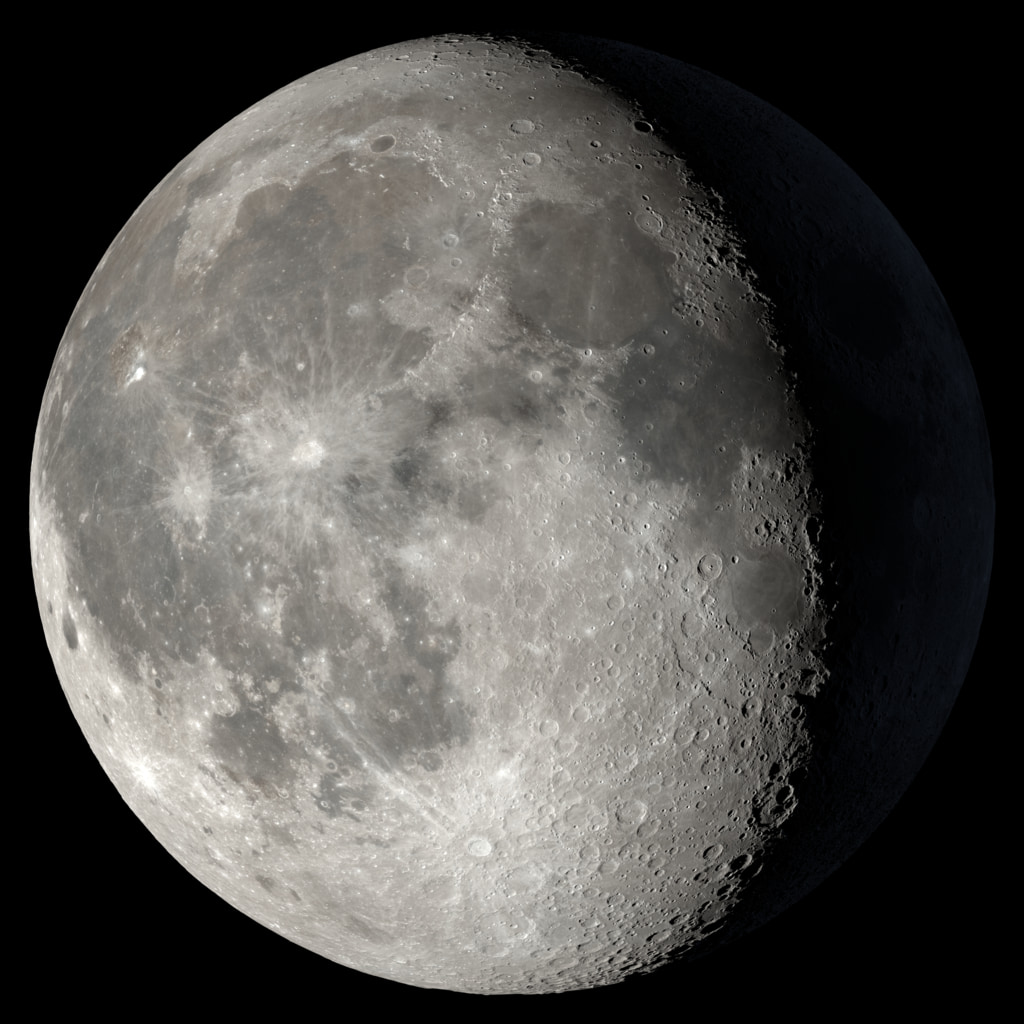
  • Ray systems. Bright streaks of debris splash out from young craters. Tycho, near the bottom (south) of the disk, has rays crossing much of the Moon; Copernicus and Kepler, in the dark plains to the left of centre as seen from the Northern Hemisphere, have smaller bright haloes.
  • The dark "seas". The lava plains show their sharpest contrast at full, which makes this a good night to learn their outlines.
  • The edge (limb). Mountains and crater rims at the very edge are seen side-on, so the outline is not perfectly smooth at 100× and up.

Use your lowest power to see the whole disk, then add a Moon filter (or a variable polarizing filter) before going to higher power: a full Moon in an 8-inch telescope is uncomfortably bright. For crater shadows, come back a few nights later, when the shadow line creeps in from the right-hand (eastern) edge as the Moon wanes. More: what the Moon looks like through a telescope and how to photograph the Moon with a telescope.

The Moon near full phase with bright rays spreading from the crater Tycho — the kind of detail a telescope shows at the Wolf Moon

Rays are the full-Moon showpiece

Near full phase, bright ray systems such as Tycho's stand out while crater shadows vanish. Credit: NASA's Scientific Visualization Studio (LRO data).

January 23: The Moon Meets Jupiter and Regulus

The Moon moves about its own width every hour against the stars. At the moment of full it is in Cancer, about 22° from Jupiter; by the evening of Saturday, January 23 it has caught up. Once the Moon rises (about 6:40–7:05 PM local time), it forms a tight triangle with brilliant Jupiter and Leo's brightest star, Regulus, low in the east. At 9 PM the Moon is about 3°–5° from Jupiter and 2°–4° from Regulus, depending on where you are: East Coast observers see it closer to Jupiter, West Coast observers closer to Regulus.

All three fit in a pair of 10×50 or 15×70 binoculars. In a telescope, view them separately: put Jupiter in the eyepiece away from the Moon's glare and you will see its four bright moons and cloud belts. Jupiter is only a few weeks from its opposition on February 10–11, 2027 and close to its largest and brightest of the season. The next evening, January 24, the Moon moves on to pass about 6°–7° from Mars. Plan the rest of the month with What to See With a Telescope in January 2027 and Night Sky in January 2027.

Next: The February 20 Snow Supermoon and a Penumbral Eclipse

February's full Moon, the Snow Moon, is full at about 23:23 UTC on February 20, 2027 (6:23 PM EST) at about 363,306 km: the second and final supermoon of 2027, according to Star Walk. It also passes through Earth's outer shadow in a penumbral lunar eclipse, greatest at about 23:13 UTC by our calculation. Penumbral eclipses only dim the Moon slightly, and this one happens around moonrise on the US East Coast and before moonrise farther west, so from North America expect, at best, a subtle shading on a Moon low in the twilight. It is not a "blood moon"; for those, see our total lunar eclipse guide.

Whole-year planning: Astronomy Events Calendar 2027 · Tonight's phase: Moon phase today · How phases work: Moon phases explained.

Gear for Moon Watching

You need nothing to enjoy the Wolf Moon. These are the pieces that make it more comfortable or let you take it further, from the cheapest add-on to a full telescope.

Celestron Variable Polarizing Moon Filter

Celestron Variable Polarizing Moon Filter

Adjustable dimming for a full Moon that is too bright to look at comfortably.

SVBONY Variable Polarizing Moon Filter

SVBONY Variable Polarizing Moon Filter

A lower-cost variable Moon filter that screws into standard 1.25-inch eyepieces.

Gosky Universal Phone Adapter

Gosky Universal Phone Adapter

Holds a phone to the eyepiece for full Moon photos through a telescope or binoculars.

Celestron SkyMaster 15x70 Binoculars

Celestron SkyMaster 15x70 Binoculars

Frames the Moon, Jupiter and Regulus together on January 23; best on a tripod.

Celestron AstroMaster 70AZ

Celestron AstroMaster 70AZ

A simple 70mm refractor that shows lunar rays, the seas and Jupiter's moons.

Sky-Watcher Heritage 130P

Sky-Watcher Heritage 130P

A compact 130mm tabletop Dobsonian: sharp lunar detail and Jupiter's belts.

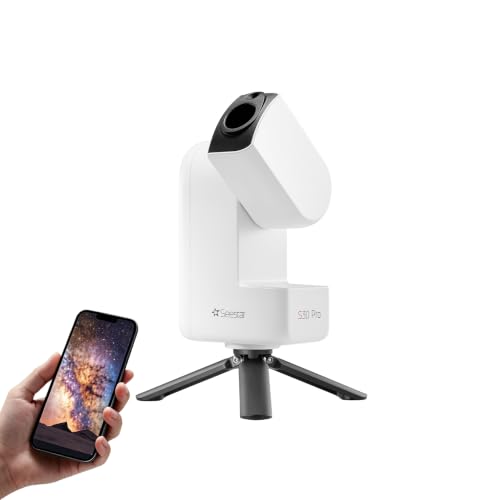
ZWO Seestar S30 Pro

ZWO Seestar S30 Pro

A smart telescope that photographs the Moon from a phone app, no eyepiece needed.

Filter advice: best Moon filters for telescopes.

Affiliate disclosure: we earn a commission from qualifying Amazon purchases made through these links, at no extra cost to you.


Next Best Step

Need the fastest next step?

Pick the path that matches where you are right now: get a recommendation, compare buyer guides, or narrow by budget.

Open Finder Tool →

🎄 Holiday season: Telescope Christmas Gift Guide 2026 · Smart telescope Black Friday deals

Wolf Moon 2027 FAQ

When is the Wolf Moon in 2027?

The Wolf Moon, January's full Moon, is full on Friday, January 22, 2027 at 12:17 UTC. That is 7:17 AM EST, 6:17 AM CST, 5:17 AM MST and 4:17 AM PST, so in North America the exact moment comes in the early morning, with the Moon low in the west. The best evenings to see it are Thursday, January 21 and Friday, January 22.

Is the January 2027 full Moon a supermoon?

Yes. At full phase the Moon is about 357,644 km (222,229 miles) from Earth, roughly 14 hours after perigee, its closest point in that orbit. Star Walk and almanac.com both list it as a 2027 supermoon, and it is the first of two; the second is the Snow Moon on February 20, 2027.

Is the Wolf Moon the closest full Moon of 2027?

Yes. By our calculation with NASA JPL ephemeris data, and in the 2027 full Moon table published by moonblink.info, the January 22 full Moon at about 357,644 km is the closest of the year. The February 20 full Moon is next at about 363,306 km. The previous full Moon, the Cold Moon of December 24, 2026, was slightly closer still, at about 356,700 km.

Which night is best to see the Wolf Moon?

Thursday, January 21, 2027 for a big rising Moon: it comes up in the east-northeast around sunset, about 4:00 to 4:30 PM local time across the continental US, already more than 99% lit. On Friday, January 22 it rises 25 to 40 minutes after sunset, still looking full. Both are good; Thursday gives the classic Moon-on-the-horizon view in twilight.

How much bigger does a supermoon look?

About 7% wider than an average full Moon and about 13% wider than the smallest full Moon of 2027 (July 18). That difference is real but very hard to notice by eye, because there is nothing next to the Moon to compare it with. The easiest way to see it is to photograph both the January and July full Moons with the same lens and zoom and put the pictures side by side.

Why is it called the Wolf Moon?

Wolf Moon is the name popular almanacs give January's full Moon, usually linked to wolves being heard more often in the depth of winter. Like most full Moon names used today, it comes from modern almanac lists that mix Native American, colonial American and European traditions, rather than from a single source.

Can I see Jupiter near the Wolf Moon?

Jupiter is about 22 degrees from the Moon at the moment of full Moon, but the Moon moves toward it over the next day. On the evening of Saturday, January 23, 2027 the Moon, still more than 95% lit, sits about 3 to 5 degrees from Jupiter and 2 to 4 degrees from the star Regulus at 9 PM, low in the east. It is a fine binocular sight.

Is a full Moon good for telescope viewing?

It is the easiest Moon to find but not the most detailed, because sunlight falls straight down and casts almost no shadows. Look for the bright ray systems around the craters Tycho and Copernicus, the dark lava plains, and the mountains seen edge-on at the limb. A Moon filter makes the view much more comfortable. For crater detail, observe a few nights before or after full.
Continue Exploring

Keep the session going with the next useful answer

Choose the next page based on whether you need a recommendation, a comparison, or a practical observing plan.

Use Finder Tool →

🎄 Holiday season: Telescope Christmas Gift Guide 2026 · Black Friday deal tracking